If you're feeding a crowd and don't want to guess: most full meals land around 12–16 oz of food per adult before drinks, depending on service style and menu. Buffets need 25–33% more protein and sides than plated dinners because guests serve themselves more generously and second helpings are common.
Here's how it breaks down by service style. All protein amounts are cooked weight — raw purchase weight will be higher because meat loses 25–50% during cooking depending on the cut.
| Category | Sit-down (plated) | Buffet (self-serve) |
|---|---|---|
| Main protein (cooked) | 4–5 oz | 6 oz |
| Sides (all sides combined) | 4–5 oz | 6 oz |
| Bread or starch | 1–2 oz | 2 oz |
| Dessert | 1–2 servings | 1–2 servings |
Kids count as half an adult portion — so 4 kids = 2 adult portions for your math. For toddlers under 4, count them as a third.
Drinks are planned separately by the glass — see the drinks section below.
Raw protein purchase guide: For most proteins, buy about 1.4× the cooked weight you need (chicken, beef, ground meats). For pulled pork or brisket, buy about 1.5× (they lose ~35%). For exact USDA-verified shrinkage on every protein, use the Raw to Cooked Weight Calculator.
Quick adjustments for your party type:
- Appetizer-only / cocktail event → 0.5–0.75 lb per person
- Grazing or charcuterie table → 3–5 oz of featured items plus sides
- Open house / drop-in → plan for 75–85% of your guest list eating at peak
- BBQ / backyard cookout → use buffet amounts
- Holiday sit-down (Thanksgiving, Christmas) → bump protein and sides by 25%
Use the calculator below for your exact crowd, or scroll down for the full chart by guest count (10–100 guests), exact amounts by food type, and the five factors that change everything.
Jump to:
- The 5 factors that change everything
- Master serving chart: 10–100 guests
- Appetizers: the complete breakdown
- Main dishes: exact amounts by type
- Side dishes: how many and how much
- Desserts: the full planning guide
- Drinks: never run out again
- Party food by event type
- Full menu examples for real parties
- The shopping list system
- Make-ahead strategy
- Common mistakes and how to avoid them
- Every party portion guide on Summer & Cinnamon
- FAQ
- Final thoughts
- Related
- Pin to Pinterest
PARTY FOOD CALCULATOR
Get exact pounds of protein, sides, rolls and dessert servings for any crowd from 10 to 100 guests — every service style, figured out for you.
| Category | Amount | Notes |
|---|
| Guests | Protein (cooked) | Sides combined | Rolls | Dessert servings |
|---|---|---|---|---|
| 10 | 4 lbs | 4 lbs | 12–18 | 10–20 |
| 20 | 8 lbs | 8 lbs | 25–35 | 20–40 |
| 25 | 10 lbs | 10 lbs | 30–45 | 25–50 |
| 50 | 20 lbs | 20 lbs | 60–90 | 50–100 |
| 75 | 30 lbs | 30 lbs | 95–130 | 75–150 |
| 100 | 40 lbs | 40 lbs | 125–175 | 100–200 |
I learned this the hard way at a backyard party for 40 people. I'd spent two days cooking — pulled pork, three salads, two appetizer trays, a full dessert table — and by the end of the night I had enough leftovers to feed my family for a week. A few years later at a graduation open house, the opposite: 45 guests, not enough sliders, the fruit tray gone in fifteen minutes, me texting my husband to stop at the store.
Both of those nights taught me the same thing: party food planning is a skill, and once you understand the fundamentals, you stop guessing. This guide is everything I know — built from years of hosting, an event planning background, and a lot of trial and error.
Let's get into it.
The 5 factors that change everything
This is the section most food planning guides skip, and it's the reason so many hosts either run out or massively over-buy. The raw guest count is only one part of the equation. These five things will determine whether you need to adjust your numbers up or down.
1. Time of day
This is the single biggest factor after guest count, and it's almost always underestimated.
A noon party means guests arrive hungry — it's lunchtime, they haven't eaten, and they expect a real meal. Plan full portions.
A 3pm party lands in a food dead zone — guests have had lunch and dinner isn't for hours. They'll snack but not demolish your spread. You can comfortably reduce your total food estimate by 20–25%.
An evening party after 7pm means guests have usually already eaten dinner. If you're serving a cocktail-style spread, they'll graze but not eat heavily. Plan appetizer quantities, not meal quantities.
| Time of day | Food adjustment |
|---|---|
| Morning (9–11am) | Standard – people are hungry for brunch |
| Lunch (11am–2pm) | Full meal portions — guests arrive hungry |
| Afternoon (2–5pm) | Reduce by 20–25% — between meal times |
| Evening (5–7pm) | Standard dinner portions |
| Late evening (7pm+) | Reduce by 20–30% — most guests have eaten |
2. Party format — sit-down vs. open house vs. cocktail
These three formats eat very differently.
Sit-down: Everyone arrives at the same time and eats a full meal together. This requires the most food per person because everyone plates up a complete serving.
Open house / drop-in: Guests arrive at staggered times throughout the event. Some stay 20 minutes, some stay 2 hours. Most open-house events peak around 75–85% of the guest list at one time, depending on the window length — shorter open houses (1.5–2 hours) cluster closer to 85%, and longer drop-ins (4+ hours) average closer to 75%.
Cocktail style: No main meal, just appetizers and small bites. Guests stand, mingle, and graze. They eat more than you'd think early on and then slow down — plan for the first hour being the heaviest.

3. Who's coming
This one trips people up constantly. The demographic of your crowd matters enormously.
Teenage boys are the black hole of party food. If your guest list is heavy with 16–22 year old males, add 30–40% to all your estimates. Seriously.
Young children eat about half what an adult does — often less, because they're too busy running around to stop and eat. If more than a quarter of your guests are under 10, you can slightly reduce your quantities.
An older adult crowd (60+) typically eats less than a mixed adult crowd. They tend to take smaller portions, skip seconds, and often decline dessert. You can comfortably plan at the lower end of all the ranges.
A mixed crowd of adults 25–55? Use standard estimates.
| Crowd type | Adjustment |
|---|---|
| Mostly teenage boys / young men | +30–40% |
| Mostly young children (under 10) | -25–30% |
| Mostly older adults (60+) | -15–20% |
| Mixed adults | Standard |
| Mixed adults + kids | -10% (kids eat less) |
4. How many food options you're offering
Here's a counterintuitive truth about party food: more options means you need less of each individual item.
When there's one main dish and two sides, people load up on all three. When there are eight appetizers, three salads, and two mains, guests take small amounts of many things and end up eating less total volume.
This is actually good news — it means a varied spread can be both more impressive and more affordable than a simple one.
With 3–4 food options: plan standard portions of each.
With 5–7 food options: reduce each item by about 20%.
With 8+ options (grazing/charcuterie style): reduce each item by 30–35%.
5. Event length
Longer parties need more food — but not in a linear way. People don't eat at the same rate throughout a 4-hour party. They eat the most in the first 90 minutes, slow down in the middle, and often pick up again toward the end (especially for desserts).
| Event length | How to plan |
|---|---|
| 1–2 hours | Light snacks only; 4–6 appetizer pieces per person |
| 2–3 hours | Standard portions for whichever format you're hosting |
| 3–4 hours | Add 15–20% to your base estimate; replenish trays |
| 4+ hours | Plan for a full meal plus snack replenishment later |
Master serving chart: 10–100 guests
Full meal — sit-down (plated)
Plated portions are controlled — each guest gets exactly one serving. All protein amounts are cooked weight; sides are prepared/served weight; bread amounts assume standard dinner rolls or bread pieces (~1 oz each). See raw purchase guide below for shopping.
Kids under 10 typically count as about half an adult portion — so 6 kids = 3 adult portions for your math.
| Guests | Protein (cooked) | Sides combined | Dinner rolls | Dessert servings |
|---|---|---|---|---|
| 10 | 3 lbs | 3 lbs | 10–20 | 10–20 |
| 15 | 4.5 lbs | 4.5 lbs | 15–30 | 15–30 |
| 20 | 6 lbs | 6 lbs | 20–40 | 20–40 |
| 25 | 7.5 lbs | 7.5 lbs | 25–50 | 25–50 |
| 30 | 9 lbs | 9 lbs | 30–60 | 30–60 |
| 40 | 12 lbs | 12 lbs | 40–80 | 40–80 |
| 50 | 15 lbs | 15 lbs | 50–100 | 50–100 |
| 75 | 22.5 lbs | 22.5 lbs | 75–150 | 75–150 |
| 100 | 30 lbs | 30 lbs | 100–200 | 100–200 |
Full meal — buffet (self-serve)
Buffet guests eat more — they serve themselves and second helpings are common. Plan roughly 25–33% more protein and sides than plated, depending on the crowd. Bread tightens slightly because waste becomes substantial at larger events — most guests take one roll, some take two.
| Guests | Protein (cooked) | Sides combined | Dinner rolls | Dessert servings |
|---|---|---|---|---|
| 10 | 4 lbs | 4 lbs | 12–18 | 10–20 |
| 15 | 6 lbs | 6 lbs | 18–25 | 15–30 |
| 20 | 8 lbs | 8 lbs | 25–35 | 20–40 |
| 25 | 10 lbs | 10 lbs | 30–45 | 25–50 |
| 30 | 12 lbs | 12 lbs | 35–50 | 30–60 |
| 40 | 16 lbs | 16 lbs | 50–70 | 40–80 |
| 50 | 20 lbs | 20 lbs | 60–90 | 50–100 |
| 75 | 30 lbs | 30 lbs | 95–130 | 75–150 |
| 100 | 40 lbs | 40 lbs | 125–175 | 100–200 |
Dessert servings above assume dessert is a single offering as part of the meal (cake, brownies, pie). If you're hosting a full dessert table with multiple items (weddings, bridal showers, graduation parties), the math is different — guests sample 2–3 pieces across all items combined. See the desserts planning section below for full dessert table breakdowns.
Raw purchase amounts (buy this much to get the cooked weight above)
These ratios are pulled from the USDA Table of Cooking Yields. For the full breakdown by protein, cooking method, and doneness — plus a calculator that works in both directions — see the Raw to Cooked Weight Calculator.
| Protein type | Cooking loss | Buy this much raw |
|---|---|---|
| Chicken breast (boneless) | 28% | 1.4× cooked weight |
| Chicken thighs (boneless) | 31% | 1.45× cooked weight |
| Ground beef (80/20) | 27% | 1.37× cooked weight |
| Ribeye / strip steak | 16–18% | 1.2× cooked weight |
| Prime rib (bone-in) | 23% | 1.3× cooked weight |
| Pork shoulder (pulled pork) | 35% | 1.5× cooked weight |
| Pork tenderloin | 20% | 1.25× cooked weight |
| Boneless ham | 10% | 1.1× cooked weight |
Example: Feeding 50 people buffet-style with pulled pork — you need 20 lbs cooked, so buy about 30 lbs raw pork shoulder. If you're buying bone-in (recommended for best texture), bump to 35 lbs to account for the bone weight you can't serve.
Use the sit-down chart when: all guests arrive at the same time, food is plated and served by you or a server Use the buffet chart when: guests serve themselves at a table, second helpings are expected
Appetizers: the complete breakdown
Appetizers are where most hosts go wrong — either not enough because they underestimate how much people snack, or way too many because they panic and keep adding things.
The key question is always: are appetizers the meal, or a prelude to the meal?
Appetizers as the only food (cocktail party style)
This is where you need the most. People are hungry, there's no meal coming, and they'll eat steadily for the first 60–90 minutes before slowing down.
Plan: 6–10 pieces per person per hour for the first two hours, then 3–4 per person per hour after that.
For a 3-hour cocktail party of 50 people: approximately 500–700 total pieces. That sounds like a lot until you spread it across 5–6 different items — suddenly it's 80–120 pieces of each, which is very manageable.
| Guests | 2-hour cocktail party | 3-hour cocktail party | 4-hour cocktail party |
|---|---|---|---|
| 10 | 60–100 pieces | 90–130 pieces | 120–160 pieces |
| 25 | 150–250 pieces | 225–350 pieces | 300–450 pieces |
| 50 | 300–500 pieces | 450–700 pieces | 600–900 pieces |
| 75 | 450–750 pieces | 675–1,050 pieces | 900–1,300 pieces |
| 100 | 600–1,000 pieces | 900–1,400 pieces | 1,200–1,800 pieces |
Appetizers before a main meal
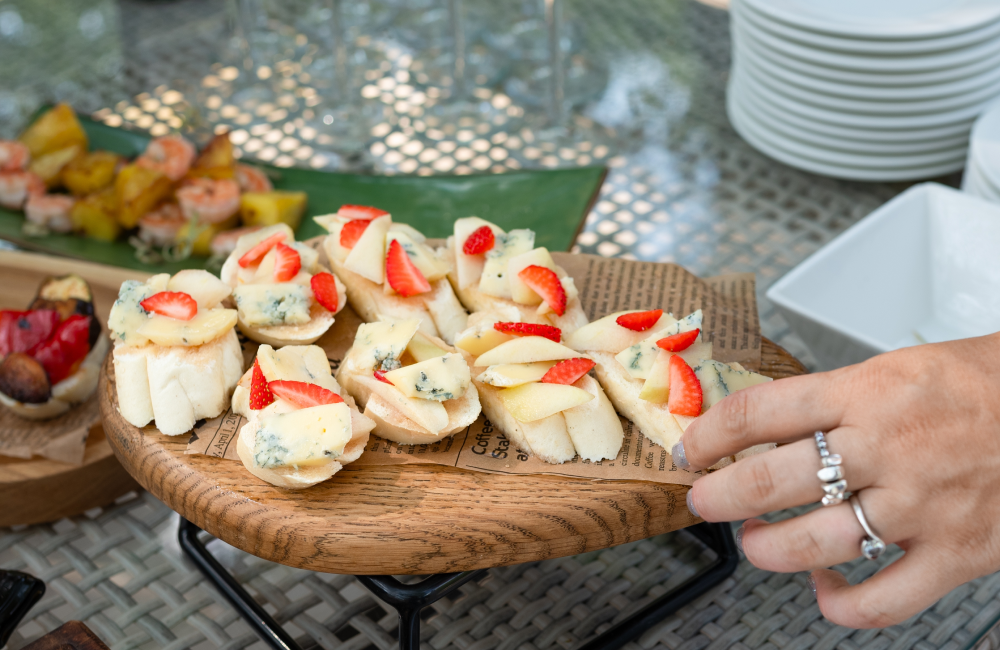
When dinner is coming, the goal is to keep guests satisfied and social without filling them up. 3–5 pieces per person is the standard, and you should time when you bring them out — ideally 30–45 minutes before dinner is served, not two hours before.
Plan: 3–5 pieces per person total.
Best appetizers for crowds
Not all appetizers work equally well for large groups. The best ones are things you can make in big batches, hold at temperature, and replenish easily. My go-to crowd appetizers: sliders (see my How Many Sliders Per Person guide), meatballs in a slow cooker, any kind of dip with chips or crackers, and caprese skewers that can be made entirely ahead.
For the full breakdown with exact pieces by crowd size, head to my How Many Appetizers Per Person guide.
Main dishes: exact amounts by type
Main dish planning is where the per-person breakdown gets refined. Different proteins cook differently, shrink differently, and satisfy differently. Here's the breakdown for the most popular party mains.
Pulled pork
Pulled pork is one of the best proteins for feeding a crowd — it's inexpensive, can be made entirely ahead, stays warm in a slow cooker for hours, and everyone loves it.
Cooked weight: ⅓–½ lb per person (use ½ lb if it's the only protein; ⅓ lb if serving alongside other options)
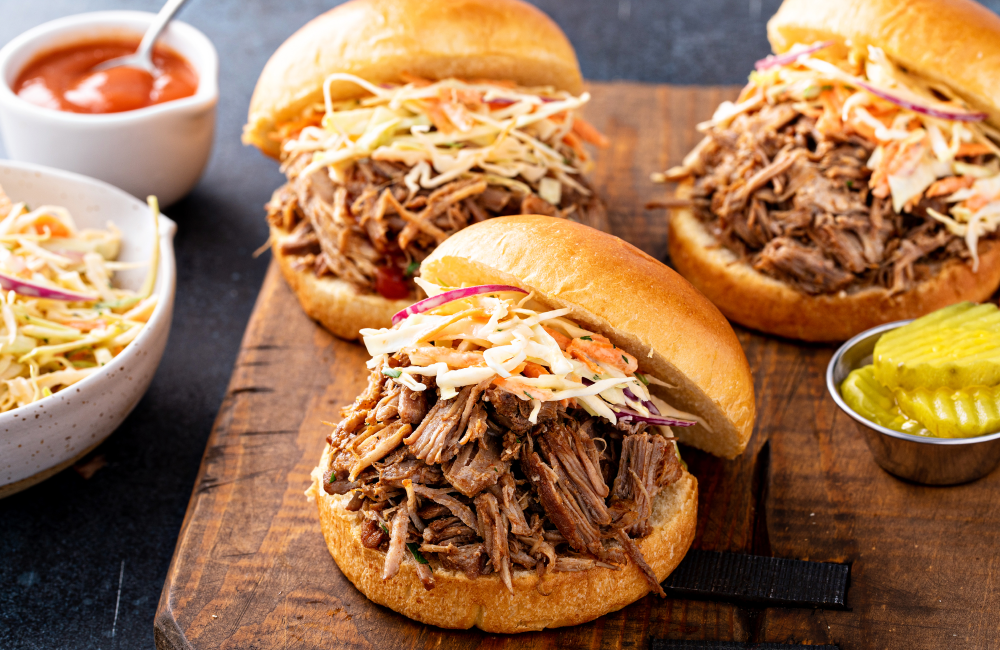
Raw weight: Pork shoulder loses about 35% of its weight when cooked (USDA data), so you need to buy roughly 1.5× your target cooked weight. If you're going bone-in — which I recommend for the best texture — add another 10–15% to cover the bone weight you can't serve.
- Feeding 25 people: need ~10 lbs cooked → buy 15 lbs boneless or 17 lbs bone-in
- Feeding 50 people: need ~20 lbs cooked → buy 30 lbs boneless or 35 lbs bone-in
- Feeding 100 people: need ~40 lbs cooked → buy 60 lbs boneless or 70 lbs bone-in
For the full USDA-verified shrinkage data on every protein, see the Raw to Cooked Weight Calculator.
For the full guide with a calculator, see How Much Meat Per Person.
Grilled chicken
Chicken thighs are the crowd cook's best friend — more flavorful than breasts, more forgiving on the grill, and they stay juicy even when held warm.
Cooked weight: 4–6 oz per person (use lower end for plated, higher for buffet)
Raw weight: Boneless chicken loses about 28–31% when cooked (USDA data), so buy about 1.4× your target cooked weight.
- Feeding 25 people: need 7.5–10 lbs cooked → buy 11–14 lbs raw
- Feeding 50 people: need 15–20 lbs cooked → buy 21–28 lbs raw
BBQ ribs
Ribs are a crowd showstopper but require more planning because so much of the weight is bone.
Plan: 4–6 ribs per person as a main (about ½ rack)
A full rack has 12–13 ribs and weighs 2.5–3 lbs. At 4–5 ribs per person, one rack serves 2–3 adults.
- 25 people → 8–10 racks
- 50 people → 16–20 racks
Burger/hot dog bar
When serving both burgers and hot dogs, most mixed crowds average about 1.5–2 total items per person. For an average suburban mixed-age party, plan 1 burger + 1 hot dog per person. For teen-heavy crowds, game day, or longer BBQs, bump to 1.5 burgers + 1 hot dog.
Average mixed crowd, 50 people → 50 burger patties, 50 hot dogs, 100 total buns Game day / teen crowd, 50 people → 75 burger patties, 50 hot dogs, 125 total buns
Whole turkey or ham (holiday meals)
- Turkey: 1–1.5 lbs of whole turkey per person (accounts for bone weight)
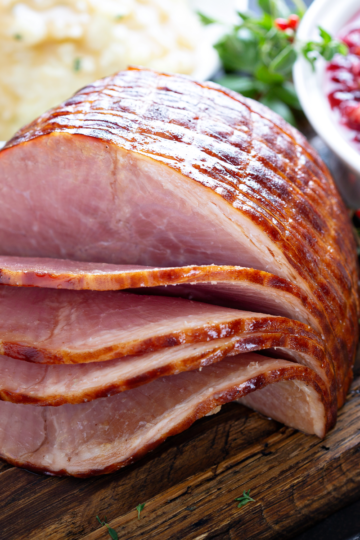
- Boneless ham: 4–6 oz per person as part of a holiday spread
Pasta as a main
- 2 oz dry pasta per person as a side dish
- 4 oz dry pasta per person as the main
- ¾ cup sauce per person
For exact amounts and a full pasta bar breakdown, see the Pasta Bar Portions Per Person guide.
Taco bar
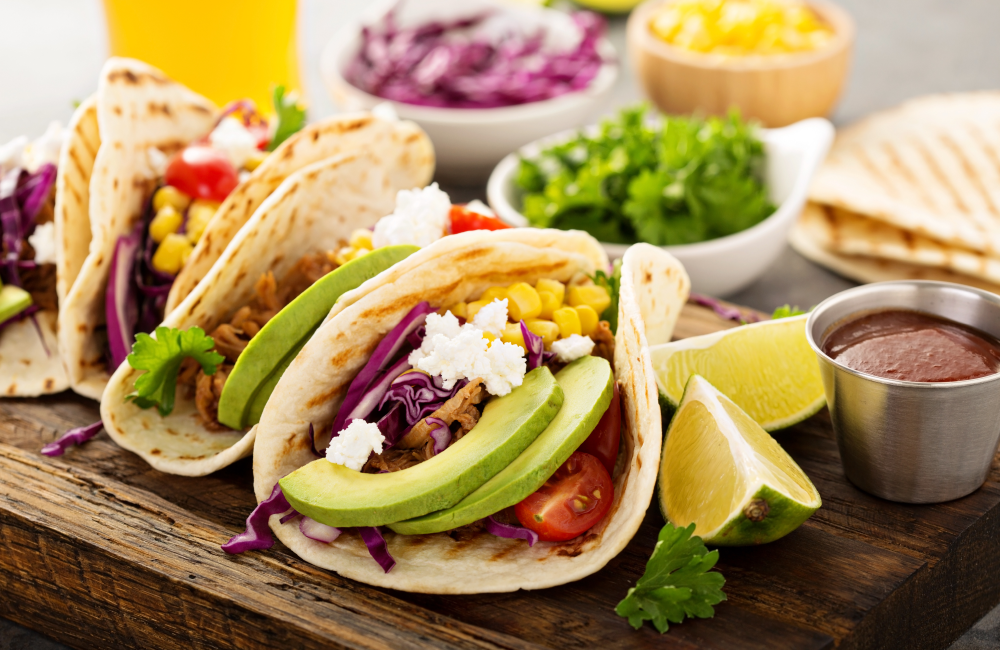
One of the best formats for feeding a crowd efficiently. For a self-serve taco bar:
- 2.5–3 tacos per person
- 4 oz cooked taco meat per person
- Offer both flour and corn tortillas
See the complete Taco Bar Portions Per Person guide for full ingredient lists scaled to any crowd.
Side dishes: how many and how much
Side dishes are the secret weapon of party food planning. A generous, varied side spread makes your main dish go further, gives guests options, and often becomes the thing people talk about most.
The general rule: 3–5 oz per person per side dish, depending on how heavily the sides are featured in your menu. The combined-sides amounts in the master chart above (4–5 oz plated, 6 oz buffet) assume guests sample across all sides — use the chart for total quantities, and use the per-dish breakdown below for shopping individual items.
More options = less of each dish:
- 1–2 sides (featured heavily): 4–5 oz of each per person
- 3–4 sides (standard): 3–4 oz of each per person
- 5+ sides (grazing/variety): 2–3 oz of each per person
The most reliable party sides
Pasta salad is the ultimate party side — it can be made 1–2 days ahead (and honestly tastes better that way), it holds at room temperature for hours, and everyone eats it.
Plan: 5 oz per person (about ½ cup). For 50 people: roughly 15 lbs.
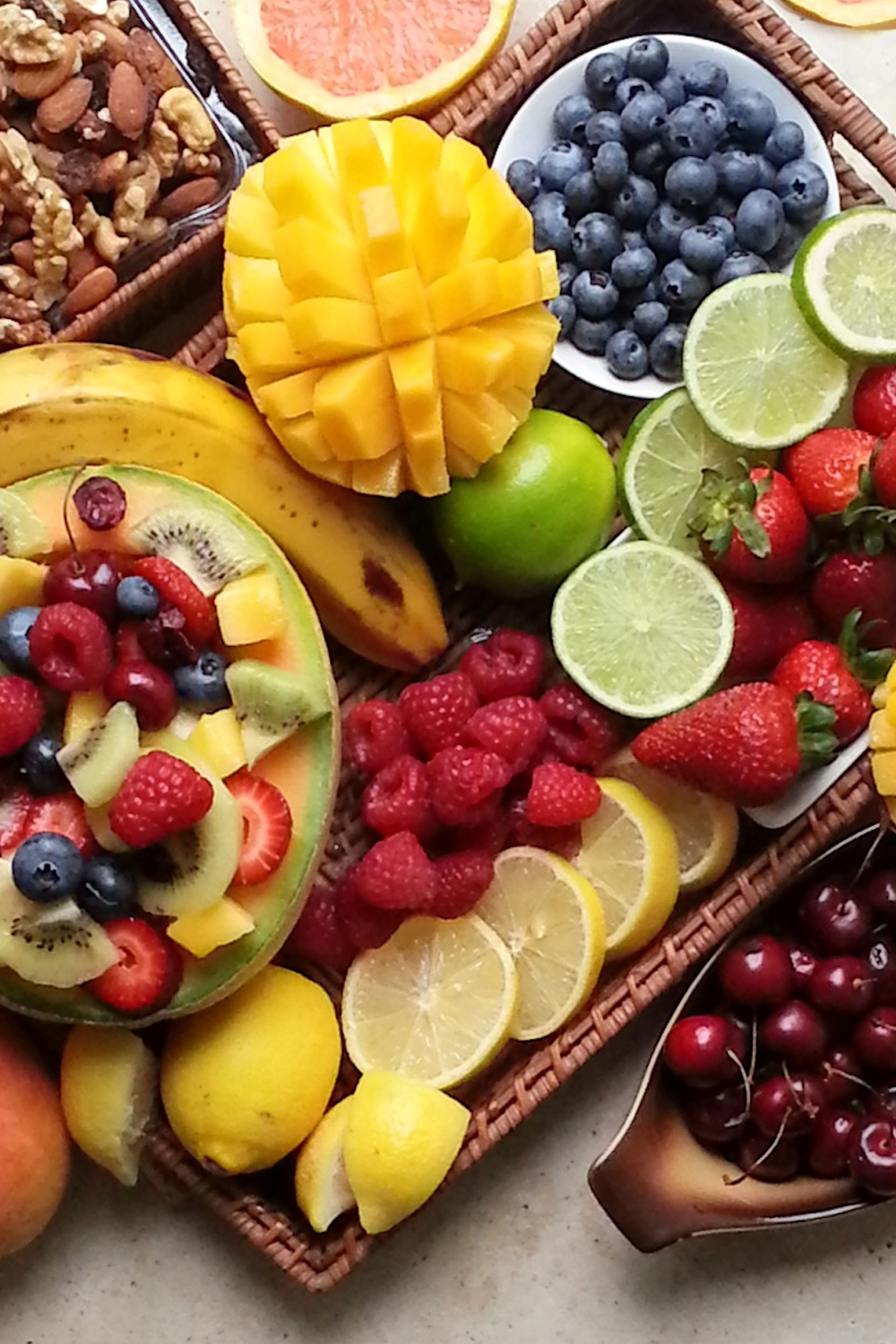
Fruit tray is your palate cleanser and the thing health-conscious guests gravitate toward. It's also eye-catching on a buffet table and requires zero cooking.
Plan: ¼–⅓ lb per person — lower end for mixed buffets with many options, higher end for showers, brunches, or fruit-featured spreads. For 50 people: roughly 12–17 lbs of cut fruit.
See How Much Fruit Per Person for exact breakdown by fruit type and crowd size.
Green salad is another essential — fresh, light, balances the heavier items.
Plan: 1–1.5 oz of greens per person (it's light). For 50 people: 3–4 large heads of romaine or 2–3 bags of mixed greens.
See How Much Salad Per Person for a full breakdown.
Potato salad or coleslaw: Both are classic crowd sides that hold well and travel easily.
Plan: 5–6 oz per person (½ cup). For 50 people: 15–18 lbs.
Corn on the cob: Plan 1–2 ears per person for a BBQ.
Baked beans, mac and cheese, or casseroles: 5–6 oz per person (about ¾ cup). For 50 people: 15–18 lbs.
Side dish chart by crowd size (3–4 oz per dish, standard featuring)
| Guests | Per side dish | 2 sides combined | 3 sides combined |
|---|---|---|---|
| 10 | ~2–2.5 lbs | ~4–5 lbs total | ~6–7.5 lbs total |
| 25 | ~5–6 lbs | ~10–12 lbs total | ~14–18 lbs total |
| 50 | ~10–12 lbs | ~20–24 lbs total | ~28–36 lbs total |
| 75 | ~14–18 lbs | ~28–36 lbs total | ~42–54 lbs total |
| 100 | ~19–24 lbs | ~38–48 lbs total | ~56–72 lbs total |
Bump to the high end of each range if sides are featured (BBQ, holiday) and lower if you're offering 5+ options where guests sample lightly.
Desserts: the full planning guide
Dessert is non-negotiable at a party. Even guests who claim they don't eat sweets will find room for something.
The baseline: 1–2 dessert servings per person when serving a single dessert option. 2–3 mini servings per person for a full dessert table. Most guests eat one full dessert, while some sample two smaller items — so a "100 dessert servings" plan for 100 guests doesn't mean 100 full slices of cake, it means enough across all options for each guest to eat 1–2 small pieces.
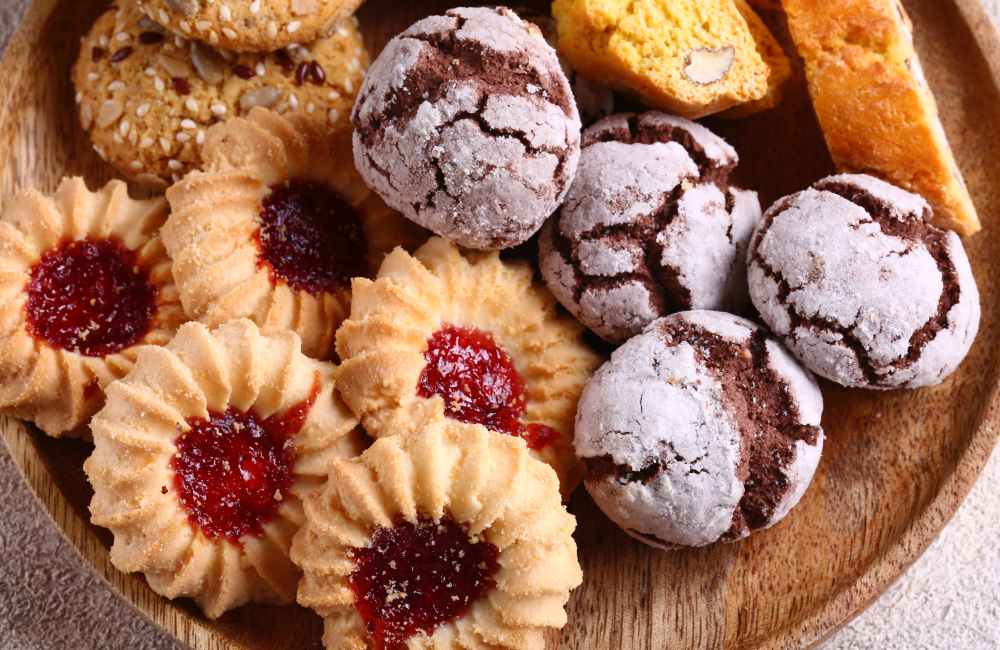
Cookies
The most crowd-friendly dessert there is — easy to make ahead, no serving required, travel well, and please almost everyone.
Plan: 3–4 cookies per person as the main dessert, 2–3 if serving alongside other desserts.
For my full cookie planning guide with exact counts by crowd size, see How Many Cookies Per Person.
Brownies and dessert bars
Sheet pan desserts are the practical hero of party baking. One 9×13 pan yields:
- Large brownies (12 cuts): 12 servings
- Medium brownies (16 cuts): 16 servings
- Party-size brownies (24 cuts): 24 servings
Plan: 1–2 brownies per person. For 50 people: 3–4 pans of 9×13.
Full guide: How Many Brownies Per Person.
Cupcakes
Plan: 1–2 cupcakes per person. For 50 people: 50–100 cupcakes (4–8 dozen).
Full guide: How Many Cupcakes Per Person.
Sheet cake
One full sheet cake (18×24 inches) feeds approximately 70–80 people with standard party-size slices (2×3 inches), or up to 96 people with smaller 2×2 inch slices. A half sheet cake (12×18 inches) serves 36–48 people. A quarter sheet (9×13 inches) serves 20–24 people.
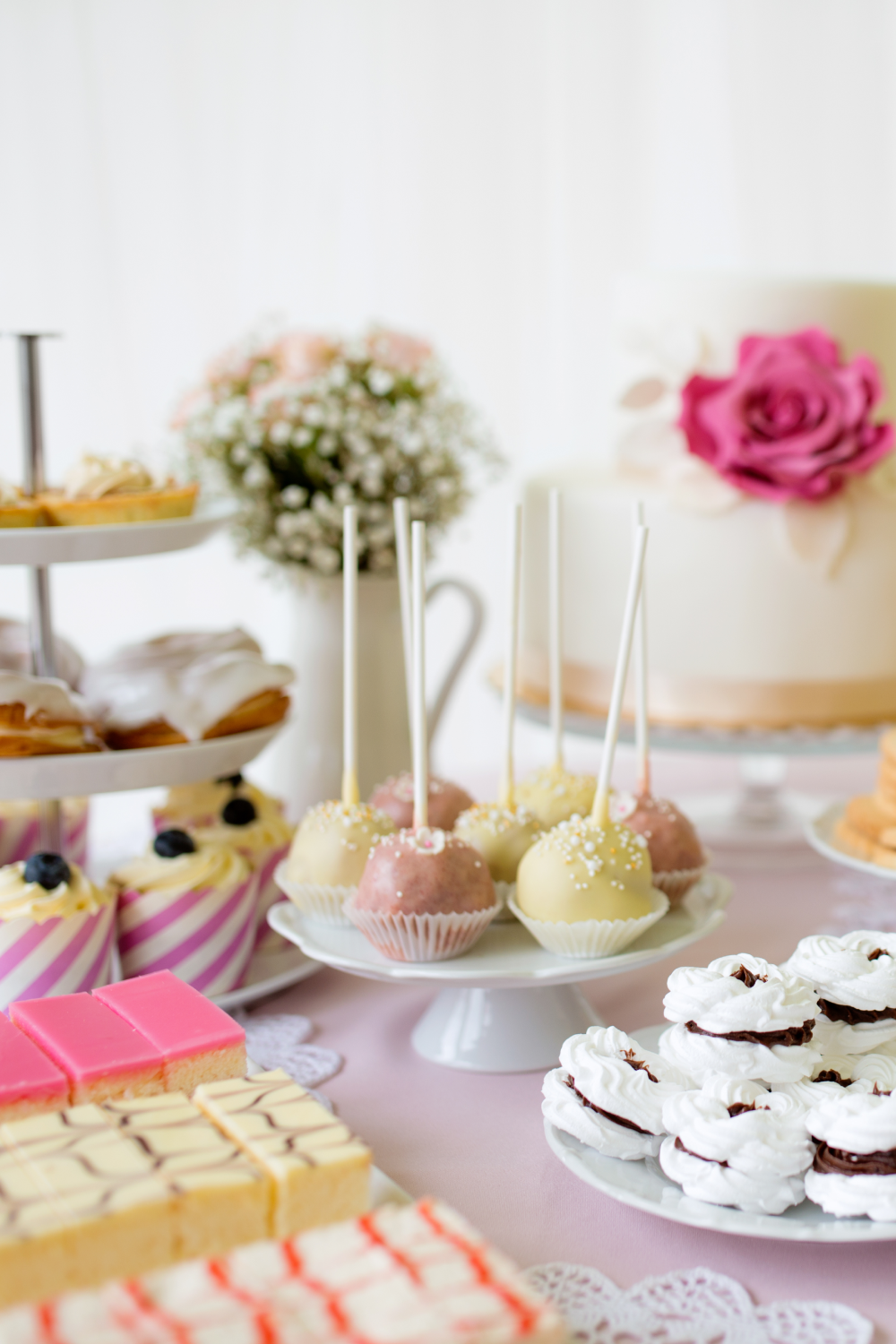
Dessert tables
For events where dessert is a feature (weddings, bridal showers, graduation parties), a dessert table typically includes 4–6 different items and guests sample 2–3 of each.
Plan: 2–3 pieces per guest across all items combined.
Example for 50 guests on a dessert table:
- Cookies: 100–120 (mix of 2–3 flavors)
- Brownie bites: 75–100
- Cupcakes: 50–75
- Cake pops or truffles: 50–75
- One sheet cake: sliced into 50 pieces
Full guide: Wedding Dessert Table Portions Per Guest.
Sugar cookies
For decorated sugar cookies at holidays or themed events:
Plan: 2–3 per person. See How Many Sugar Cookies Per Person.
Hot chocolate bar (winter events)
Plan: 1.5 cups per person. See my Hot Chocolate Calculator for full amounts by crowd size.
Drinks: never run out again
Running out of drinks is one of the most disruptive things that can happen at a party. Unlike food, where you can stretch portions by slicing things smaller, you can't conjure drinks out of thin air. Over-buy here — it's always cheaper than making a mid-party store run.
The standard drink formula
Plan 2–3 drinks per person for the first hour, then 1 drink per hour after that.
For a 3-hour party: 4–5 drinks per person total. For a 4-hour party: 5–6 drinks per person total.
| Guests | 2-hour party | 3-hour party | 4-hour party |
|---|---|---|---|
| 10 | 30–40 drinks | 40–50 drinks | 50–60 drinks |
| 25 | 75–100 drinks | 100–125 drinks | 125–150 drinks |
| 50 | 150–200 drinks | 200–250 drinks | 250–300 drinks |
| 75 | 225–300 drinks | 300–375 drinks | 375–450 drinks |
| 100 | 300–400 drinks | 400–500 drinks | 500–600 drinks |
Non-alcoholic drink breakdown
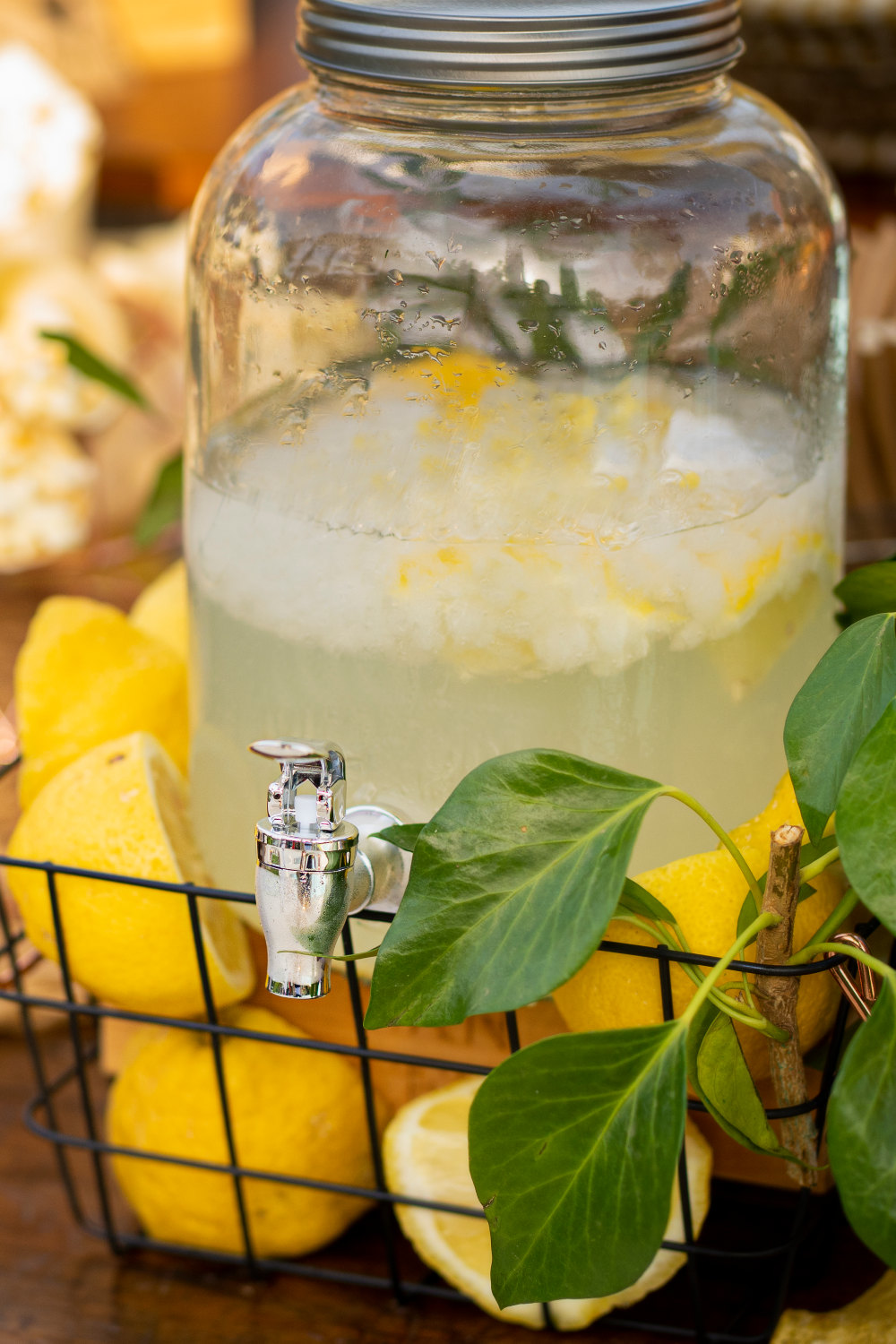
For a non-alcoholic spread, I recommend three options: water, lemonade or iced tea, and one other (juice, punch, or soda). Split approximately:
- Water: 40% of total drinks
- Lemonade/iced tea: 35% of total drinks
- Other: 25% of total drinks
Ice
Don't forget ice — it's the most commonly forgotten party supply. Plan 1 lb per person for drinks only, or 1.5–2 lbs if you're also using ice to keep food and beverages cold.
Drinks for specific events
For detailed drink planning, see my How Many Drinks Per Person guide.
Party food by event type
Every party format has its own logic. Here's how to think about the most common ones.
Birthday party
Birthday parties run the full spectrum from "cake and ice cream for 15 kids" to "full backyard dinner for 60 adults." The food planning changes dramatically based on the time of day and whether it's kids or adults.
Kids birthday (ages 3–10): Kids eat about half what adults do, they're distracted by games and excitement, and they'll eat mostly cake. Plan for: pizza or hot dogs as the main (1–2 per child), a small veggie or fruit tray, the birthday cake. Keep it simple.
Adult birthday dinner: Full meal portions. One main, 2–3 sides, cake as dessert.
Adult cocktail birthday: 8–12 appetizer pieces per person, a beautiful dessert table, skip the full meal.
For the full guide: How Much Food for a Birthday Party.
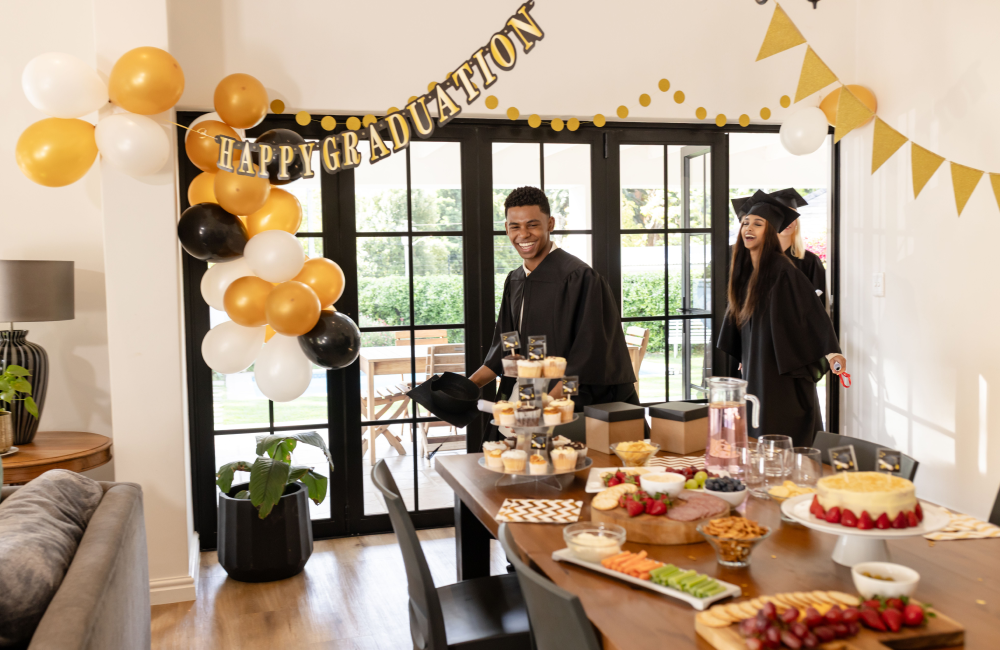
Graduation party
Graduation open houses are uniquely tricky because they're drop-in format — guests come and go over 3–5 hours. Plan for 75–85% of your guest list at peak (lower end for longer drop-ins, higher for shorter windows), and make sure everything can be replenished easily.
Best graduation party formats: slider bar, taco bar, BBQ spread, or appetizer-heavy grazing table. All four work well with a drop-in format because nothing needs to be served hot from the oven at a specific time.
Full guide: Graduation Party Food Guide.
Baby shower or bridal shower
These are typically afternoon events (the 2–5pm slot), which means lighter food is appropriate. Guests will have had lunch and dinner isn't for hours.
Standard shower format: 3–4 appetizer options, finger sandwiches, a fruit and vegetable tray, and a beautiful dessert table. No heavy main dish needed.
Plan: 4–6 appetizer pieces per person, ⅓ lb fruit per person, 2–3 dessert pieces per person. For exact amounts scaled to your guest count, use the bridal shower food calculator — and see Example 4 below for a fully worked menu.
BBQ or backyard cookout
The most forgiving party format. People expect casual, plentiful food, and the grill-everything approach means you can adjust quantities on the fly.
Standard BBQ plan per person:
- 1–2 burger patties or 6 oz of main protein (per the buffet chart)
- 1 hot dog per person on average, or 1–2 each for teen-heavy / game-day crowds
- 5 oz pasta or potato salad
- 4 oz coleslaw
- 1–2 ears corn
- 1–2 cookies or brownies for dessert
Holiday dinner (Thanksgiving, Christmas)
Holiday dinners are sit-down, everything arrives at once, and people expect to eat significantly more than at a casual party. This is where you bump protein and sides by 25% over the standard buffet amounts.
Thanksgiving-specific: 1–1.5 lbs whole turkey per person, 5–6 oz each side dish (you'll have 4–6 sides minimum), 1 slice of each pie per person (yes, both pies).
Office party or work event
People eat significantly less at work events — social dynamics, professional setting, not wanting to look greedy in front of colleagues. Scale back by 20–25% from your standard estimate.
Cocktail party / networking event
The appetizer-only format. Full planning in the appetizers section above. Key rule: never let a tray look more than half empty. Keep extras in the kitchen and replenish constantly.
Wedding reception
Wedding food planning is its own art form. The key variables are dinner style (plated vs. buffet vs. stations) and whether cocktail hour overlaps with any of the meal service.
For a buffet reception: use the buffet chart in the master serving section above — roughly 1 lb of food per adult guest plus dessert. Wedding receptions often run heavier, so add 15–20% on top to account for longer events and second helpings.
For wedding dessert tables: Wedding Dessert Table Portions Guide.
Full menu examples for real parties
Sometimes the best way to understand portion planning is to see a complete menu worked out from start to finish. Here are four real party scenarios with exact quantities.
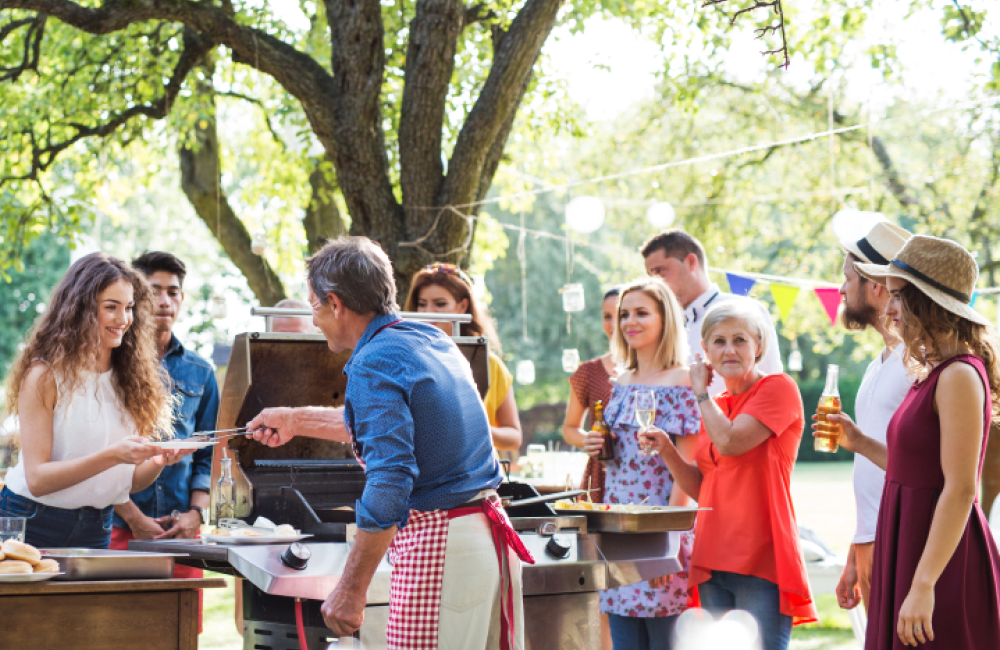
Example 1: Backyard BBQ for 40 people
Menu: Pulled pork sliders, pasta salad, coleslaw, fruit tray, chips & dip, brownies
| Item | Per person | Total for 40 |
|---|---|---|
| Pulled pork (cooked) | 0.4 lb | 16 lbs cooked → buy ~24 lbs raw boneless (or 28 lbs bone-in) |
| Slider buns | 2.5 | 100 buns |
| Pasta salad | 5 oz | 12.5 lbs |
| Coleslaw | 4 oz | 10 lbs |
| Fruit tray | 5 oz | 12.5 lbs |
| Chips | 1.5 oz | 4 lbs |
| Dips | 2 oz | 5 lbs |
| Brownies | 2 pieces | 80 brownies (4 pans) |
| Drinks | 4 drinks | 160 total drinks |
Grocery budget estimate: $280–$380
Example 2: Graduation open house for 75 guests (drop-in format)
Planning for 75 invited = approximately 58 people eating at peak.
Menu: Taco bar, fruit tray, chips & guac, sugar cookies, sheet cake, lemonade
| Item | Per person (58) | Total |
|---|---|---|
| Taco meat (cooked) | 4 oz | ~15 lbs cooked → buy ~21 lbs raw (80/20 ground beef) |
| Tortillas | 3 | 174 (buy 200) |
| Toppings bar | — | Shredded cheese (5 lbs), lettuce, pico, sour cream, guac |
| Fruit tray | 5 oz | ~18 lbs cut fruit |
| Chips | 1.5 oz | ~5.5 lbs |
| Guacamole | 2 oz | ~7 lbs |
| Cookies | 3 per person | 174 cookies (about 15 dozen) |
| Sheet cake | 1 slice | Sheet cake | 1 slice | 1 full sheet cake (serves 60–70) |
| Lemonade | 4 drinks | ~232 servings |
Grocery budget estimate: $350–$500
Example 3: Cocktail party for 30 people (2.5 hours)
Menu: Charcuterie grazing table, mini sliders, caprese skewers, spinach dip with bread, brownie bites
| Item | Per person | Total |
|---|---|---|
| Charcuterie meats | 2 oz | 3.75 lbs |
| Cheese assortment | 2 oz | 3.75 lbs |
| Crackers/bread | 8–10 pieces | 240–300 pieces |
| Sliders | 2.5 | 75 sliders |
| Caprese skewers | 3 | 90 skewers |
| Spinach dip | 2 oz + bread | 4 lbs dip, 2 baguettes |
| Brownie bites | 2 | 60 bites (3 pans, small cuts) |
| Drinks | 5 drinks | 150 total |
For the full charcuterie board guide: Charcuterie Board Portions Per Person.
Example 4: Bridal shower for 20 women (afternoon)
Menu: Finger sandwiches, fruit tray, veggie platter, dessert table (cookies, cupcakes, dessert bars)
| Item | Per person | Total |
|---|---|---|
| Finger sandwiches | 3 | 60 sandwiches |
| Fruit tray | 5 oz | 6 lbs cut fruit |
| Veggie platter | 3 oz | 4 lbs veggies + 2 lbs dip |
| Cookies | 3 | 60 cookies (5 dozen) |
| Cupcakes | 1.5 | 30 cupcakes (2.5 dozen) |
| Dessert bars | 1.5 | 30 pieces |
| Drinks | 4 | 80 servings |
The shopping list system
One of the most useful things I learned from my event planning days: don't go to the grocery store with a recipe list. Go with a categorized shopping list organized the way the store is laid out.
Here's the system I use for every party I host:
Step 1: Calculate your totals first. Before you write a single item on your list, sit down with your menu and your guest count and calculate every quantity. Use the charts in this guide. Write down the numbers.
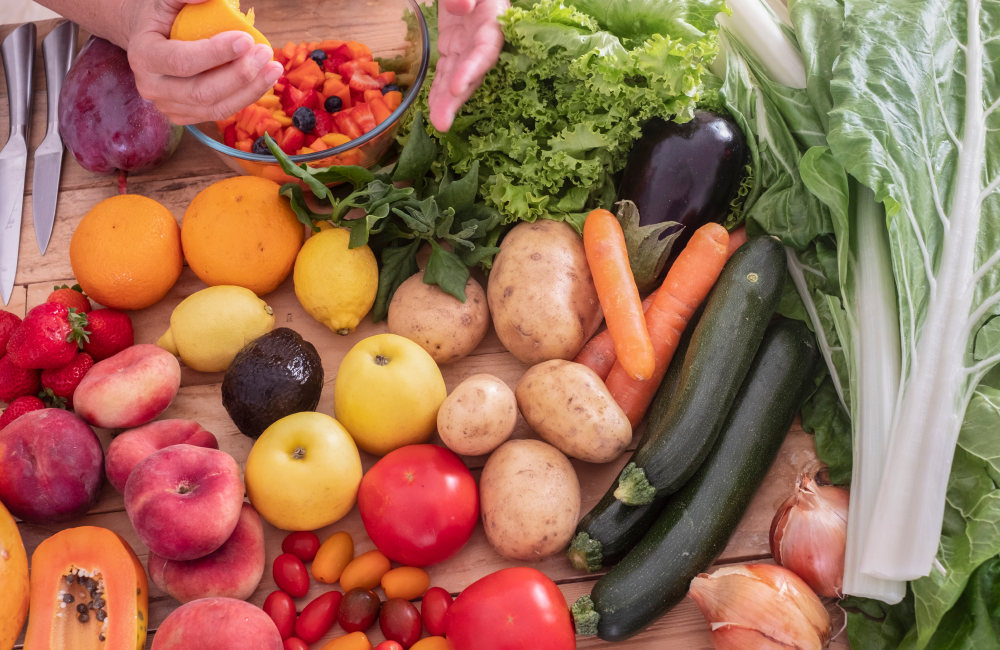
Step 2: Build your list by store department. Organize your list into: Produce, Meat & Seafood, Dairy & Deli, Bread & Bakery, Pantry/Dry Goods, Frozen, Drinks & Ice.
Step 3: Add 10% to everything perishable. Not 50%, not double — just 10%. This covers the people who show up unexpectedly, the teenager who eats four servings, and the fact that things always disappear faster than you expect. 10% is the buffer that saves you without wasting.
Step 4: Shop in this order: Costco or Sam's Club first for bulk items (drinks, chips, paper goods, fruit), then your regular grocery store for fresh items and specialty things.
When to shop Costco: For any party over 20 people, Costco almost always saves money on drinks, chips, fruit trays, deli platters, and paper goods. It's worth the trip.
Make-ahead strategy
The single biggest thing that separates a stressed host from a relaxed one is make-ahead planning. Almost everything can be made ahead — the question is just how far ahead.
What to do 1 week before
- Order any specialty items (specialty cakes, custom platters)
- Buy all non-perishable supplies: chips, canned goods, paper goods, decorations
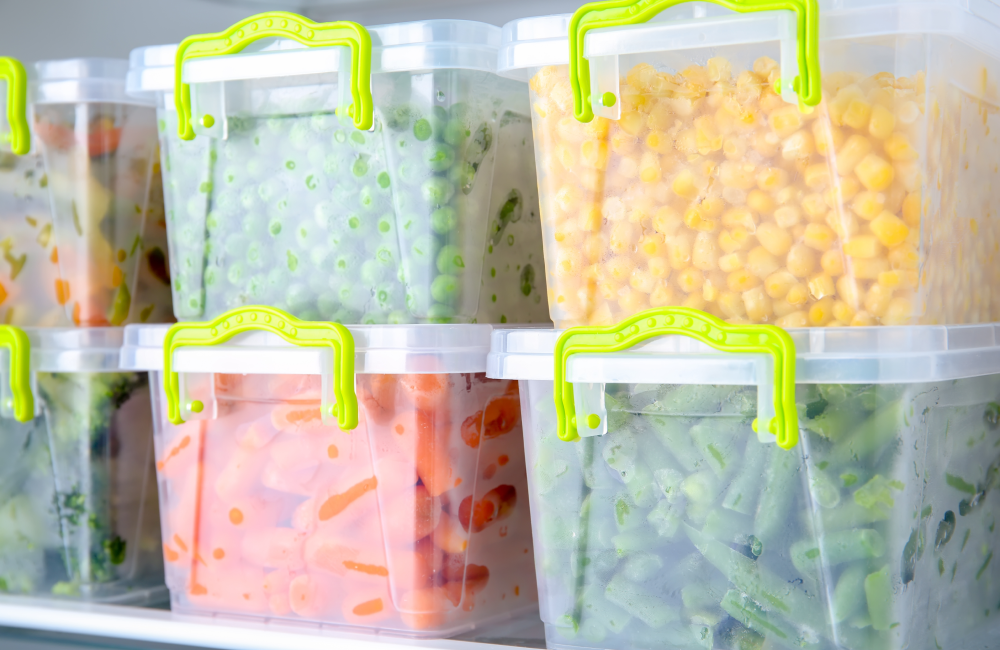
- Make and freeze cookies, brownies, or any dessert bars that freeze well
3 days before
- Make any dry rubs or marinades for meat
- Bake unfrosted cake layers — wrap well and freeze or refrigerate
- Make any dips that improve with time (spinach dip, hummus)
- Pick up drinks and chill
2 days before
- Make pasta salad, potato salad, coleslaw (all are better the next day)
- Frost and decorate cakes
- Prep and chop vegetable trays — store in airtight containers with paper towels
- Slow-cook pulled pork if making it — it reheats beautifully
1 day before
- Make any remaining dips and sauces
- Cut and prep fruit trays (for most fruits — avoid apples and bananas until day-of)
- Set up serving table and label platters and bowls
- Confirm all supplies: serving spoons, chafing dishes, slow cookers, napkins
Day of
- Bring meat to temperature in slow cookers 2 hours before guests arrive
- Set out room temperature items 30–60 minutes before
- Keep half your food in the kitchen and replenish as trays empty
- Breathe. You've got this.
Common mistakes and how to avoid them
After years of hosting parties and helping friends plan theirs, I've seen the same mistakes come up over and over. Here's how to sidestep all of them.
Putting all the food out at once. The biggest rookie mistake. Your food looks most impressive when trays are full. Put out half at the start and keep the rest in the kitchen to replenish. Guests will think you're endlessly producing fresh food, which feels generous even when you're not cooking anything new.
Forgetting serving equipment. You've bought and made all this food — and then you don't have enough serving spoons, tongs, or labels. For every food item, you need at least one dedicated serving utensil. For 10 food items, that's 10 serving spoons and tongs. It adds up. Make a list the week before and count what you have.
Not labeling food. This matters more than people think. Guests eat more when they know what they're looking at. Label every item on your buffet — name of the dish plus any key allergens. A little tent card from the dollar section at Target does the job.
Underestimating how much teenagers eat. I'll say this again because it's that important. If your guest list includes teenage boys, add 35–40% to your total food estimate. They will clear your tray before most adults have filled their first plate.
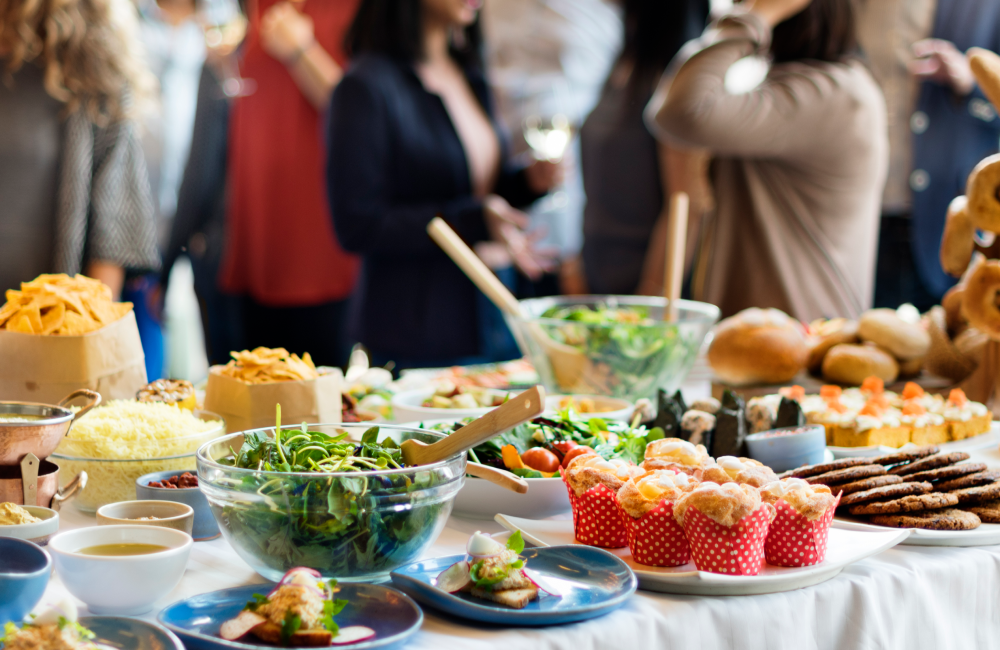
Serving too many options. Eight different appetizers sounds generous but actually results in smaller amounts of each, visual overwhelm on the table, and stressed cooking for you. Four to five really good options beats eight mediocre ones every time.
Forgetting dietary restrictions until day-of. Shoot a quick text to guests when you finalize your menu: "Anything you can't eat?" Do this at least a week before. Most common restrictions to plan for: gluten free, dairy free, vegetarian. It's easy to have a few GF crackers and a labeled vegetarian option without overhauling your entire menu.
Running out of ice and drinks before food. People drink throughout the whole party. Food consumption peaks in the first 90 minutes. Always buy more drinks and ice than you think you need — running out of drinks is far more disruptive than running out of chips.
Trying to do everything the day of. You will be exhausted, you will rush, and the food will suffer. Everything that can be made ahead, should be made ahead. The day of a party should be: warm things up, set things out, and enjoy your own party.
Every party portion guide on Summer & Cinnamon
Every portion guide and serving chart on Summer & Cinnamon, organized by food type and event. Each one includes a calculator scaled to your guest count.
By food type
Proteins & mains
- Raw to Cooked Weight Calculator — exact USDA shrinkage for every protein
- How Much Meat Per Person — BBQ, Pulled Pork & Chicken
- How Much Turkey Per Person
- How Many Sliders Per Person
- Taco Bar Portions Per Person
- Pasta Bar Portions Per Person
Sides & salads
- How Much Salad Per Person
- How Much Fruit Per Person
- How Much Pasta Salad Per Person
- Mac and Cheese for a Crowd
- Baked Potato Bar for a Crowd
- How Many Cups of Soup Per Person
Appetizers & grazing
- How Many Appetizers Per Person
- Charcuterie Board Portions Per Person
- Popcorn Bar Calculator
- Buffet Portions Per Person
- How to Build a Beautiful Charcuterie Board
Desserts
- How Many Cookies Per Person
- How Many Cupcakes Per Person
- How Many Brownies Per Person
- How Many Dessert Bars Per Person
- How Many Sugar Cookies Per Person
- Wedding Dessert Table Portions Per Guest
Drinks
By event type
- How Much Food for Thanksgiving Dinner
- Graduation Party Food Guide
- Costco Graduation Party Food List
- How Much Food for a Birthday Party
- How Much Food for a Bridal Shower
- How Much Food for 25–100 Guests
- How Much Pizza Per Person
Planning tools
FAQ
How far in advance should I start planning party food?
Start your menu and headcount one week out, shop two days before, and prep what you can the day before. Anything that holds well (pasta salad, coleslaw, dips, marinated meats, baked goods) should be made 1–2 days ahead so the day-of is just warming, plating, and breathing. See the make-ahead strategy section above for the full timeline.
How much food for 50 people?
For a sit-down meal: 15 lbs cooked protein + 15 lbs sides + 50–100 dinner rolls + 50–100 dessert servings. For a buffet: 20 lbs protein + 20 lbs sides + 60–90 rolls + 50–100 dessert servings. For a 3-hour cocktail party: 450–700 appetizer pieces. For a drop-in open house: plan for about 40 people eating at once and use the sit-down or buffet chart for that adjusted count.
How much food for 25 people?
For a sit-down meal: 7.5 lbs protein + 7.5 lbs sides + 25–50 rolls + 25–50 dessert servings. For a buffet: 10 lbs protein + 10 lbs sides + 30–45 rolls. For a 3-hour cocktail party: 225–350 appetizer pieces. For an open house: plan for about 18–20 people eating at peak.
How much food for 100 people?
For a sit-down meal: 30 lbs protein + 30 lbs sides + 100–200 rolls + 100–200 dessert servings. For a buffet: 40 lbs protein + 40 lbs sides + 125–175 rolls. For a 3-hour cocktail party: 900–1,400 appetizer pieces. For an open house: plan for 75–80 people eating at peak.
Is it better to have too much or too little food at a party?
Always slightly too much. Running out of food creates an awkward, uncomfortable atmosphere that guests remember. Having extra means guests can go back for seconds (which they love), you have leftovers for the week, and you feel good as a host. Aim for 10% extra — not double, just 10%.
How do I keep buffet food warm for a long party?
Slow cookers are your best friend for keeping proteins warm — set them on "warm" and they'll hold temperature for hours. Chafing dishes with sterno work for anything in a pan. Cold items should stay on ice or be refrigerated and brought out in smaller amounts throughout the party.
How much food do I need for a 4-hour party?
Add about 20% to whichever chart you're using. For a 4-hour buffet for 50 people, plan for roughly 24 lbs protein and 24 lbs sides (instead of the standard 20 lbs each).
What is the easiest food to serve at a large party?
The easiest crowd foods are anything that can be made completely ahead and held warm without deteriorating: pulled pork in a slow cooker, pasta salad, fruit trays, chips and dips, and cookie trays. A taco bar is also extremely easy because guests build their own, which removes all the plating work from you.
Final thoughts
Party food planning doesn't have to be a source of anxiety. It's really just math — and once you have the right numbers to start with, the math is simple.
Start with the right chart — sit-down or buffet — for your service style. Adjust for your time of day, your crowd, and how many options you're offering. Make as much ahead as humanly possible. Put out half your food at the start and replenish from the kitchen. Add 10% to everything perishable.
And most importantly: remember that your guests aren't coming for a perfectly calibrated buffet. They're coming to celebrate with you. The food is the backdrop to the moment — and a generous, well-planned spread sets exactly the right tone for whatever you're celebrating.
Now go host something great.
Did this guide help you plan your party? I'd love to hear about it — leave a comment below or tag me on Instagram. And if you're looking for recipes to fill your party menu, explore the Summer & Cinnamon recipe collection for crowd-tested favorites that scale beautifully for any crowd size.
Related
Looking for other recipes like this? Try these:
Pin to Pinterest