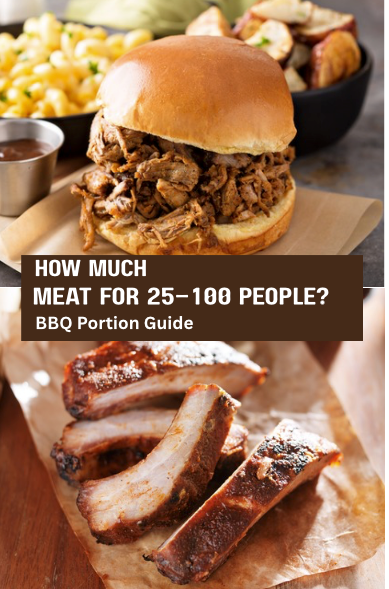
Exact raw pounds to buy for any crowd — every meat type, shrinkage included, no guessing.
The most expensive mistake when feeding a crowd isn't buying too much — it's buying by raw weight and forgetting that meat shrinks. Every cut has two numbers: how much cooked meat lands on the plate, and how much raw you actually buy, which is always higher. Here's exactly what to buy for every meat.
Jump to:
- Quick Answer: How Much Meat Per Person
- Jump to the Calculator
- Tell me about your crowd
- What meat are you serving?
- Tell me about the meal
- The Number Nobody Talks About: Shrinkage
- The Full Chart: Raw Pounds to Buy by Guest Count
- By Meat Type: What You Need to Know
- How Your Sides Change Everything
- Serving Multiple Proteins
- The Safety Buffer Question
- Common Mistakes
- FAQ
- Plan the Rest of Your Menu
- Final Thoughts
- Related
- Pin to Pinterest
Quick Answer: How Much Meat Per Person
The baseline rule: ½ pound of cooked meat per person for a meal with sides.
But what you actually buy at the store is always more than that — because of shrinkage.
| Meat Type | Cooked Per Person | Raw to Buy Per Person | Shrinkage |
|---|---|---|---|
| Brisket | ½ lb | ¾–1 lb | 40% loss |
| Pulled pork | ⅓–½ lb | ½–¾ lb | 35% loss |
| Ribs (bone-in) | ¾ lb | 1–1¼ lbs | 30% loss |
| Chicken (bone-in) | ¾ lb | 1 lb | 30% loss |
| Chicken (boneless) | ½ lb | ¾ lb | 28% loss |
| Sausage / hot links | ⅓ lb | ½ lb | 15% loss |
| Ground beef | ⅓–½ lb | ¾ lb | 27% loss |
| Steak | ⅓–½ lb | ½–⅔ lb | 18% loss |
| Turkey (whole) | ½ lb | 1–1¼ lbs | ~50% loss* |
| Salmon / fish | ⅓ lb | ½ lb | 20% loss |
Based on average appetites with 2–3 sides. Adjust up for big eaters or meat-focused menus. Per-person amounts are buffer-free — the low end matches the chart's exact math; round toward the high end for a cushion.
*Whole-turkey loss isn't just cooking shrinkage — it includes the carcass, bones, and what you lose carving. A 15-lb bird gives you roughly 7 lbs of carved meat. A bone-in turkey breast loses far less.
Jump to the Calculator
Your exact number — based on meat type, guest count, appetite level, and how many sides you're serving — is in the calculator below. It outputs both what to buy raw AND what you'll have cooked, with the shrinkage math shown.
Summer & Cinnamon · Party Food Guide
Meat Per Person Calculator
Exact raw pounds to buy for any crowd — brisket, pulled pork, chicken, ribs, and more. Shrinkage included.
Tell me about your crowd
What meat are you serving?
Tell me about the meal
Your Meat Order
20 adults · Brisket · Average appetites · 2–3 sides
| Who | Raw to Buy |
|---|---|
|
👨👩👧 Adults
—
|
—lbs raw |
|
🛒 Total to buy
—
|
—lbs raw |
| Guests | Brisket | Pulled Pork | Chicken boneless |
Ribs |
|---|---|---|---|---|
| 10 | 9.25 lbs | 6.5 lbs | 7.75 lbs | 12 lbs |
| 15 | 13.75 lbs | 9.75 lbs | 11.5 lbs | 17.75 lbs |
| 20 | 18.5 lbs | 13 lbs | 15.5 lbs | 23.75 lbs |
| 25 | 23 lbs | 16.25 lbs | 19.25 lbs | 29.5 lbs |
| 30 | 27.5 lbs | 19.5 lbs | 23 lbs | 35.5 lbs |
| 40 | 36.75 lbs | 25.75 lbs | 30.75 lbs | 47.25 lbs |
| 50 | 46 lbs | 32.25 lbs | 38.25 lbs | 59 lbs |
| 75 | 68.75 lbs | 48.25 lbs | 57.5 lbs | 88.5 lbs |
| 100 | 91.75 lbs | 64.5 lbs | 76.5 lbs | 118 lbs |
The Number Nobody Talks About: Shrinkage
This is the part that gets people every time and it's the most important thing in this entire post.
Raw meat is not what you serve. It is what you start with. By the time meat hits the table, it has lost a significant amount of its original weight — to moisture evaporation, to fat rendering out, and in the case of bone-in cuts, to the bone itself. The amount it loses depends entirely on the cut and how you cook it.
Brisket loses 35–40% of its weight during a low-and-slow cook. If you put ten pounds raw into the smoker or oven, expect six to six and a half pounds on the table. That's not a mistake — that's how brisket works. The collagen breaks down, the fat renders, the moisture evaporates. What you get in exchange is extraordinary flavor and tenderness. But you have to account for it when you buy.
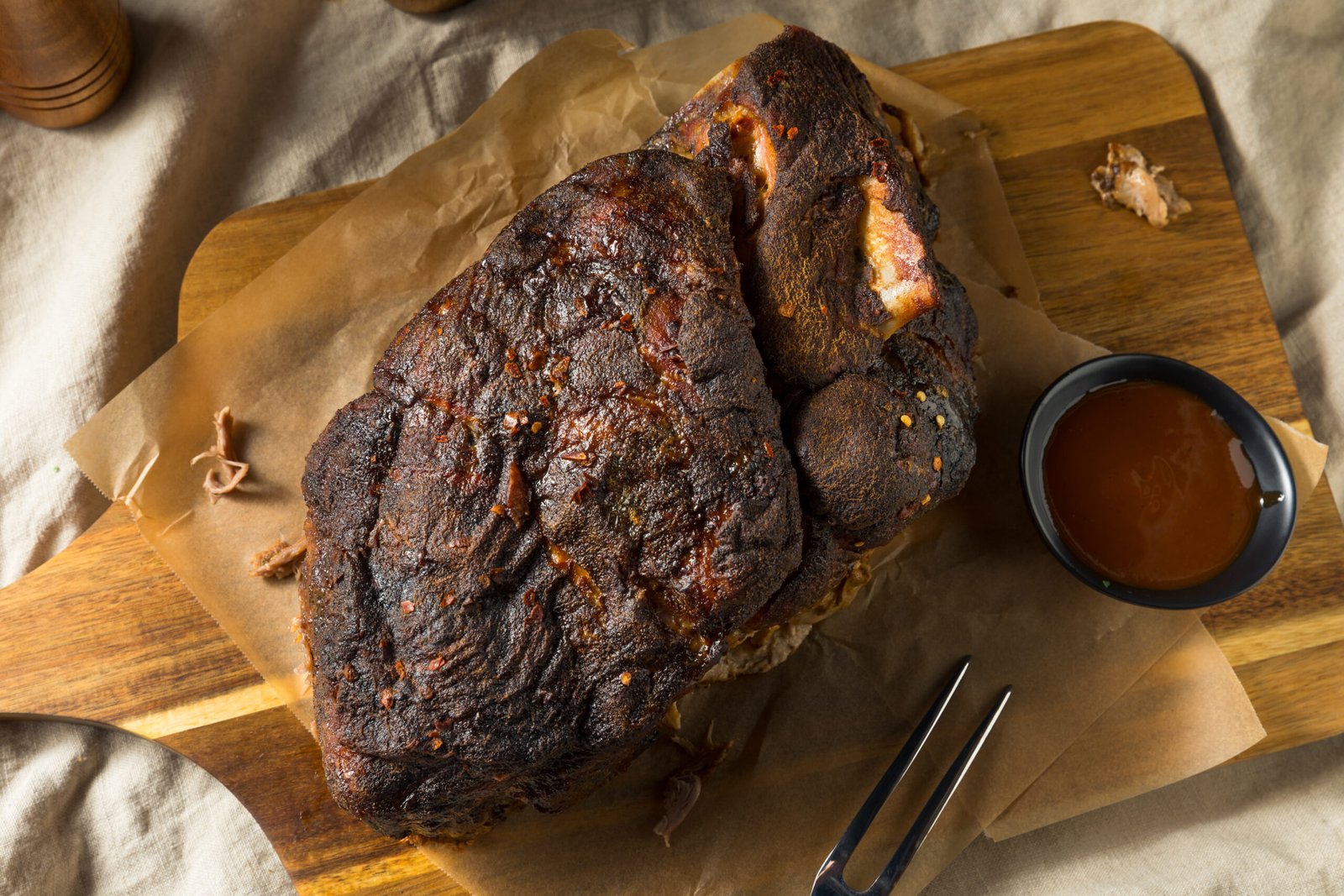
Pulled pork loses about 35% — a fifteen-pound pork shoulder comes out at roughly ten pounds of pulled meat. Again, this is correct and expected. The bone, the fat cap, the rendered moisture — all of that contributes to the loss.
Boneless chicken loses about 28%, and closer to 31% for thighs. Bone-in pieces land around 30%. That's more than most people expect, which is exactly why so many hosts run a little short on chicken — they plan like it barely shrinks, and it does.
A whole turkey is its own animal. Between the carcass, the bones, and what you lose carving, you end up with only about 45–50% of the raw weight as meat on the plate. That's why the rule for a whole bird is roughly a pound to a pound and a quarter of raw turkey per person — you're buying a lot of structure you won't eat.
Sausage is the easy one. It only loses about fifteen percent. What you buy is very close to what you serve. If you're feeding a crowd and want predictable math, sausage is your most reliable option.
Every one of these rates is cross-checked against USDA cooking-yield data — you can see the exact per-protein breakdown in the raw to cooked weight calculator, which is where these numbers come from. The three exceptions are brisket, ribs, and sausage: the USDA doesn't publish yields for smoked brisket or bone-in ribs, so those use well-established catering and pitmaster figures instead.
The rule that fixes everything: always calculate based on what you want to serve, then divide by the shrinkage factor to find what to buy. The calculator does this automatically. But now you understand why the raw number is always higher.
The Full Chart: Raw Pounds to Buy by Guest Count
All amounts are raw weight to purchase at the store. Based on average appetites with 2–3 sides. Always round up to the nearest half pound when buying.
| Guests | Brisket | Pulled Pork | Chicken (boneless) | Ribs |
|---|---|---|---|---|
| 10 | 8.5 lbs | 6 lbs | 7 lbs | 10.75 lbs |
| 15 | 12.5 lbs | 9 lbs | 10.5 lbs | 16.25 lbs |
| 20 | 16.75 lbs | 11.75 lbs | 14 lbs | 21.5 lbs |
| 25 | 21 lbs | 14.75 lbs | 17.5 lbs | 27 lbs |
| 30 | 25 lbs | 17.75 lbs | 21 lbs | 32.25 lbs |
| 40 | 33.5 lbs | 23.5 lbs | 28 lbs | 43 lbs |
| 50 | 41.75 lbs | 29.25 lbs | 34.75 lbs | 53.75 lbs |
| 75 | 62.5 lbs | 44 lbs | 52.25 lbs | 80.5 lbs |
| 100 | 83.5 lbs | 58.5 lbs | 69.5 lbs | 107.25 lbs |
Shrinkage rates used: brisket 40%, pulled pork 35%, chicken boneless 28%, ribs 30%.
By Meat Type: What You Need to Know
Brisket
Brisket is the most dramatic when it comes to shrinkage, and it's also the most common source of miscalculation. Plan a little under a pound of raw brisket per person — for twenty guests, that's about seventeen pounds raw, which sounds like a lot, and it is a lot, and it's correct. Round up toward a full pound a head if you want a cushion; the chart numbers are buffer-free.
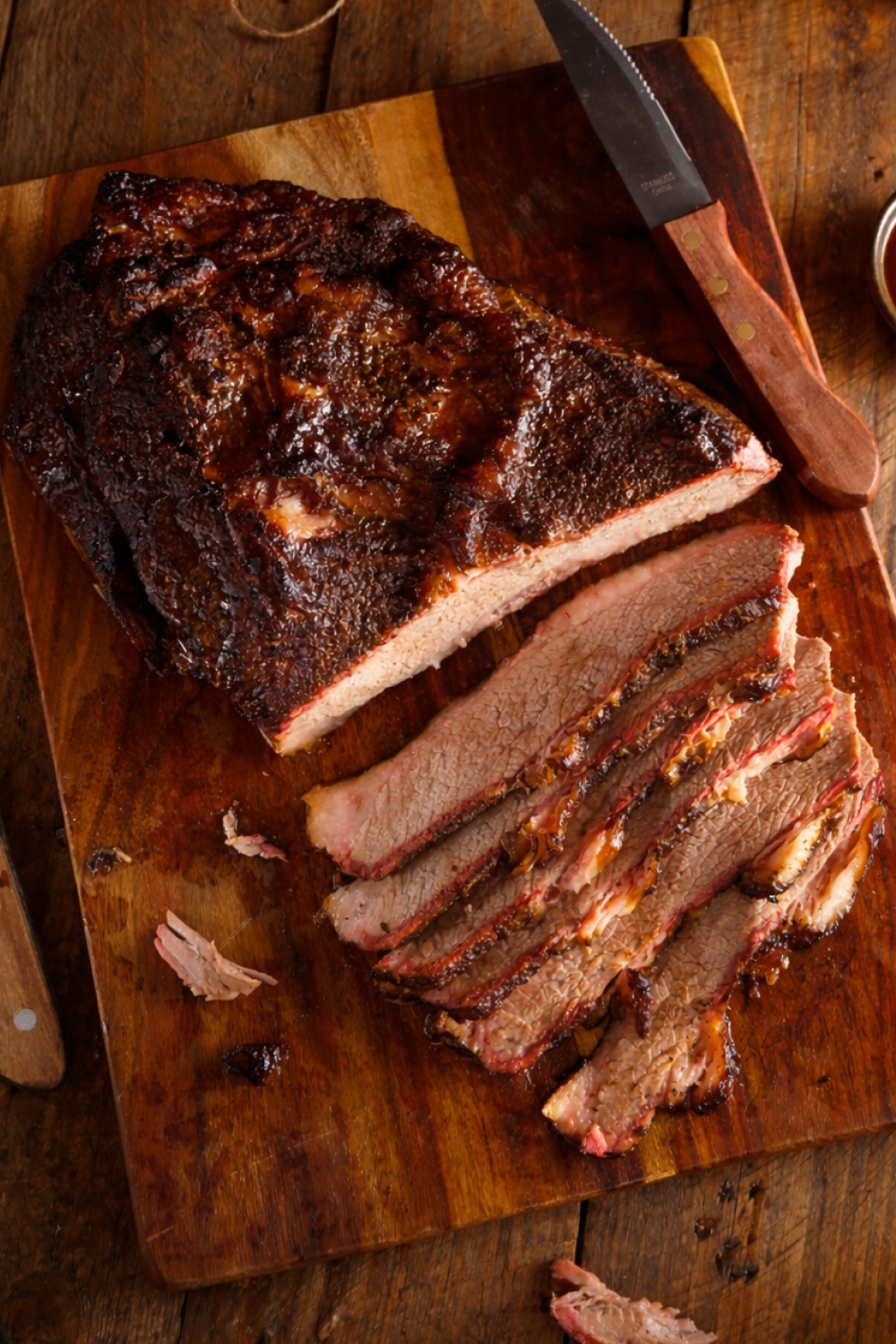
A whole packer brisket typically runs fifteen to twenty pounds raw. After a twelve to eighteen hour cook at low temperature, you'll end up with nine to twelve pounds of sliced meat. That serves approximately eighteen to thirty people as a main dish depending on the size of the brisket.
Always buy brisket based on what you want on the table, not what you start with. If you want ten pounds of sliced brisket: 10 ÷ 0.60 = about seventeen pounds raw.
Pulled Pork
Pulled pork is one of the most forgiving meats for a crowd because it stretches. A well-seasoned pulled pork with good sauce and soft buns goes further than sliced proteins because people take smaller portions on a bun than they would from a platter.
A typical pork shoulder (Boston butt) runs six to ten pounds raw. After a long cook, expect about sixty-five percent of that weight in pulled meat. A ten-pound shoulder gives you roughly six and a half pounds of pulled pork — enough for sixteen to twenty people as a main.
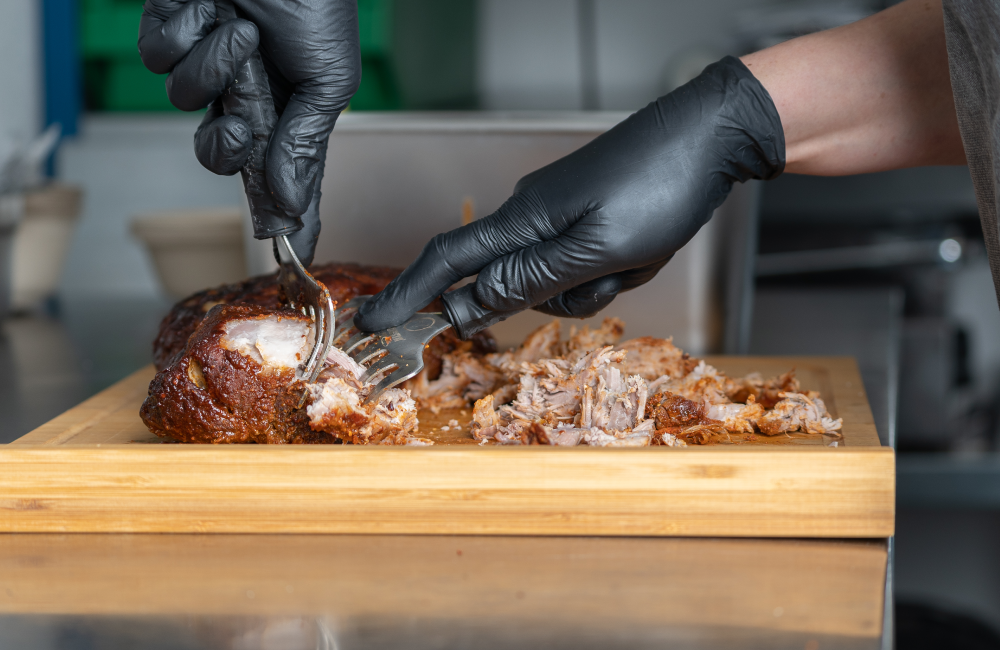
Buy just under 0.6 pounds raw per person. For thirty guests that's about eighteen pounds raw — plan on two or three large pork shoulders.
If you're serving pulled pork on buns, also check the Sliders Per Person guide for how many buns and toppings to plan.
Ribs
Ribs are the most variable cut because the bone accounts for a significant portion of the weight you're buying. A rack of baby back ribs weighs two to three pounds raw and serves two to three people. St. Louis style spare ribs run three to four pounds raw and also serve two to three people — they're larger but meatier.
Buy about a pound to a pound and a quarter of raw ribs per person. For twenty guests that's about twenty-one to twenty-two pounds raw — roughly seven to nine racks depending on the style.
The thirty percent shrinkage figure accounts for moisture loss during cooking. The bone weight is separate — you're already buying it when you buy the rack, so don't deduct it from your serving calculation.
Chicken (Bone-In Pieces)
Bone-in chicken pieces are excellent for a crowd — they're budget-friendly, they hold up well to grilling or baking in large quantities, and they're easy to serve. Plan one to two pieces per person depending on the size of the pieces and what else is on the table.
As a weight calculation: about one pound of raw bone-in chicken per person, which accounts for the roughly thirty percent cooking loss. For twenty guests, that's about twenty-one to twenty-two pounds raw — roughly thirty to forty pieces, and more if you're using smaller thighs or drumsticks, which can run six or more to the pound.
Thighs and drumsticks are significantly more forgiving than breasts for a crowd. They stay moist even if they sit in a warming setup, and they cost less. If you haven't committed to a cut yet, thighs are the move for anything over fifteen people.
Chicken (Boneless Breasts or Thighs)
Easier to serve, easier to portion, and boneless thighs in particular are one of the most reliable crowd meats. Buy ¾ pound raw per person. For fifty guests that's about thirty-five pounds raw.
Boneless chicken loses about twenty-eight percent during cooking — and boneless thighs run a little higher, closer to thirty-one percent. It's a bigger drop than most people plan for, so don't shortchange it. Buy for the cooked weight you actually want on the table and let the shrinkage math add the cushion.
Sausage and Hot Links
Sausage is the most mathematically reliable meat on this list. It loses only about fifteen percent during cooking, it comes pre-portioned, and it's easy to calculate: one to two links per person, or about half a pound raw per person as a main.
For a BBQ spread where sausage is one of two or three proteins, you can count on one link per person. If it's the only protein, two links per person.
Ground Beef (Burgers, Meatballs)
Ground beef loses about twenty-seven percent during cooking, primarily from fat rendering — that's the rate for standard 80/20, the grind most people reach for. Leaner 93/7 loses a bit less, around twenty-three percent. A quarter-pound raw patty becomes roughly a three-ounce cooked burger. Buy ¾ pound raw per person for a burger main.
For the specific math on burgers by guest count, the How Many Burgers Per Person guide covers patty count, bun count, and toppings all the way to one hundred guests.
Turkey
A whole turkey yields about forty to fifty percent of its raw weight as usable carved meat — significantly less than other cuts because of the carcass, the giblets, and the considerable bone structure. For a whole bird, plan about one to one and a quarter pounds raw per person; you're buying a lot of structure you won't eat. A fifteen-pound turkey serves approximately twelve to fifteen people as a main.
For larger gatherings, turkey breasts only (bone-in or boneless) are a much more efficient option. A bone-in turkey breast at ¾ pound raw per person gives you predictable, manageable portions without the carcass math. For a full turkey-specific breakdown, see the How Much Turkey Per Person guide.
Steak and Fish
Steak is one of the most efficient proteins on this list — a grilled steak loses only about sixteen to eighteen percent at medium (ribeye the least, strip steak a touch more). Salmon loses a bit more, around twenty percent. Buy half a pound to two-thirds of a pound raw per person for either as a main dish at a smaller gathering. These are less common at large parties because of cost and the precision required to cook them well for a crowd, but the math is straightforward.
How Your Sides Change Everything
The number of sides on your table has a direct and meaningful effect on how much meat you need. People fill their plates with what's available. More sides means smaller meat portions, not because guests eat less but because they eat more variety.
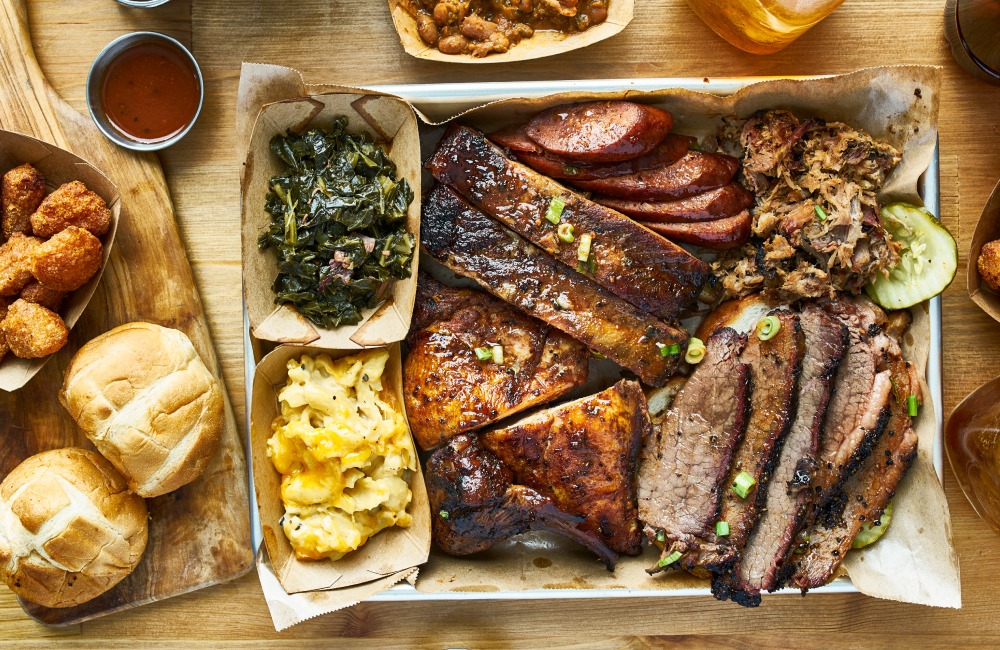
Four or more sides (Thanksgiving style, big BBQ spread): Reduce meat portions by about twenty percent. With potato salad, baked beans, corn, coleslaw, and rolls on the table, people take smaller portions of the protein. For twenty guests with brisket as one of five items: you can plan thirteen to fourteen pounds raw instead of seventeen.
Two to three sides (standard backyard party): The baseline numbers in every table above. This is the most common setup.
Meat-focused menu (one side or none): Increase portions by about twenty percent. If the table has one side and the meat is the clear centerpiece, plan accordingly. For twenty guests with brisket and one side: twenty pounds raw is the right number.
The calculator adjusts for this automatically. Worth thinking through before you buy.
Serving Multiple Proteins
One of the most common BBQ questions is how to plan when you're serving two or three different meats. The answer is not to add the per-person amounts together — that would give you way too much food.
When you offer multiple proteins, guests sample rather than take full portions of each. A good working rule for a multi-protein spread:
Plan for ⅔ of the normal per-person amount for each protein, and make sure the total across all proteins adds up to roughly the standard per-person amount for your crowd.
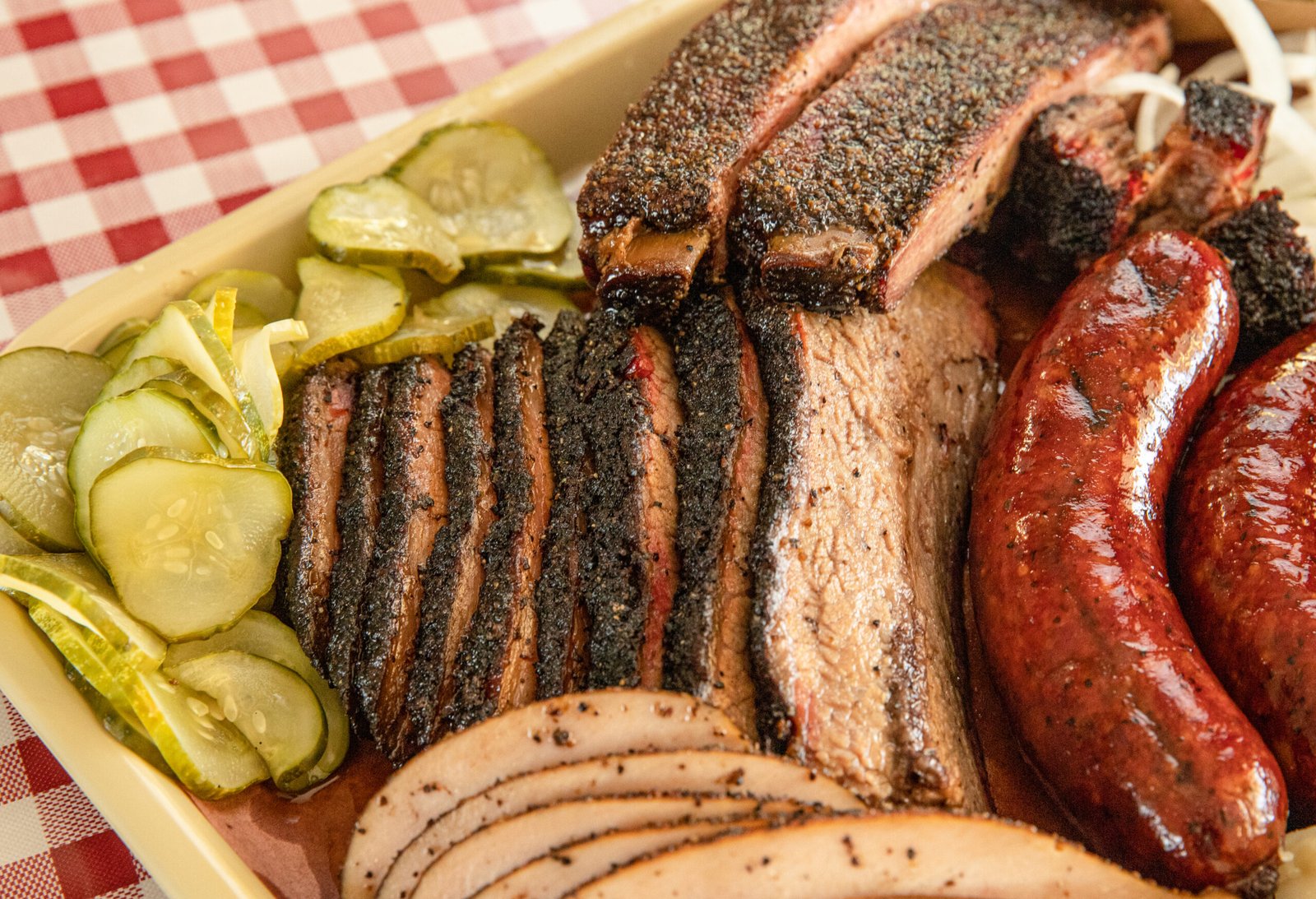
So for twenty guests with brisket and pulled pork:
- Brisket: ⅔ of normal → about eleven pounds raw
- Pulled pork: ⅔ of normal → about eight pounds raw
- Total: nineteen pounds raw — close to what you'd buy for one protein, split between two
This is why a BBQ spread with three meats doesn't cost three times as much. People eat less of each one.
The Safety Buffer Question
Should you add extra? Almost always yes — especially for BBQ.
Here's why BBQ specifically deserves a buffer beyond other proteins: the cook itself is variable. A brisket that was supposed to yield sixty percent might come out at fifty-five. A pork shoulder might stall and lose a little more moisture than expected. You cannot precisely control what a twelve-hour cook returns to you.
Add ten percent to your raw purchase for any smoked or low-and-slow meat. For everything else, a ten percent buffer is still worth it. Leftover brisket or pulled pork reheats beautifully and makes extraordinary sandwiches the next day.
Nobody has ever gone home from a BBQ disappointed that there was too much meat.
Common Mistakes
Buying raw weight and thinking that's what you'll serve. This is the single biggest error. Ten pounds raw brisket is six pounds cooked. Plan for what you want on the table, then work backward to raw.
Using cooked weight from a recipe without accounting for your cut. A recipe that says "serves twenty" was tested with a specific cut from a specific source. The yield from your particular brisket might be different. Always verify with the raw-to-cooked conversion for your specific meat.
Not accounting for bone weight in bone-in cuts. Bone-in ribs, chicken pieces, and turkey all include significant bone weight in the raw purchase. The shrinkage percentages already account for this, but it's worth knowing why the raw number is so much higher than the cooked.
Serving multiple proteins and planning full portions of each. You'll overbuy significantly. Use the two-thirds rule above and let the total per-person amount guide you.
Forgetting that teenagers eat like adults. If you have a group of teenage boys at your BBQ, plan at the big-eaters end of every range. This is non-negotiable. Trust me on this.
Not adding a buffer for BBQ. Low-and-slow is inherently variable. Buy slightly more than you think you need and plan for leftovers.
FAQ
How much meat per person at a BBQ? Half a pound of cooked meat per person is the baseline. In raw terms: roughly a pound of brisket per person, a little over half a pound of pulled pork on buns, three-quarters of a pound of boneless chicken, and about a pound to one and a quarter pounds of ribs.
How much brisket for 10 people? 8.5 pounds raw, which gives you about 5 pounds cooked — roughly half a pound per person.
How much brisket for 20 people? About 17 pounds raw (around 10 pounds cooked). Plan on a large whole packer brisket or two smaller flats.
How much brisket for 50 people? About 42 pounds raw — this is a serious cook. You're looking at two to three whole packer briskets.
How much pulled pork for 10 people? 6 pounds raw — one medium pork shoulder gives you roughly 3.8 pounds of pulled meat, which is just enough when it's served on buns (the portion most people plan for pulled pork). Buy two smaller shoulders if you want a comfortable buffer or you're plating it as a main.
How much pulled pork for 25 people? About 15 pounds raw — two large pork shoulders. They'll give you roughly 9.5 pounds of pulled pork, which feeds twenty-five people a generous portion.
How much chicken for 20 people? Boneless: 14 pounds raw. Bone-in pieces: about 21–22 pounds raw (roughly 30–40 pieces, more with smaller thighs or drumsticks).
How much chicken for 50 people? Boneless: about 35 pounds raw. Bone-in pieces: about 54 pounds raw.
How much meat for 25 people total? At the standard half-pound cooked per person: you need 12.5 pounds of cooked meat. In raw terms — brisket: 21 pounds, pulled pork: 15 pounds, boneless chicken: about 17.5 pounds.
How much meat for 50 people? 25 pounds cooked. In raw terms — brisket: 42 pounds, pulled pork: 29 pounds, boneless chicken: about 35 pounds.
How much meat for 100 people? 50 pounds cooked. In raw terms — brisket: 83–84 pounds, pulled pork: 58–59 pounds, boneless chicken: about 69–70 pounds. At this scale, sausage or boneless chicken thighs are the most manageable options.
Does it matter if I have leftovers planned? Yes — if you're intentionally planning for leftovers, add twenty-five percent to your total. Pulled pork and brisket reheat beautifully. Leftover pulled pork becomes tacos, loaded baked potatoes, or sandwiches. It's worth making extra.
Plan the Rest of Your Menu
If you're planning the protein, you're probably planning the whole spread. Here's what belongs alongside this post:
- How Many Chicken Wings Per Person — if wings are part of the spread, this covers the math for bone-in and boneless with exact counts and pounds.
- How Many Burgers Per Person — patty count, bun count, toppings, for 10 to 100 guests.
- How Many Hot Dogs Per Person — especially useful when kids are part of the crowd.
- Sliders Per Person — if you're doing pulled pork or brisket on small buns, this covers the bread-to-meat ratio.
- How Much Potato Salad Per Person — the most common BBQ side, with exact pounds by guest count.
- How Much Mashed Potatoes Per Person — for holiday-style roasts or comfort food spreads.
- Raw to Cooked Weight Calculator — the exact USDA shrinkage rate for any single cut, in either direction.
- How Much Food for 25 to 100 Guests — if you want to plan the whole menu at once, start here.
- Ultimate Party Food Planning Guide — every category, every calculator, one place.
Final Thoughts
Meat is the most expensive thing on your party menu. Getting it right means you don't overspend and you don't run short — and the only way to get it right is to understand that what you buy and what you serve are two different numbers.
The formula is simple. Decide how much cooked meat you want per person. Divide by the shrinkage factor for your cut. That's what you buy.
Add a buffer for BBQ. Round up when in doubt. Plan for leftovers on purpose — pulled pork tacos the next day are one of the best arguments for hosting in the first place.
All calculations based on average appetites with 2–3 sides. Shrinkage rates: brisket 40%, pulled pork 35%, ribs 30%, chicken bone-in 30%, chicken boneless 28%, sausage 15%, ground beef 27%, steak 18%, salmon 20%, turkey ~50% (whole bird, including carcass and carving). Cut-specific yields are cross-checked against USDA cooking-yield data via the raw to cooked weight calculator; brisket, ribs, and sausage use catering-standard estimates the USDA doesn't publish. Always purchase based on raw weight using the calculator or charts above.
Related
Looking for other recipes like this? Try these:

Pin to Pinterest