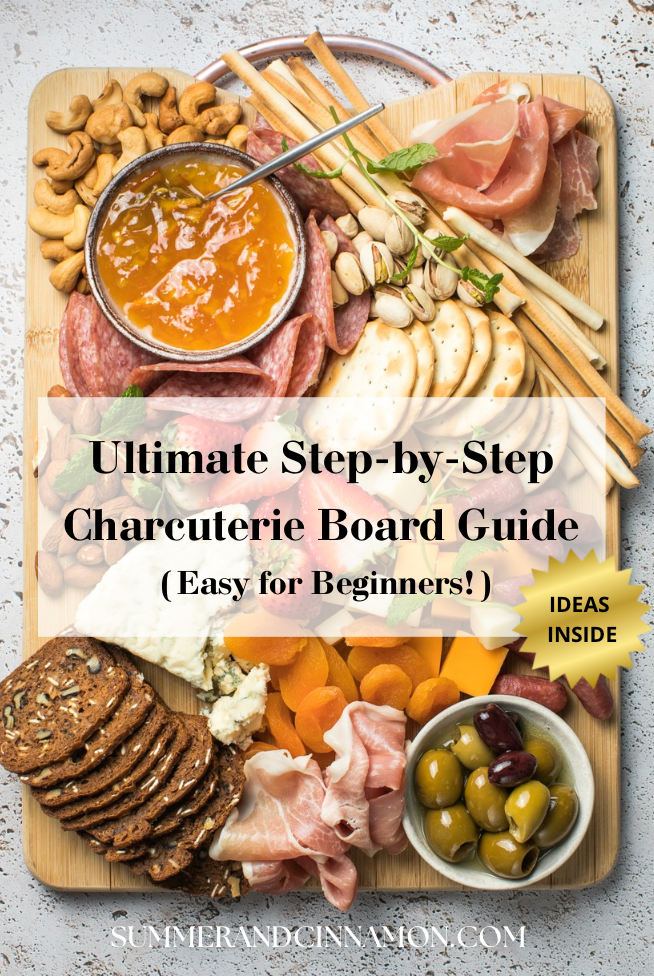
Charcuterie boards look way harder than they are. You've seen the ones on Instagram — the perfectly draped prosciutto, the honey dripping just so, the little cluster of grapes cascading off one corner — and it seems like you'd need a degree in food styling to pull one off. You don't. A great board comes together in about 30 minutes once you know the framework.
Here's the thing — the framework isn't a secret. It's three meats, three cheeses, three accompaniments, and a handful of rules about how to arrange them so the board looks intentional instead of thrown together. This is the guide I wish I'd had the first time I built a board for a dinner party and spent 45 minutes rearranging grapes.
Below is the exact build order, how to style meats so they have height, the flavor pairings that never fail, and the mistakes to avoid. If you need exact quantities for your guest count, the charcuterie board portions per person guide has a calculator that does the math for you.
Jump to:
- What Makes a Great Charcuterie Board
- The 3-3-3 Formula
- How to Choose Your Cheeses
- How to Choose Your Meats
- How to Style Meats (This Is Where the Magic Is)
- The Accompaniments: Sweet, Briny, Crunchy
- What Size Board Do You Need
- The Step-by-Step Build Order
- Think in Clusters, Not Lines
- Add One Unexpected Thing
- Flavor Pairing Cheat Sheet
- Garnish Lightly
- Make-Ahead Strategy
- Common Charcuterie Board Mistakes
- Quick Charcuterie Board Themes
- Plan the Rest of Your Party
- Final Thoughts
- Related
- Pin to Pinterest
What Makes a Great Charcuterie Board
The best boards balance four things: flavor, texture, color, and flow.
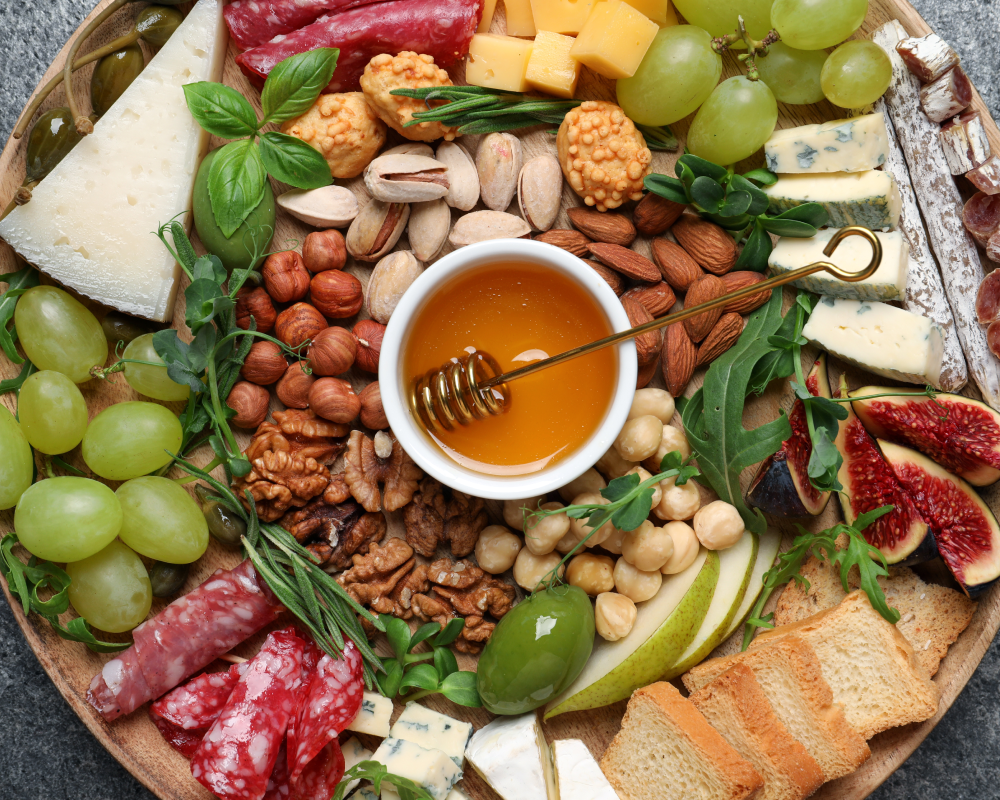
Flavor means sweet, salty, briny, and rich — you want at least three of those four in every bite range. Texture means creamy cheese, crunchy cracker, chewy dried fruit, crisp apple. Color means you're not serving a beige board — there should be greens (herbs, olives), reds (strawberries, pomegranate), yellows (cheese, honey), and browns (crackers, meats). Flow means the eye moves around the board naturally instead of getting stuck in one corner.
Once you're thinking about those four things, everything else is just styling.
The 3-3-3 Formula
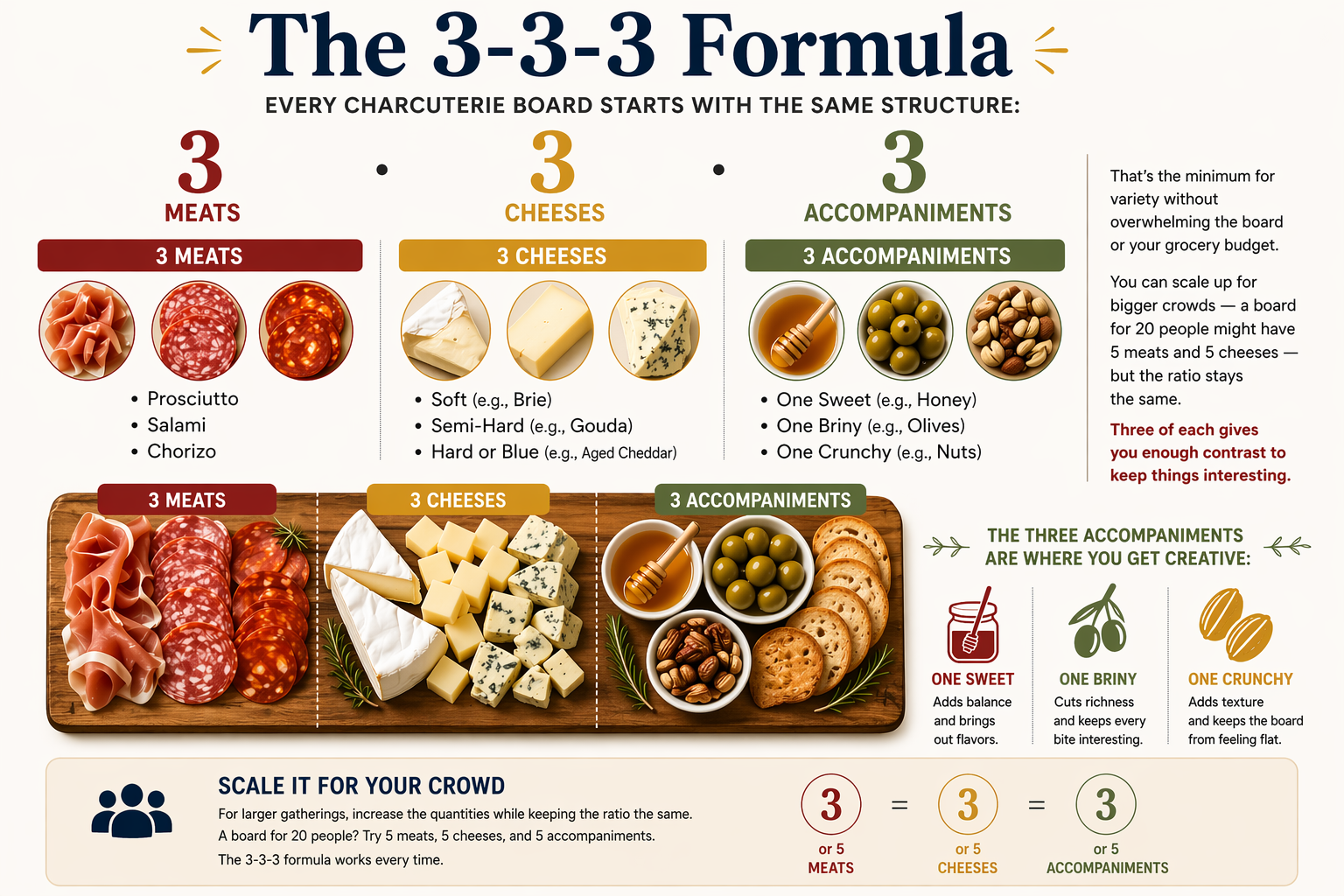
Every charcuterie board starts with the same structure:
3 meats · 3 cheeses · 3 accompaniments
That's the minimum for variety without overwhelming the board or your grocery budget. You can scale up for bigger crowds — a board for 20 people might have 5 meats and 5 cheeses — but the ratio stays the same. Three of each gives you enough contrast to keep things interesting.
The three accompaniments are where you get creative: one sweet, one briny, one crunchy. That trio is what separates "cheese plate" from "charcuterie spread."
How to Choose Your Cheeses
The rule that actually matters: variety in texture beats variety in price.
Pick one from each category:
Soft and creamy — brie, camembert, goat cheese, burrata, triple crème. This is the cheese people spread on crackers and make happy noises over.
Firm or aged — aged cheddar, manchego, gouda, gruyère, parmesan. Cut into wedges or cubes. Holds up to everything.
Bold or unique — blue cheese, smoked gouda, herb-crusted chèvre, or something washed-rind. This is the cheese that makes your board feel thought-out.
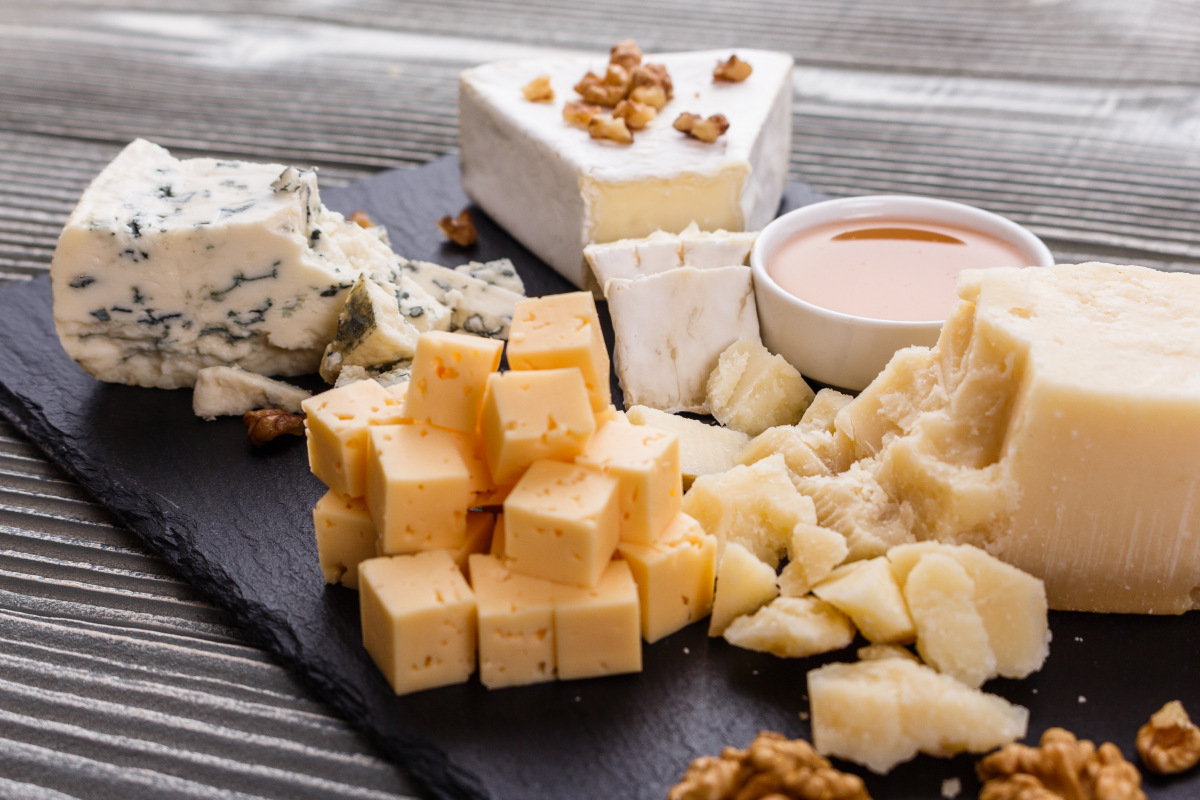
One from each category and you're done. Three different cheddars from the same grocery case is not variety — it's the same bite three times.
Take cheese out of the fridge 30–60 minutes before serving. Cold cheese tastes muted. Room temperature cheese is when the flavor actually shows up.
How to Choose Your Meats
Cured meats bring salt, fat, and depth — the savory backbone that makes a board feel substantial instead of snacky.
Pick three:
- One mild — prosciutto, capicola, or bresaola
- One spiced or bold — soppressata, chorizo, spicy salami
- One crowd-pleasing classic — Genoa salami, summer sausage, or pepperoni
Get these sliced thin at the deli counter when you can. Pre-packaged works in a pinch, but deli-sliced prosciutto draped in ribbons looks ten times more intentional than flat squares pulled from plastic.
If you're planning the board as one piece of a bigger spread, the ultimate party food planning guide covers how to balance the rest of the menu.
How to Style Meats (This Is Where the Magic Is)
Trust me on this — styling is 80% of what makes a board look professional. Flat meat laid in straight lines looks like you gave up. Folded, rolled, and draped meat looks like a restaurant made it.
Salami fold: Fold each slice in quarters and fan them out like a deck of cards. Takes ten seconds, looks deliberate.
Prosciutto ribbons: Pinch the middle of a slice and let the ends flare naturally. Don't lay prosciutto flat. Flat prosciutto is sad prosciutto.
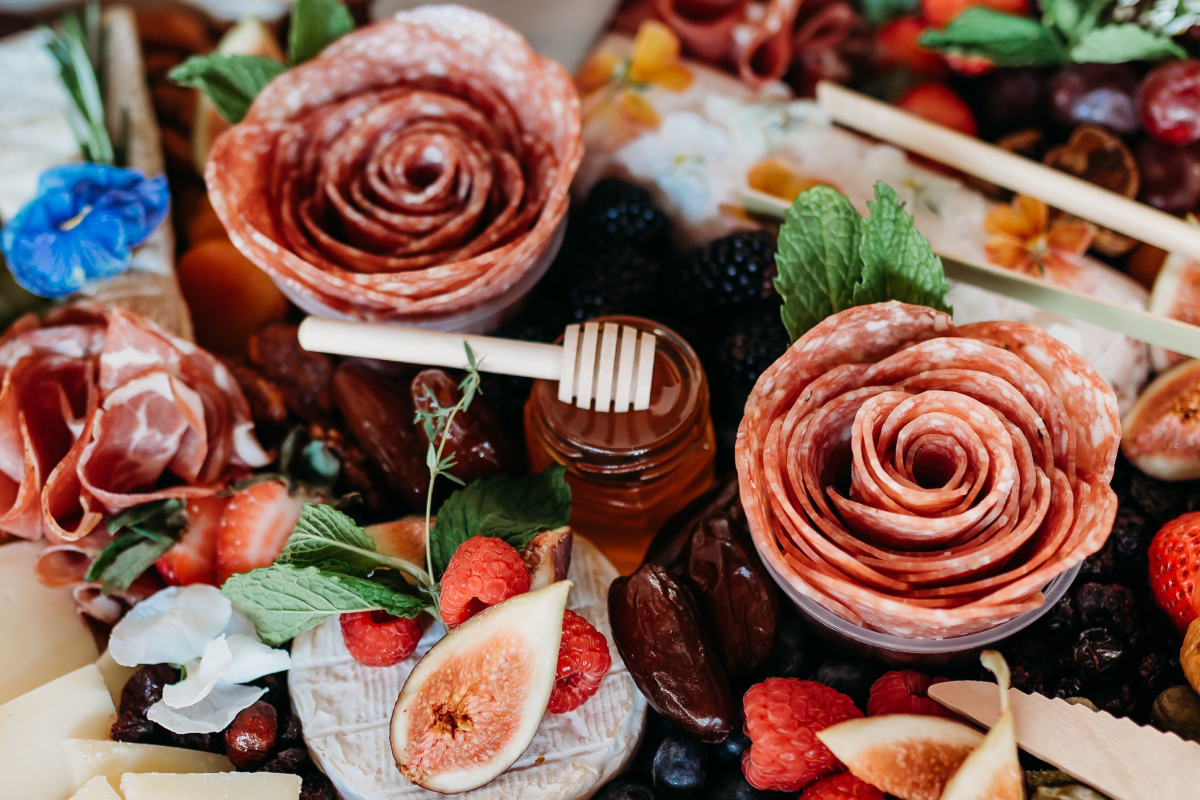
Salami rose: Wrap salami slices around the outside of a champagne flute, overlapping about halfway down each slice. Flip the flute upside down on the board, then carefully lift it away. You have a rose. This is the move that gets the "wait, YOU made this?" reaction.
Coins and fans: Chorizo, summer sausage, and pepperoni can just be fanned out in a loose arc. Simple, clean, effective.
The goal is height and movement. A flat board reads amateur. A board with folds, rolls, and ribbons reads polished.
The Accompaniments: Sweet, Briny, Crunchy
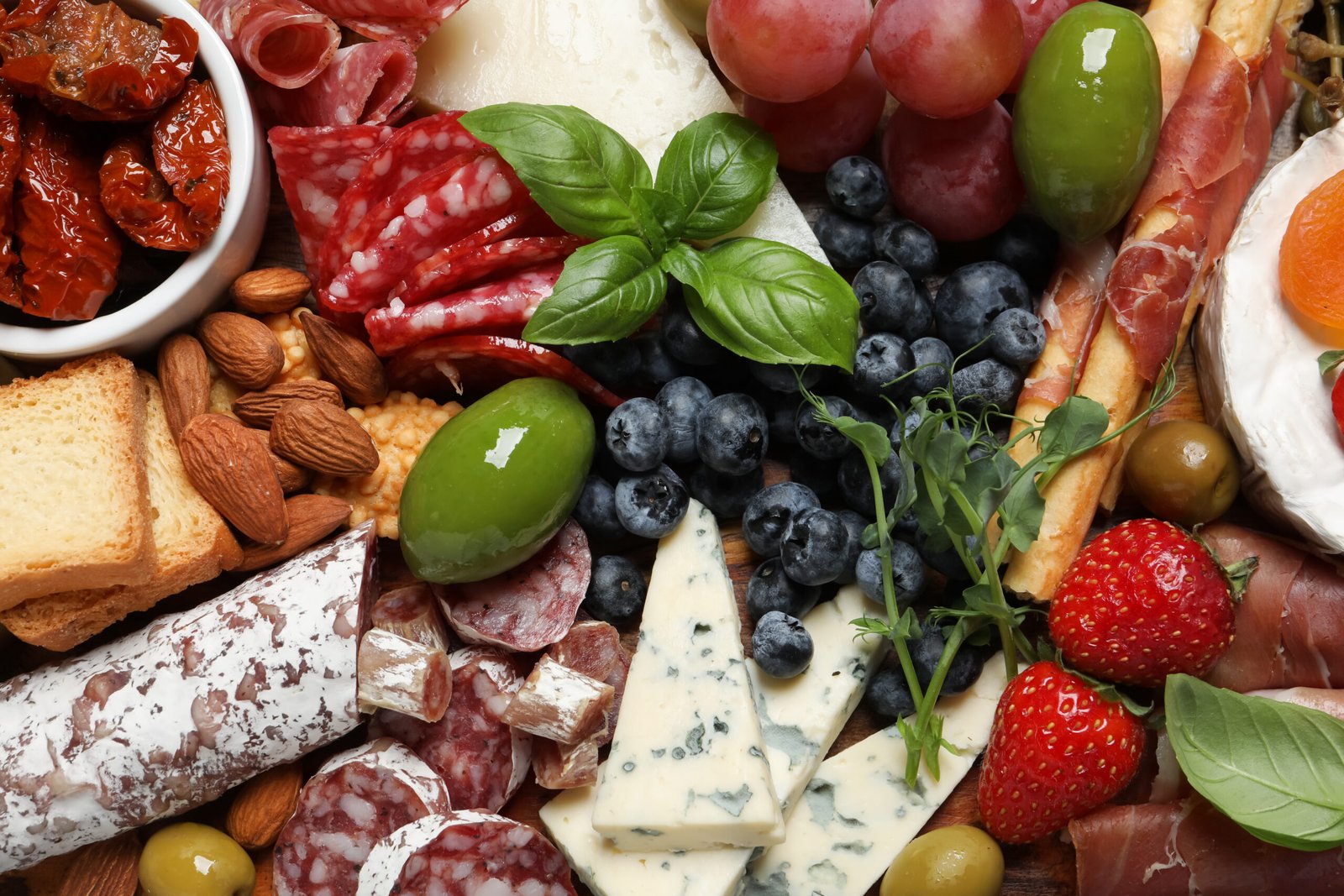
This is where a cheese-and-meat plate becomes a charcuterie board. Pick at least one from each category:
Sweet:
- Honey (get the kind with the dipper — it's worth it)
- Fig jam, quince paste, or apricot preserves
- Fresh grapes, sliced apples, or pear slices
- Dried apricots, dates, or dried figs
- Fresh berries in summer, pomegranate seeds in fall/winter
Briny:
- Castelvetrano olives (the buttery green ones — non-negotiable for me)
- Cornichons or small dill pickles
- Pickled red onions
- Marinated artichoke hearts
Crunchy:
- Marcona almonds, candied pecans, or pistachios
- A mix of crackers — different shapes, mostly neutral flavors
- Sliced toasted baguette or crostini
- Breadsticks for height
One of each minimum. Two or three of each for bigger crowds or when you want the board to feel abundant.
What Size Board Do You Need
Match the board to the crowd. Too small looks overstuffed; too big looks empty.
- 2–4 people → 12–14 inch board
- 6–8 people → 18–20 inch board
- 10–12 people → 24 inch board or a long rectangular platter
- 15+ people → two boards side by side, or lay parchment paper directly on the table and build on that
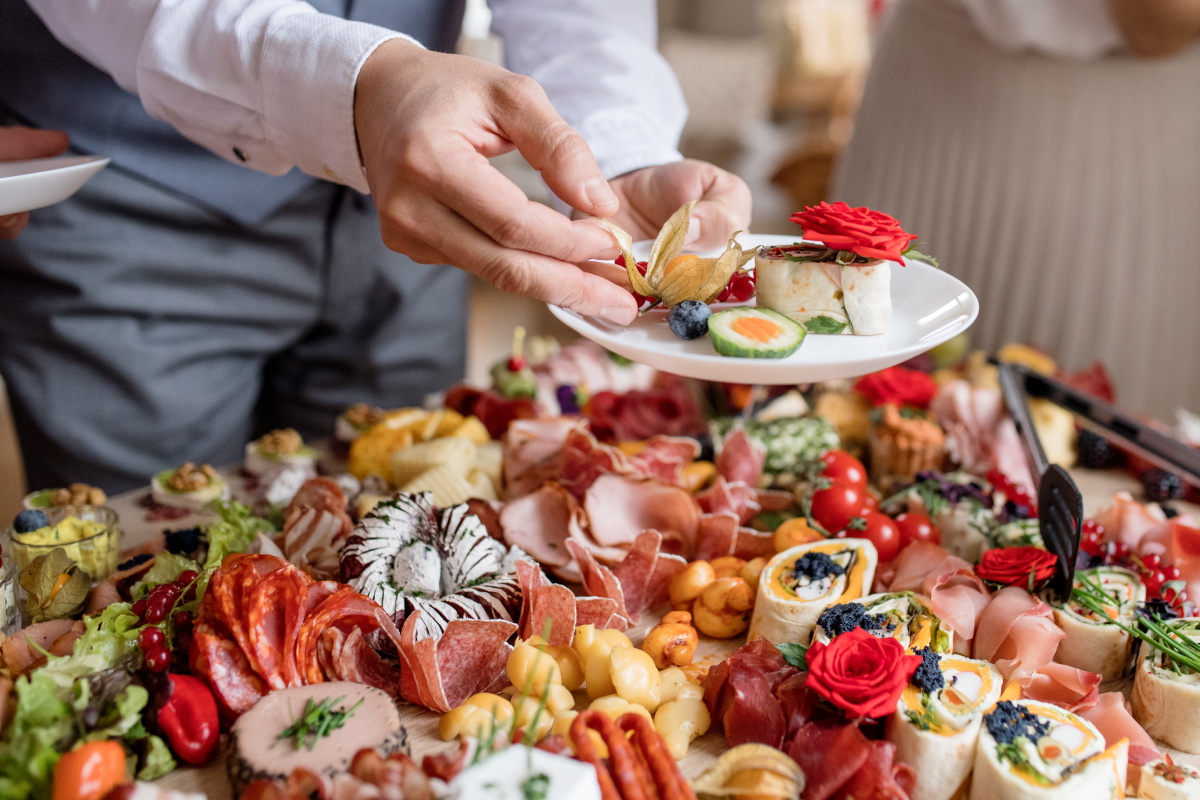
If you don't own a board big enough, skip the board entirely. Lay kraft paper or parchment directly on the counter or table, build on top, call it a grazing table, and nobody will question it. Some of the prettiest spreads I've seen are built right on butcher paper.
The Step-by-Step Build Order
Order matters more than people realize. Here's the sequence that actually works:
Step 1: Cheeses first. Place them as anchor points around the board — not clustered in one corner. Spread them out so guests naturally circulate. Pre-slice firm cheeses into wedges or cubes, but leave soft cheeses whole with a knife next to them.
Step 2: Small bowls next. Put the ramekins for jam, honey, olives, and mustard on the board before anything else goes on. You need to commit to their spots early — moving them later wrecks the layout around them.
Step 3: Meats, fanned or rolled. Arrange them around the cheeses, using folds and ribbons for height. Don't cluster all your meat together — spread it across the board.
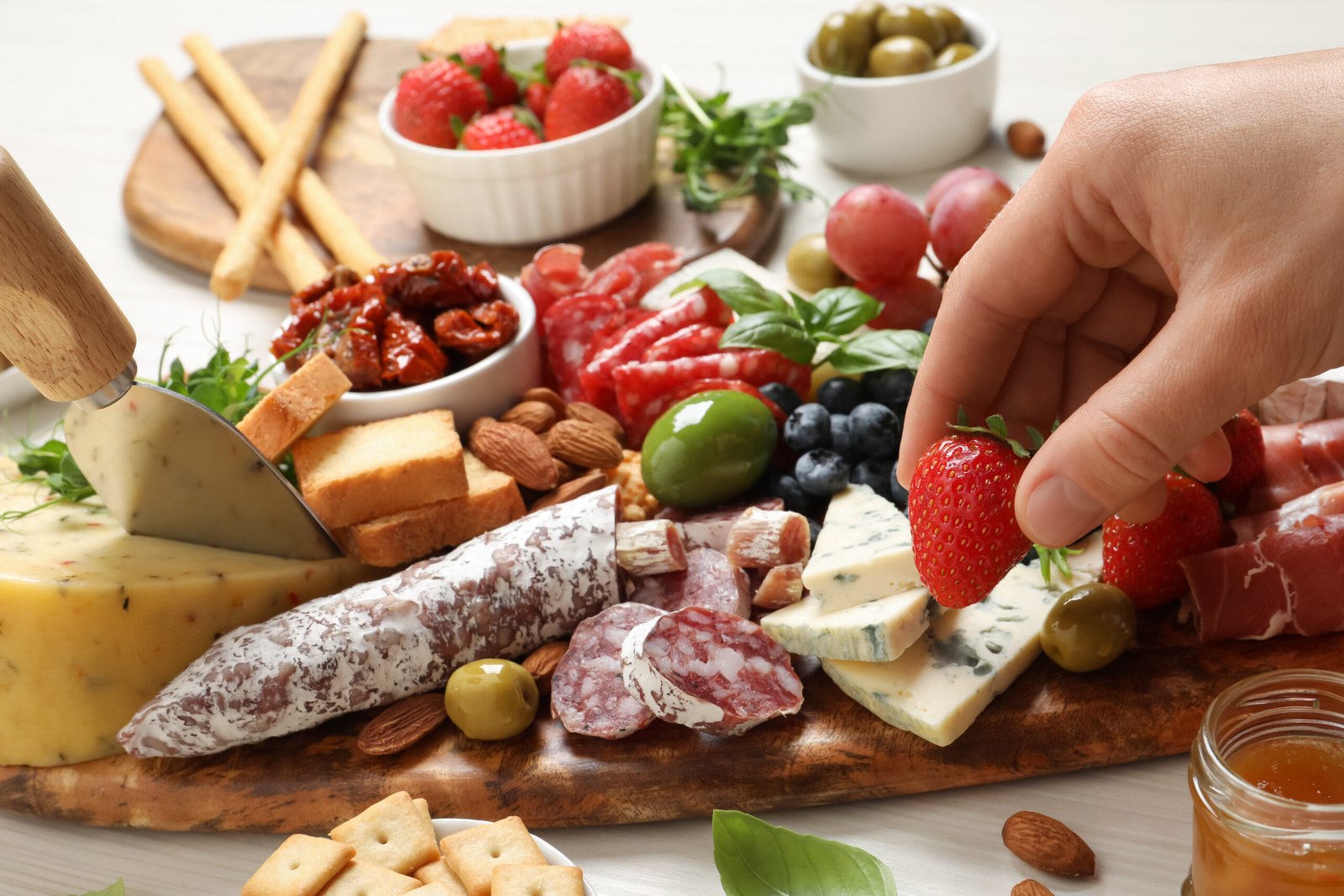
Step 4: Fruit clusters. Tuck clusters of grapes, berries, or sliced fruit into the gaps. Grapes are the secret weapon — they fill odd spaces and don't oxidize, so they look good for hours.
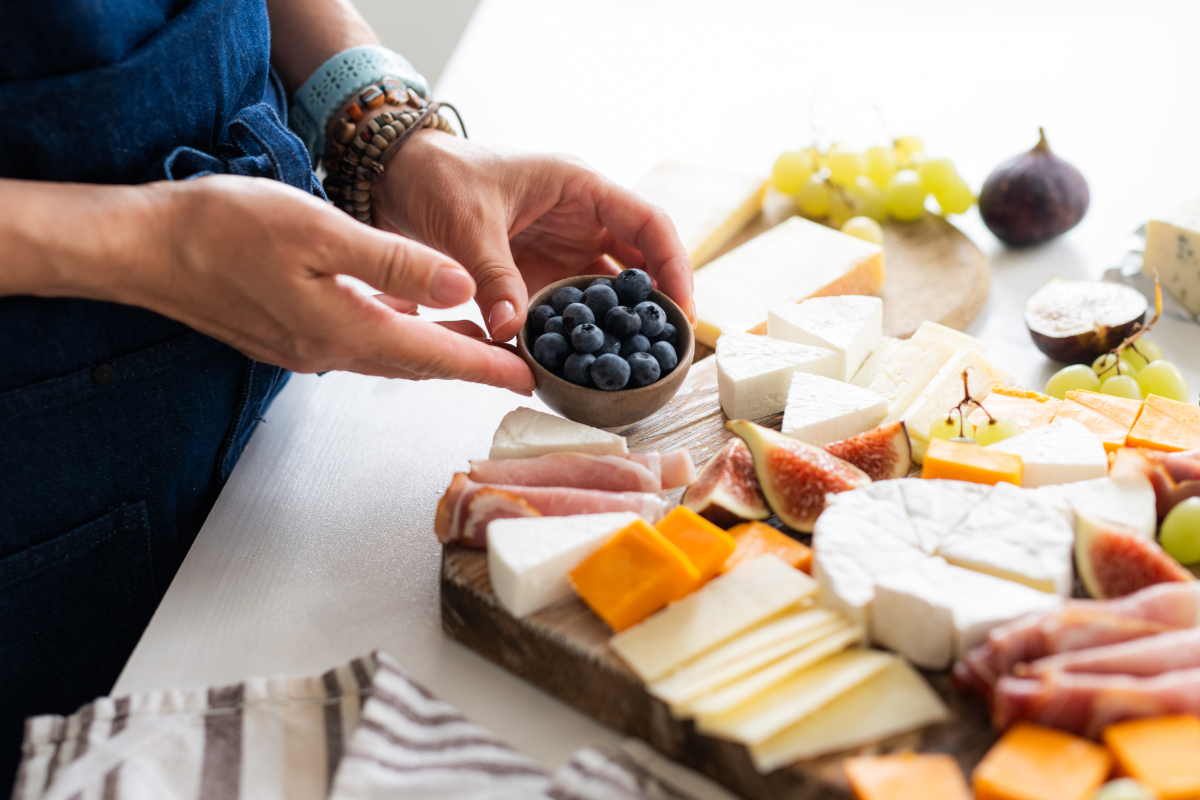
Step 5: Nuts and small items. Cornichons, dried fruit, olives that didn't fit in the bowl, small chunks of chocolate. These fill the remaining gaps.
Step 6: Crackers last. Crackers break when you rearrange the board and go stale fast once they're out. Put them down at the very end, and keep a backup supply in the kitchen to refill as they disappear.
The reason this order works: the big pieces determine your layout. Crackers are filler. If you start with them, you'll box yourself in.
Think in Clusters, Not Lines
The easiest way to make a board look amateur is to lay everything out in tidy rows.
Instead, cluster similar items in groups of odd numbers — 3 or 5 — and scatter them across the board with complementary items in between. Three ribbons of prosciutto next to the brie. A small group of olives next to the honey bowl. A cluster of grapes draping over the edge.
Odd numbers look intentional. Even numbers look measured.
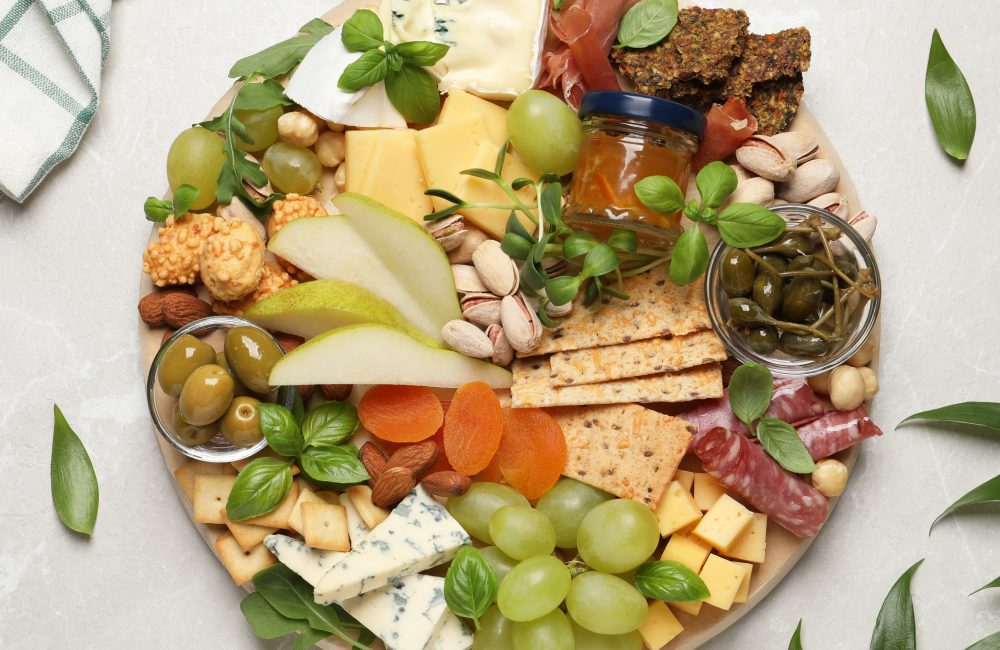
And leave some breathing room. A 100% packed board looks crammed and stressful. Aim for about 85% coverage with small gaps that let the board or paper show through. Those gaps are what give the eye somewhere to rest.
Add One Unexpected Thing
This is the tip nobody talks about but it's what separates a good board from a memorable one: include one thing people aren't expecting.
Options:
- A chunk of honeycomb (comb and all — people lose their minds)
- A small bowl of chocolate-covered espresso beans
- Candied citrus peel
- Spicy mustard instead of regular
- Hot pepper jelly
- A small pile of dark chocolate squares
- Pickled watermelon rind
One unexpected element turns a board from pretty to memorable. Guests will talk about it. Pinterest will pin it. That's the goal.
Flavor Pairing Cheat Sheet
You don't need to memorize this, but these pairings are foolproof:
| Cheese | Pair it with |
|---|---|
| Sharp cheddar | Honey, apple slices, whole-grain mustard |
| Brie | Fig jam, fresh berries, prosciutto |
| Blue cheese | Pear slices, walnuts, honey |
| Goat cheese | Lemon zest, fresh herbs, raspberry jam |
| Manchego | Quince paste, Marcona almonds, chorizo |
| Prosciutto | Melon, fresh figs, burrata |
The rule: pair salty with sweet, sharp with rich, mild with bold. Contrast is what creates interest in every bite.
Garnish Lightly
Fresh rosemary sprigs, thyme, or a few edible flowers tucked into gaps make a board look finished. But don't go overboard — garnish is a supporting actor, not the star.
A few sprigs distributed unevenly across the board. Maybe a small sprig stuck into the honeycomb. That's it. Over-garnishing makes a board look like a floral arrangement trying to be food.
Make-Ahead Strategy
You can prep most of a board 24 hours ahead:
- Day before: Slice firm cheeses and wrap tightly in plastic. Fold meats and cover on a plate. Wash and dry fruit. Pre-fill small bowls with jam, honey, and olives and cover with plastic wrap.
- 1–2 hours before: Take cheese out of the fridge. Arrange board (it'll hold at room temp for 2+ hours without issue).
- Just before serving: Add crackers, any fresh-cut apples or pears (toss in lemon juice to prevent browning), and final garnish.
Boards hold up surprisingly well once they're built. You're not going to stress it — most charcuterie travels fine in the car and sits at room temp for hours without sadness.
Common Charcuterie Board Mistakes
A few issues that come up every time:
- Too many similar cheeses. Three cheddars isn't variety. Cover all three texture categories.
- Forgetting knives. Every soft or semi-soft cheese needs its own knife. A $10 set of four small cheese knives lasts forever.
- All-beige board. Cheddar, crackers, summer sausage, hummus — the whole thing blurs together visually. Add color deliberately with berries, pomegranate, herbs, or pickled onions.
- No flavor contrast. Three salty cheeses and three salty meats with no honey or jam leaves the board one-note. Sweet and briny accompaniments are what keep guests coming back.
- Overcrowding one area. Spread ingredients across the whole board instead of clustering everything in the middle.
- Crackers too early. They break. They go stale. Always last.
Quick Charcuterie Board Themes
Once you've got the formula down, themed boards are easy variations:
- Fall harvest board — pumpkin-shaped cheese, apple slices, candied pecans, maple honey
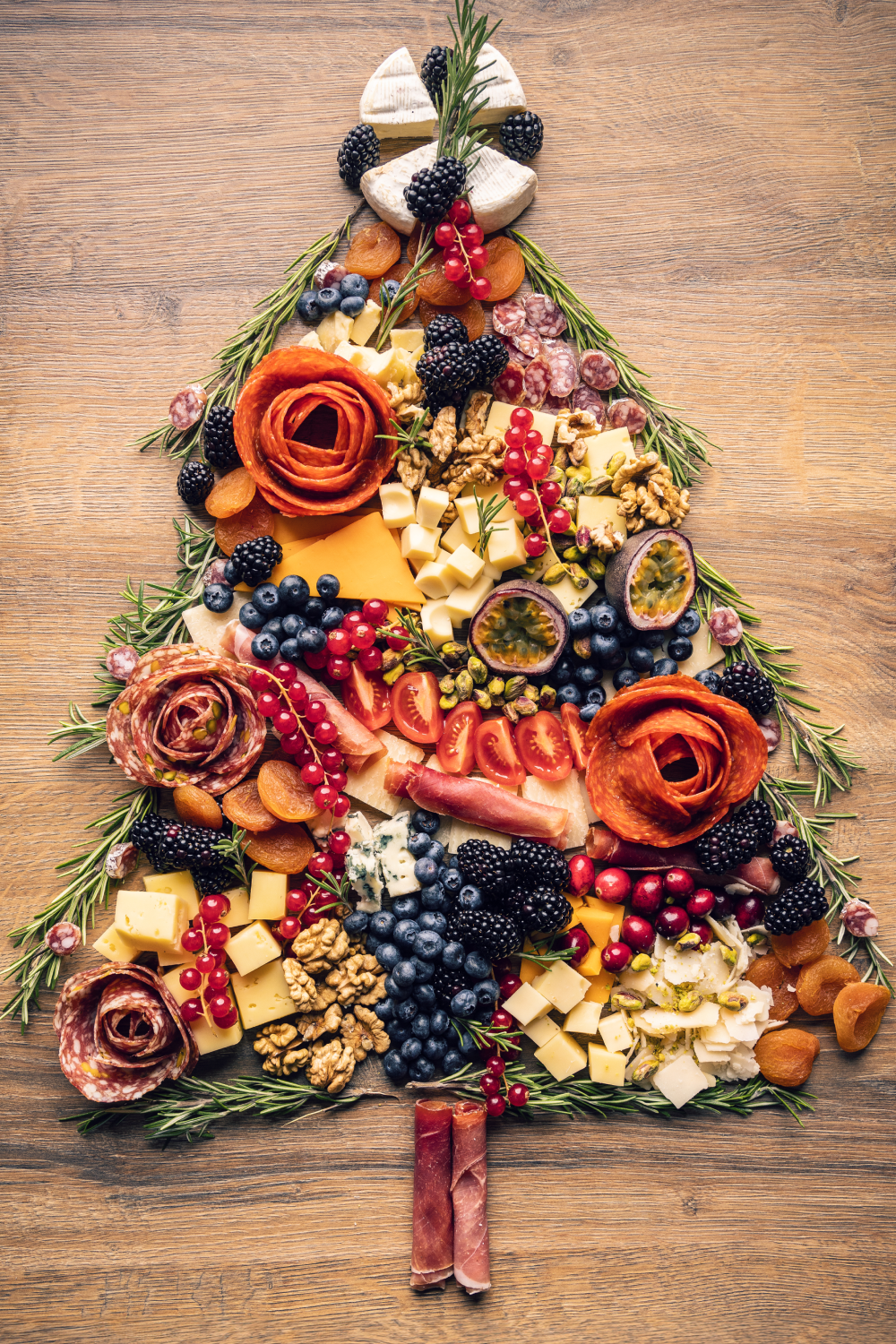
- Christmas charcuterie — arrange into a wreath or tree shape, add fresh rosemary, dried cranberries, pomegranate seeds
- Valentine's dessert board — swap the savory items for chocolate, fresh berries, honey, and soft cheeses
- Kid-friendly snack board — mild cheeses, pepperoni, crackers, grapes, carrot sticks, ranch
- Mediterranean board — feta, olives, hummus, pita, cucumber, tomatoes, olive oil
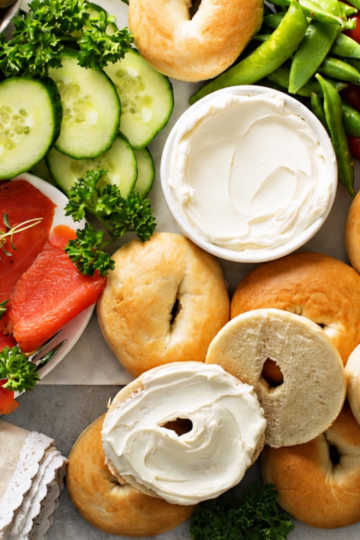
- Breakfast charcuterie — soft cheeses, bagels, lox, cream cheese, fresh fruit, jam
- Budget board — three grocery store cheeses, pepperoni and salami, grapes, crackers, honey, olives
Same framework, different ingredients.
Plan the Rest of Your Party
A charcuterie board is usually one piece of a bigger spread. These guides cover the rest:
- How many appetizers per person — pair your board with other bites
- Dessert charcuterie board guide — the sweet version of this whole thing
- Dessert table portions per person — if desserts are a separate category
- How much food for 25–100 guests — for larger events
- Ultimate party food planning guide — the complete menu planning hub
- How many drinks per person — always pair the board with the right drink plan
Final Thoughts
The secret to a stunning charcuterie board isn't expensive ingredients or years of practice.
It's structure. Pick three meats, three cheeses, three accompaniments. Build from anchor pieces out to filler. Work in clusters of odd numbers. Add one unexpected thing. Garnish lightly.
That's it. That's the whole guide.
The best boards feel generous, not fussy. Your goal isn't perfection — it's a spread that makes people want to stay awhile, reach across the table, and keep grabbing just one more bite. Build it for them, then pour yourself a drink and enjoy the compliments.
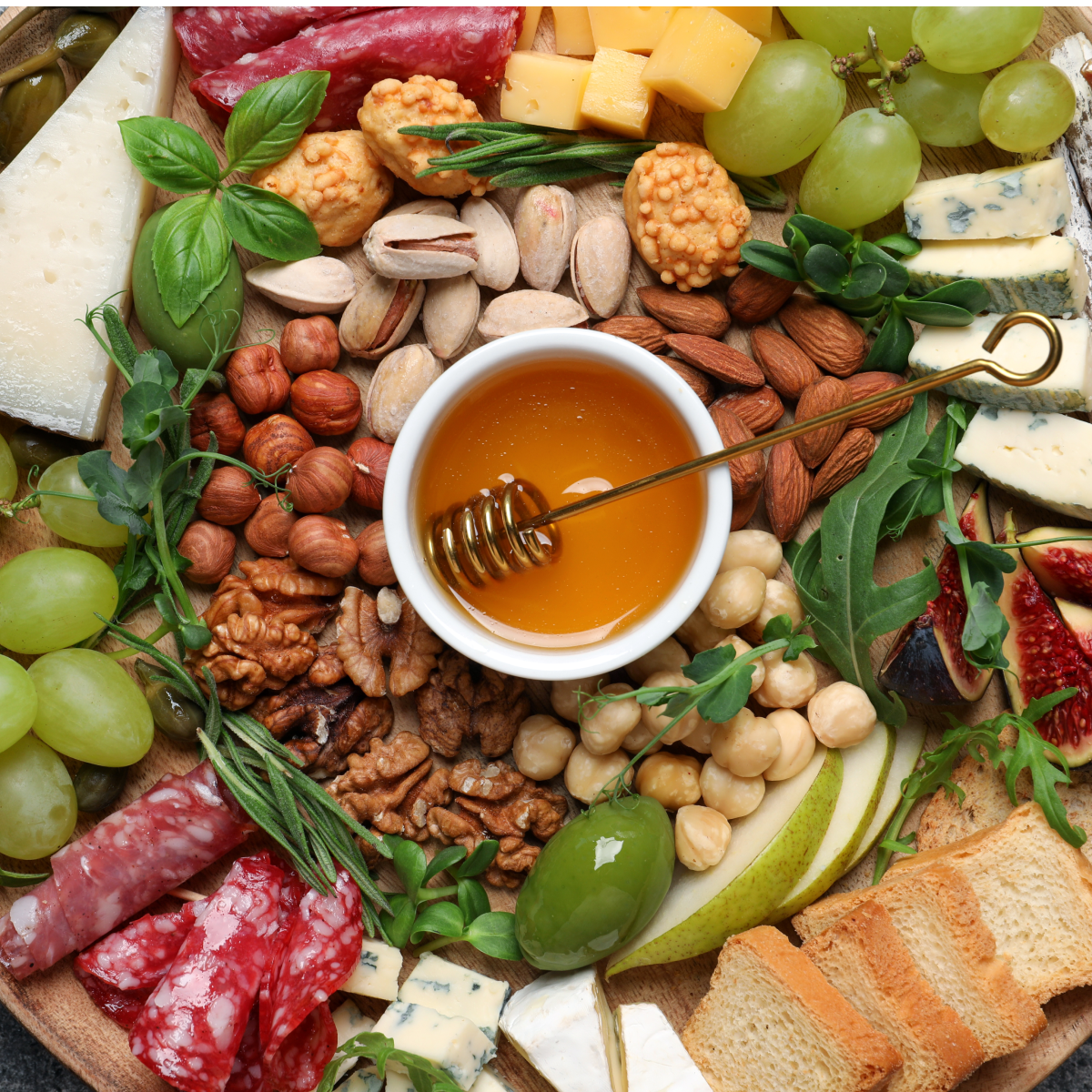

The Ultimate Charcuterie Board Guide
Ingredients
Equipment
Method
- Select ingredients and have fun building your board!
Notes
- Make it ahead: Most components can be prepped 24 hours in advance. Slice cheeses and meats the day of serving for the best texture and appearance.
- Cheese temperature matters: Remove cheeses from the fridge 30–60 minutes before serving so flavors fully develop.
- Balance is key: Aim for a mix of creamy, firm, and aged cheeses along with salty meats, crunchy elements, and something briny or sweet for contrast.
- Customize the board: Swap items based on what’s available—no need to stick to exact ingredients. Seasonal fruits, nuts, or spreads work beautifully.
- Serving size guide: Plan on about 2–3 ounces of cheese and 2 ounces of meat per person if serving as an appetizer.
Related
Looking for other recipes like this? Try these:
Pin to Pinterest