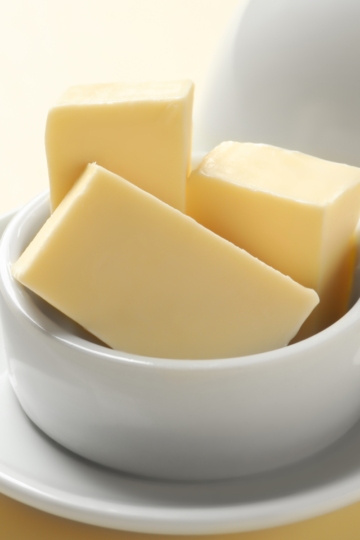
You're halfway through a recipe and realize you're out of butter. The recipe needs a stick — maybe two — and there's no easy run to the store. Standing in the kitchen, butter wrapper in hand, wondering if oil will work.
Here's the good news: oil works in most recipes. The catch is that the right amount depends entirely on what you're baking. The "¾ cup oil per 1 cup butter" rule that gets repeated everywhere is a decent starting point for cakes and quick breads — but it'll make your cookies flat, your brownies greasy, and your pie crust impossible. Each recipe type needs a different swap.
This guide walks you through the exact oil-to-butter ratio for every kind of recipe, which oils work best for each use, and the small adjustments (a splash of water, chilling the dough, picking the right oil) that make the difference between "you can't tell the difference" and "what happened to my dessert."
For more reliable swaps when you're missing other baking staples, the complete baking ingredient substitutions guide covers everything else you might need.
Jump to:
Quick Answer
For most recipes, the rule is ¾ cup oil for every 1 cup of butter (a 3:4 ratio). This works best in cakes, muffins, quick breads, and brownies — anything where moisture matters more than structure.
But the universal rule has limits. Here's the short version of where it changes:
- Cakes, muffins, quick breads: ¾ cup oil per 1 cup butter (or 1:1 if you want extra moisture)
- Brownies: ¾ cup oil per 1 cup butter — works beautifully
- Cookies: ½ to ⅔ cup oil per 1 cup butter (start with ⅔ and adjust), or 1:1 with coconut oil — and always chill the dough
- Pie crust and flaky pastry: Skip liquid oil. Use solid coconut oil (1:1) or stick with butter
- Frosting: Skip oil entirely — this isn't a swap that works
- Sautéing or melting use: 1:1 ratio, no adjustments
The reason ratios change recipe to recipe is that butter is doing different jobs in different recipes. In a cake, it's adding moisture and tenderness — oil does that beautifully. In a cookie, butter is creating structure through creaming with sugar — oil can't do that, so you have to compensate. In a pie crust, butter's solid-cold-state is the entire point — and liquid oil simply can't replicate flaky layers.
Skip down to your recipe type for the exact swap that'll work.
Which Oil Substitute for Which Recipe?
Find your recipe type and get the swap that actually works.
For Cakes (Yellow, Chocolate, Vanilla, Bundt)
Best: ¾ cup neutral oil (vegetable, canola, avocado) per 1 cup butter. Cakes turn out moist, tender, and have a longer shelf life than butter cakes — they don't dry out as fast on day two.
Slight adjustment: If you want to keep the original fat content close to identical, reduce the oil by 15% (about 3 tablespoons less per cup) and add 1½ tablespoons of water per stick of butter to replace the moisture butter would have provided. This is the more technically correct swap, but the simpler ¾ cup rule works fine for most cakes.
Pro tip: For chocolate cakes, you can use olive oil or even avocado oil — the chocolate masks any oil flavor and adds richness. For vanilla or yellow cakes, stick with truly neutral oils so the cake's flavor comes through.
Skip: Coconut oil unless you want a coconut flavor in the finished cake. Even refined coconut oil can leave a faint tropical note that fights with vanilla cakes.
For Cookies
Best: Start with ½ to ⅔ cup oil per 1 cup butter and adjust based on the cookie style. Cookies are where the standard ¾ cup rule fails most dramatically, but cookie chemistry varies enough that one ratio doesn't fit every recipe.
For most drop cookies (chocolate chip, oatmeal, snickerdoodle), start with ⅔ cup oil per 1 cup butter. If the dough looks too dry or crumbly, add 1-2 more tablespoons of oil. If the dough looks oily or won't hold its shape on the cookie sheet, you went too far — pull back next time.
For thin or wafer-style cookies (where you actually want some spread), ½ cup oil per 1 cup butter works well.
Coconut oil is the closest oil-based substitute to butter and can often be used close to 1:1 in cookies. It solidifies as it cools and behaves more like butter than liquid oils do, but the exact ratio still depends on the cookie style and whether you're using refined or virgin coconut oil. Start at 1:1, watch the dough texture, and pull back slightly if the dough looks oily. Refined coconut oil works for most cookies; use virgin only when you want a coconut flavor in the finished cookie.
Critical adjustment regardless of ratio: Chill the dough for at least 1 hour before baking. Oil doesn't solidify like butter, so cookie dough made with liquid oil spreads way more in the oven. Even with coconut oil, chilling helps the cookies hold their shape.
Read the recipe before you swap. If step one is "cream butter and sugar until light and fluffy," the recipe relies on creaming for structure — and oil can't be creamed. These cookies will be denser and flatter no matter what ratio you use. Adjust your expectations or pick a different recipe.
Skip: Recipes where butter is the entire flavor profile, like shortbread, classic sugar cookies, or butter cookies. The butter in these is the point — substituting oil produces a fundamentally different cookie. Don't try.
For Brownies
Best: ¾ cup oil per 1 cup butter. Brownies are actually one of the best applications for oil swaps — many chewy fudgy brownie recipes are designed for oil from the start. Oil-based brownies tend to be denser, fudgier, and stay moist longer.
Pro tip: For the most fudgy texture, use a slightly richer oil like avocado or even melted coconut oil. The richness amplifies the chocolate.
Skip: Brownie recipes that rely on creaming butter and sugar (less common but they exist). Read the recipe — if step one is "cream butter and sugar until light and fluffy," it's a recipe that needs solid fat.
For Muffins and Quick Breads
Best: ¾ cup oil per 1 cup butter — or even 1:1 if you want maximum moisture. Muffins, banana bread, zucchini bread, and pumpkin bread are the most forgiving recipes for oil swaps. Most coffee shop and bakery muffins are made with oil for exactly this reason.
Pro tip: Oil-based muffins stay fresh longer than butter-based ones. They also work well at room temperature, which is why almost every grab-and-go bakery muffin uses oil.
Skip: Nothing, really. This is the safest oil substitution category in baking.
For Pie Crust and Flaky Pastry
Best: Solid (room-temperature) coconut oil at a 1:1 ratio. The fat needs to be solid and chilled to create the layers that make pastry flaky. Liquid oil simply cannot replicate this — it'll just make your pastry oily and dense, not flaky.
The why: Flaky pastry depends on small chunks of cold solid fat that melt during baking, leaving behind air pockets that create layers. Liquid oil disperses through the flour and creates a uniform, crumbly result instead — closer to a tart crust than a pie crust.
Decent alternative: Vegetable shortening, also at 1:1. Solid at room temperature, neutral in flavor, works for flaky pastry though purists prefer butter.
Skip: Vegetable, canola, or olive oil for traditional flaky pie crust. They don't work no matter what ratio you use. If you only have liquid oil, switch to a different style of crust (a press-in crumb crust or graham cracker crust) instead of trying to force a flaky result.
For Frosting and Buttercream
Best: Don't substitute oil here — this isn't a swap that works. Buttercream depends on butter's specific creaming behavior and ability to hold whipped air. Liquid oil makes a slick, runny mess that won't hold a piped design.
Better alternative: If you're out of butter for frosting, use a different frosting style entirely. Glazes (powdered sugar + milk + vanilla), cream cheese frosting, or whipped cream all work without butter. The cream cheese substitute guide covers options for cream cheese frosting if you're missing that too.
For Savory Baking (Biscuits, Cornbread, Scones)
Best for biscuits and scones: Solid coconut oil or vegetable shortening at 1:1. Same logic as pie crust — these need solid fat for the proper texture.
Best for cornbread: ¾ cup neutral oil per 1 cup butter, same as cakes. Cornbread made with oil is moister and stays softer than butter-based versions.
Pro tip: Olive oil works beautifully in savory baking. A ¾ cup substitution of olive oil for butter in a savory cornbread or focaccia recipe adds a Mediterranean richness that complements savory flavors.
Why Butter and Oil Don't Behave the Same Way
Most people think of butter and oil as interchangeable fats. They're not — and the reason ratios change recipe to recipe comes down to what these two fats are actually made of.
Butter is roughly 80-82% fat, 16-18% water, and 2% milk solids. That water content matters more than people realize. When butter melts in a hot oven, the water turns to steam, which creates lift and aeration in baked goods. The milk solids contribute browning, flavor, and the unmistakable taste of butter. The remaining fat (the actual butterfat) does the work of carrying flavor and creating tenderness.
Oil is 100% fat. No water, no solids, no milk. It carries flavor and creates tenderness, but it doesn't aerate, doesn't brown the way butter does, and doesn't evaporate water during baking.
This composition difference creates four practical effects:
Oil makes baked goods more moist. Because oil doesn't lose water to evaporation during baking, more moisture stays in the final product. This is why oil-based cakes and muffins stay soft for days while butter-based versions go stale faster.
Oil can't be "creamed" with sugar. Creaming butter and sugar incorporates air into the fat, which is what gives cookies their characteristic structure and cakes their lift. You physically cannot do this with oil — you'd just have sweetened oil. This is why cookie recipes need adjustments when you swap to oil.
Oil doesn't create flaky layers. The flaky layers in pie crust, biscuits, and pastry come from solid pieces of cold butter melting during baking and leaving behind air pockets. Liquid oil disperses through the flour evenly and creates a tender, crumbly texture instead of a layered, flaky one.
Oil produces a softer, denser texture. Without butter's water-to-steam lift, baked goods made with oil are typically slightly denser. In a cake or muffin, this is a feature (more tender). In a cookie, it's a bug (flatter, less structure).
The recipe-specific ratios above account for all of this. The ¾ cup rule reduces the total fat slightly to compensate for oil being 100% fat. The cookie rule typically reduces the oil amount because cookies need less moisture and more structure. The pastry rule defaults to solid coconut oil because liquid oil simply can't do the job.
The Best Oils to Use (and Which to Skip)
Not all oils behave the same way in baking. Here's how to choose.
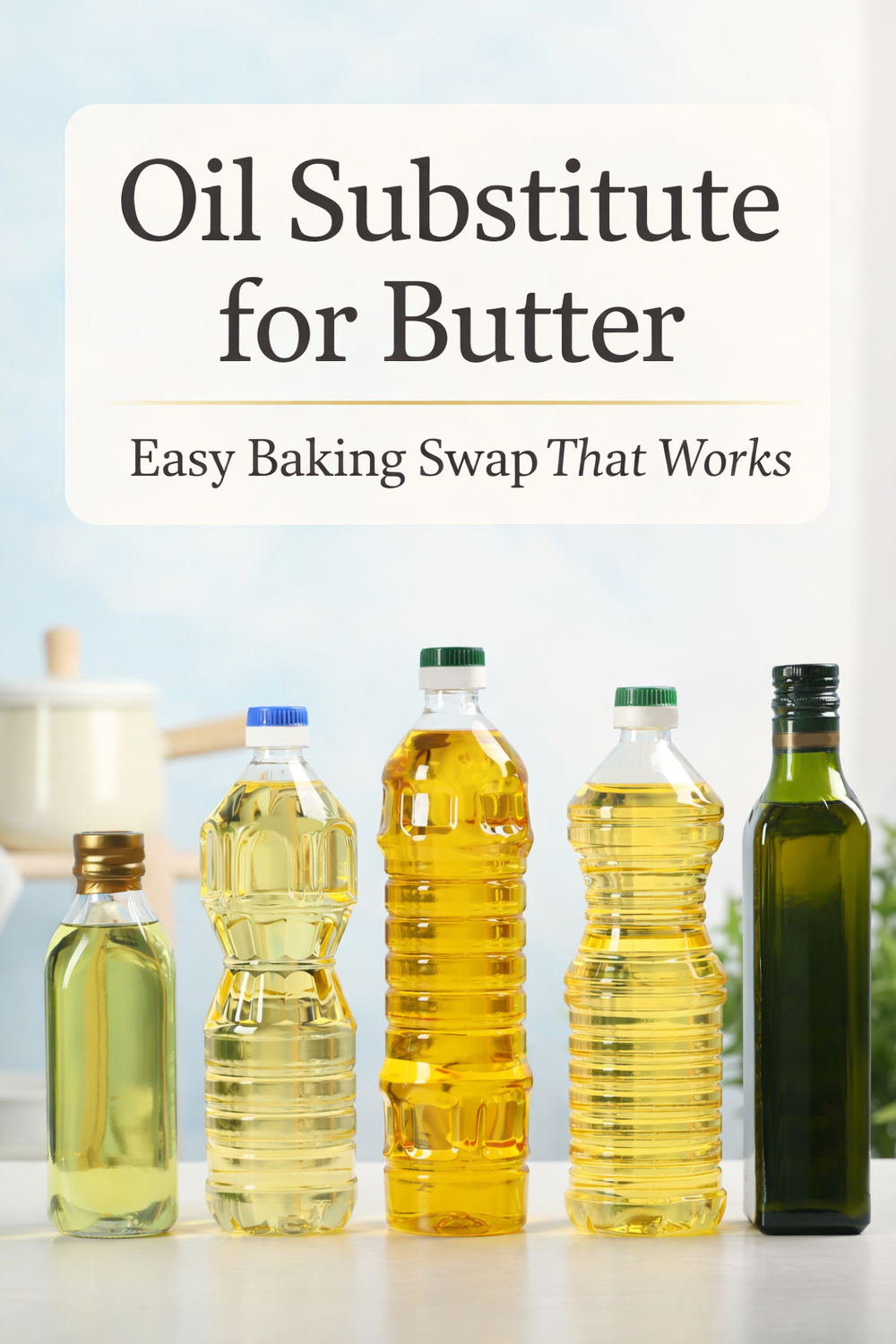
Vegetable Oil — The Default
Neutral flavor, cheap, available everywhere, works in any recipe that calls for "neutral oil." This is the safe choice for cakes, muffins, brownies, and quick breads. Most box cake mixes specify vegetable oil for a reason — it disappears into the recipe.
Best for: Cakes, muffins, brownies, quick breads, anything where you want the recipe's flavors to shine without oil flavor competing.
Canola Oil — Slightly Lighter
Very similar to vegetable oil but with a slightly lighter mouthfeel and a healthier fat profile (more monounsaturated fats). For most baking purposes, vegetable and canola are interchangeable.
Best for: Same as vegetable oil. Use whichever you have.
Avocado Oil — The Premium Neutral
Genuinely neutral flavor, high smoke point, works in any baking application that calls for neutral oil. The price is the only catch — avocado oil costs 3-4x what vegetable oil does. Worth it if you're using it for high-heat cooking too.
Best for: Any recipe that calls for neutral oil, especially if you're already buying it for sautéing.
Light Olive Oil — Subtle Mediterranean Flavor
"Light" refers to flavor, not calories. Light olive oil has a much milder taste than extra virgin and works in chocolate cakes, savory quick breads, and Mediterranean-style baking. Don't use extra virgin in sweet baking unless the recipe specifically calls for it (some Italian olive oil cakes do).
Best for: Chocolate cakes, focaccia, savory cornbread, Italian olive oil cakes, anywhere a subtle olive flavor enhances the recipe.
Skip for: Vanilla cakes, sugar cookies, anything where the olive flavor would compete with delicate flavors.
Coconut Oil — The Solid-Fat Substitute
The one oil that actually behaves somewhat like butter because it's solid at room temperature (below 76°F). This makes it the best choice for cookies, pie crust, and flaky pastry where solid fat matters.
Two types to know:
- Refined coconut oil is deodorized and has little to no coconut flavor. Use this for most baking unless you specifically want coconut flavor.
- Virgin (or unrefined) coconut oil has a strong coconut taste. Use this only when coconut flavor is welcome — tropical desserts, certain cookies, dairy-free fudge.
Best for: Cookies, pie crust, biscuits, dairy-free baking, fudge, anywhere butter's solid-state matters.
Skip for: Vanilla cakes (the coconut flavor sneaks through), savory baking, recipes where you want a completely neutral fat.
Ghee (Clarified Butter) — Closest to Butter
Technically not an oil, but worth mentioning because it's the closest substitute when you want true butter flavor without the milk solids. Ghee is 100% butterfat — the water and milk solids have been cooked off. It's lactose-free for dairy-sensitive bakers.
Best for: Recipes where butter flavor is the point and you can't use butter for dietary reasons. 1:1 swap with melted butter.
Oils to Skip in Baking
Some oils don't belong in baking unless you specifically want their flavor:
- Extra virgin olive oil (in sweet recipes) — too peppery and grassy for most desserts
- Sesame oil — too pungent
- Walnut oil — too strongly flavored, also expensive
- Peanut oil — fine in savory baking but the flavor competes with most sweet recipes
If a recipe calls for "neutral oil," it means vegetable, canola, or avocado. Don't substitute strongly flavored oils unless you want the flavor.
Butter to Oil Conversion Chart
The math is simple but worth having on hand. This chart assumes the standard ¾ cup oil per 1 cup butter ratio (for cakes, muffins, brownies, quick breads).
| Butter Amount | Oil Substitute |
|---|---|
| ¼ cup butter | 3 tablespoons oil |
| ⅓ cup butter | ¼ cup oil |
| ½ cup butter (1 stick) | ⅓ cup oil + 1 tablespoon |
| ⅔ cup butter | ½ cup oil |
| ¾ cup butter | ½ cup oil + 2 tablespoons |
| 1 cup butter (2 sticks) | ¾ cup oil |
| 1¼ cups butter | ¾ cup oil + 3 tablespoons |
| 1½ cups butter (3 sticks) | 1 cup oil + 2 tablespoons |
| 2 cups butter (4 sticks) | 1½ cups oil |
For cookies, reduce the oil to ½–⅔ cup per 1 cup butter — start with ⅔ cup and adjust based on dough texture. With coconut oil specifically, use 1:1 since it solidifies like butter. Always chill the dough for at least 1 hour before baking.
For 1:1 substitutions (when the recipe says "melted butter" or you're using coconut oil for pastry), just use equal amounts.
Common Mistakes (and How to Fix Them)
These are the mistakes that turn an oil-for-butter swap into a baking disaster.
Using a 1:1 Swap in Cakes and Muffins
The single most common mistake. Recipes that call for 1 cup of butter and you swap in 1 cup of oil produce greasy, oily, heavy results. Oil is 100% fat; butter is only 80%. So 1 cup of oil contains 25% more fat than 1 cup of butter.
The fix: Use ¾ cup of oil per 1 cup of butter for cakes, muffins, brownies, and quick breads. The 25% reduction matches the actual fat content.
Skipping the Chill on Cookie Dough
Oil-based cookie dough at room temperature spreads way more in the oven than butter-based dough. Without chilling, you'll pull cookies out of the oven that look like crispy pancakes — flat, thin, and overdone at the edges.
The fix: Chill oil-based cookie dough for at least 1 hour, ideally 2-4 hours. The cold oil helps the cookies hold their shape until the structure sets in the oven.
Trying to Make Flaky Pie Crust with Liquid Oil
Vegetable, canola, or olive oil in a pie crust recipe produces a crust that's tender and crumbly but never flaky. The flaky layers come from solid fat — period.
The fix: Use solid coconut oil at 1:1 if you need a dairy-free or oil-based crust. Or pivot to a press-in crumb crust (graham cracker, Oreo, or shortbread) instead of trying to force a flaky result.
Using Strong-Flavored Oil in Sweet Recipes
Extra virgin olive oil, walnut oil, or unrefined coconut oil have strong flavors that show up in the finished product. A vanilla cake made with extra virgin olive oil tastes like a savory olive oil cake, not a vanilla cake.
The fix: Stick to neutral oils (vegetable, canola, avocado, refined coconut) for most sweet baking. Save strong-flavored oils for recipes that complement them — chocolate cakes, focaccia, Mediterranean baking.
Forgetting to Adjust for Lost Liquid
When you swap oil for butter, you lose the water content butter contributed (about 16-18% of the original butter amount). In some recipes — particularly bread doughs and certain cake recipes — this matters.
The fix: For every stick of butter (½ cup) you replace with oil, add 1½ tablespoons of water or other liquid (milk, juice from the recipe). This restores the moisture balance. Most cakes and muffins don't strictly need this adjustment, but it produces better results in particular recipes.
Using Oil in Recipes That Specifically Need Solid Butter
Shortbread, butter cookies, classic pound cake, croissants, biscuits, and pie crust all depend on solid butter for their fundamental character. Substituting oil in these recipes doesn't produce a worse version of the same thing — it produces a completely different baked good.
The fix: Don't try. If you don't have butter and you need a recipe that genuinely requires solid fat, switch to a recipe designed for oil. There are excellent oil-based brownies, oil-based cakes, and oil-based muffins. There aren't great oil-based shortbread cookies — that's not a battle worth fighting.
FAQ
Can I use olive oil instead of butter in cake?
Yes, especially in chocolate cake. Use ¾ cup of light olive oil per 1 cup of butter. The chocolate masks any olive flavor and adds richness. For vanilla or yellow cakes, use light olive oil only — extra virgin will be too peppery and herbal. Mediterranean olive oil cakes are an entire genre of baking that uses olive oil intentionally as the primary fat.
How much oil do I use to replace 1 stick of butter?
A stick of butter is ½ cup, so use ⅓ cup oil plus 1 tablespoon (which equals ⅜ cup, or 75% of the original butter amount) for cakes, muffins, brownies, and quick breads. For cookies, start with about ¼ to ⅓ cup of oil per stick of butter (depending on the cookie style — start higher and adjust based on dough texture) and always chill the dough.
Can I substitute oil for butter in cookies?
Yes, but with adjustments. Start with about ½ to ⅔ cup of oil per 1 cup of butter, depending on the cookie style (most drop cookies like chocolate chip, oatmeal, and snickerdoodle do well at ⅔ cup), and adjust based on dough texture — add a tablespoon if it looks too dry, pull back next time if it looks oily. Coconut oil is the closest match to butter for cookies and can often be used close to 1:1. Always chill the dough for at least 1 hour before baking. Skip oil substitutions in shortbread, sugar cookies, and butter cookies where butter is the entire flavor.
What's the best oil to use in baking?
For neutral results in cakes, muffins, and quick breads: vegetable, canola, or avocado oil. For cookies and pastry: refined coconut oil (it solidifies like butter). For chocolate cakes and savory baking: light olive oil works beautifully. For dairy-free baking that needs butter behavior: ghee or coconut oil.
Is oil healthier than butter?
It depends on the oil and what you mean by "healthy." Most cooking oils are lower in saturated fat than butter, which can be better for cardiovascular health. But oil contains 25% more fat per cup than butter (since butter has water and milk solids), so you're often consuming more total fat in oil-based baking. The healthiest substitution is olive or avocado oil for butter — both are high in monounsaturated fats and have well-established health benefits.
Can I combine oil with other substitutes?
Yes, and in some recipes this gives the best result. A common combination is half oil, half mashed banana or applesauce — this works well in muffins and quick breads because the fruit adds moisture and natural sweetness while reducing the total fat. For cakes, combining ½ cup oil with ½ cup full-fat Greek yogurt produces a tender, moist crumb that some bakers prefer to either substitute alone.
What is the ratio of oil to butter for baking?
The standard ratio is ¾ cup oil per 1 cup butter (a 3:4 ratio) for cakes, muffins, brownies, and quick breads. For cookies, use half the amount (½ cup oil per 1 cup butter). For pie crust and pastry, use solid coconut oil at a 1:1 ratio. For melted butter applications, use oil at 1:1 with no adjustments.
Does coconut oil work as a substitute for butter in cookies?
Yes — coconut oil is the closest oil-based substitute for cookies because it solidifies at room temperature (below 76°F) and behaves more like butter than liquid oils do. Start at close to 1:1 (1 cup coconut oil for 1 cup butter), then chill the dough for 1+ hours before baking. Watch the dough texture as you mix — refined and virgin coconut oils have slightly different textures, so adjust by a tablespoon either way if the dough looks too oily or too dry. Use refined coconut oil if you don't want any coconut flavor in your cookies; virgin coconut oil works when coconut flavor is welcome.
Can I use oil instead of butter in cinnamon rolls?
Not for the dough — cinnamon roll dough needs butter for proper structure and flavor. But you can use oil in the glaze if needed (mix powdered sugar with milk and a teaspoon of vegetable oil). For my old fashioned sourdough cinnamon rolls and sourdough cinnamon roll focaccia, the butter in the dough and filling is genuinely important.
How much oil replaces 2 sticks of butter?
Two sticks of butter equals 1 cup. Replace with ¾ cup of oil for most recipes (cakes, muffins, brownies, quick breads). For cookies, replace 2 sticks with about ½ to ⅔ cup of oil depending on the cookie style — start with ⅔ cup and adjust based on dough texture. For pie crust requiring solid fat, use 1 cup of solid coconut oil at close to a 1:1 ratio.
Final Thoughts
Here's what most oil-substitute guides miss: the right ratio depends on what you're baking, not on a universal rule. Cakes and muffins want ¾ cup of oil per cup of butter. Cookies usually want less oil than cakes, plus a chill. Pie crust wants solid coconut oil or nothing. Frosting wants you to pick a different recipe entirely.
The best oils to keep on hand for baking are vegetable or canola oil for everyday neutral applications, refined coconut oil for cookies and anywhere you need solid fat, and a bottle of light olive oil for chocolate cakes and savory baking. With those three, you can swap oil for butter in nearly any recipe that allows it.
What I'd skip without a second thought: 1:1 swaps in cakes (greasy results), liquid oil in pie crust (no flaky layers), strong-flavored oils in delicate sweet recipes (the oil flavor takes over), and any oil substitution in shortbread, butter cookies, or buttercream frosting (these recipes need butter for their fundamental character).
The whole point of substitution is keeping your baking on track when life happens. Now you've got the actual ratios for every recipe type, the right oil for each job, and the small adjustments that make the difference between "you can't tell" and "what happened to my dessert."
If you're missing more than just butter, these guides cover the rest of your baking pantry:
- Butter substitutes for baking — for when you need solid butter alternatives, not just oil
- Cream cheese substitutes — for frosting, cheesecakes, and dips
- Milk substitutes — for adjusting consistency in any recipe
- Buttermilk substitutes — for tangy flavor in pancakes, biscuits, and quick breads
- Heavy cream alternatives — for richness, sauces, and whipped toppings
- Cornstarch substitutes — for thickening sauces and adding structure
For the complete picture, the baking ingredient substitutions guide covers every common swap in one place — butter, milk, eggs, sugar, flour, and beyond.
Related
Looking for other recipes like this? Try these:
Pin to Pinterest