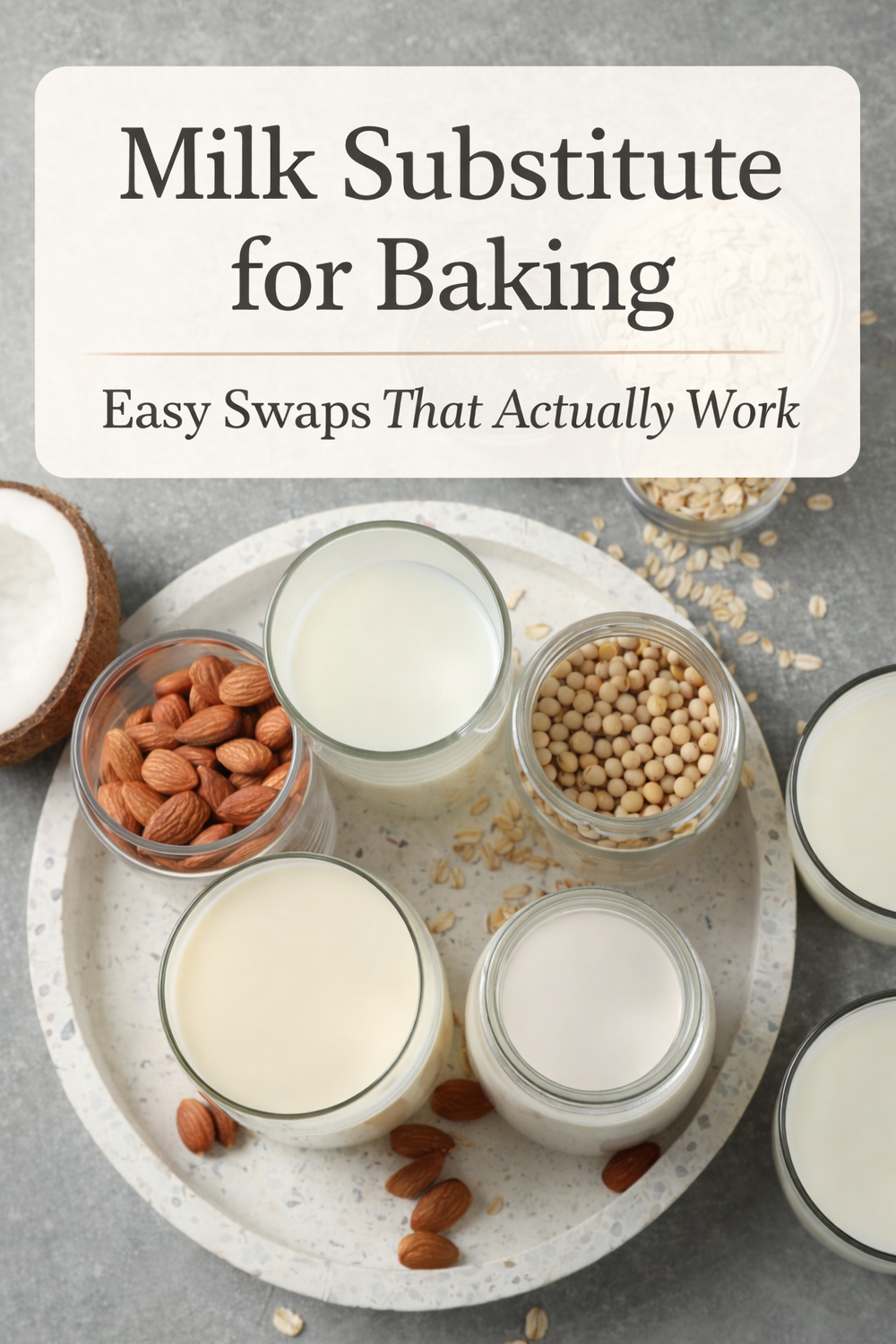
You're halfway through a recipe and realize you're out of milk. Or you're baking for someone who can't have dairy, or you only have evaporated milk in the pantry, or you grabbed oat milk by mistake at the store and want to know if it'll still work. Standing in the kitchen, recipe pulled up on your phone, wondering if the swap will save the day or ruin it.
Here's the good news: milk is one of the easiest ingredients to substitute in baking. The bad news is that "easy" doesn't mean "any swap works for any recipe." Soy milk and oat milk hold up well in cakes and quick breads. Almond milk produces lighter, paler results. Water works in a pinch but loses richness. Evaporated milk needs dilution. And yeast breads are pickier than you'd think.
This guide walks you through the seven best milk substitutes for baking, the exact ratios for each, which recipes they work best for, and the small adjustments that make the difference between "you can't tell" and "what happened to my cake."
For more reliable swaps when you're missing other baking staples, the complete baking ingredient substitutions guide covers everything else you might need.
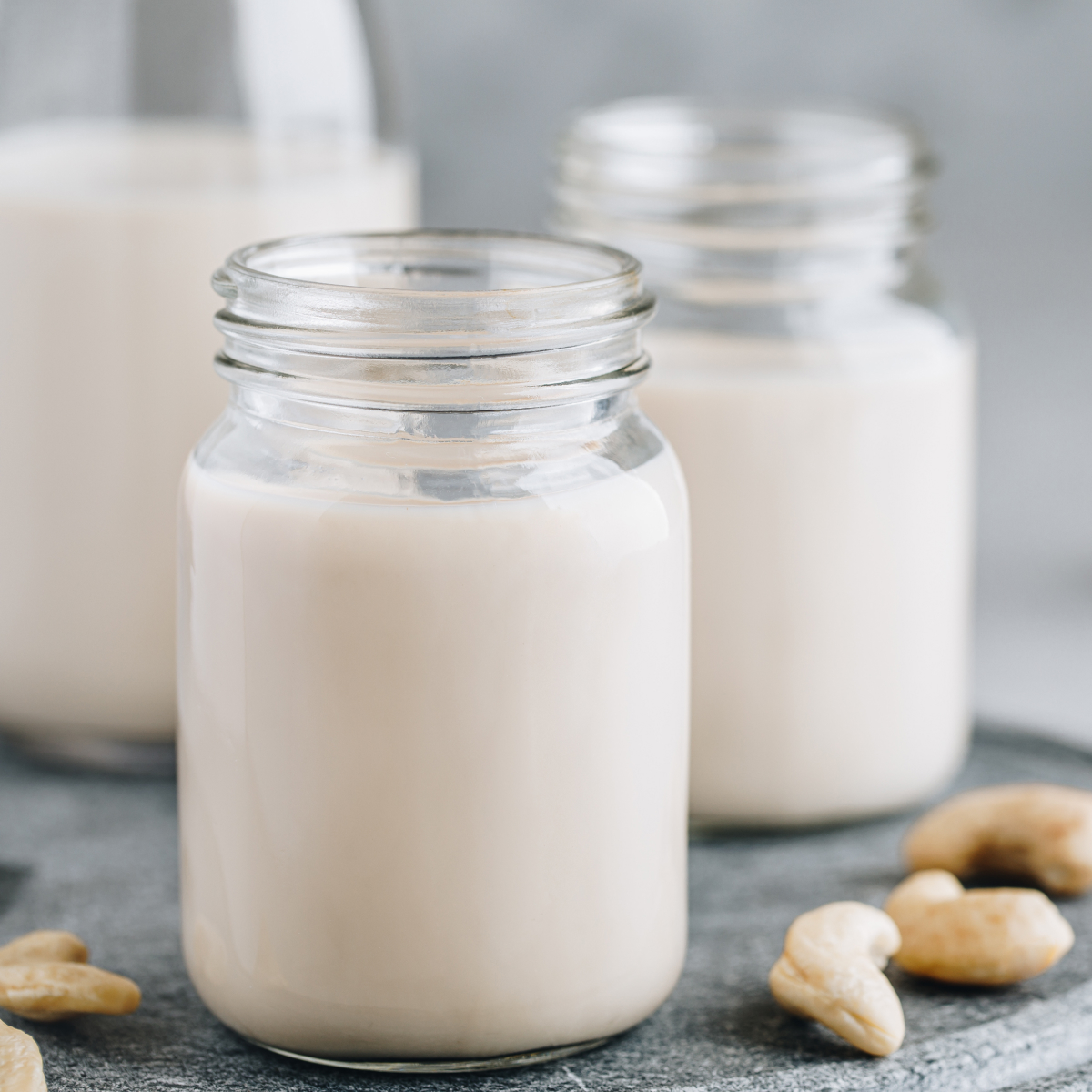
Jump to:
Quick Answer
For most baking recipes, the rule is 1 cup of substitute per 1 cup of milk (a straight 1:1 swap). The best all-purpose substitutes are soy milk and oat milk — both work in nearly any baked good with no recipe adjustments.
If those aren't options, here's the short version:
- For cakes, muffins, quick breads: soy milk, oat milk, almond milk, or coconut milk (carton) — 1:1
- For yeast bread: soy milk is the closest match because of its protein content
- For evaporated milk you have on hand: mix ½ cup evaporated milk + ½ cup water = 1 cup regular milk
- For richer results: half-and-half diluted with water (¾ cup cream + ¼ cup water = 1 cup milk)
- In an emergency: water plus 1 tablespoon of butter or oil per cup (works, just less rich)
- For tangy recipes: plain yogurt thinned with a bit of milk or water
But here's the thing — milk does three different jobs in different recipes. It adds moisture in cakes, builds structure in yeast breads, and contributes browning and richness in everything. The right substitute depends on which job matters most. A swap that saves your muffins might leave your dinner rolls pale and dense.
Skip down to your recipe type for the exact swap that'll actually work.
Which Milk Substitute for Which Recipe?
Find your recipe type and grab the swap that fits.
For Cakes (Yellow, Chocolate, Vanilla, Bundt)
Best: Soy milk or oat milk at 1:1. Both have enough protein and fat to produce a tender, structured crumb similar to dairy milk. Soy milk specifically matches dairy milk's protein content (about 7-8 grams per cup vs dairy's 8), which means similar browning and similar structure.
Decent: Almond milk at 1:1. Cakes will be slightly lighter in color and texture because almond milk has less protein and fat. Works for most home baking, especially chocolate cakes where the chocolate carries the color and richness.
Decent: Coconut milk from a carton (not canned) at 1:1. Adds slight richness and a hint of tropical flavor. Works well in chocolate cakes, banana cakes, and tropical-flavored recipes.
Skip: Canned coconut milk (too thick and rich), water alone (too thin), and rice milk in delicate cakes (often makes cakes gummy because of the high starch content).
For Cookies
Best: Soy milk or oat milk at 1:1. Most cookie recipes use very little milk to begin with (often just 1-2 tablespoons), so the substitution barely affects the outcome.
Decent: Almond milk at 1:1, water at 1:1, or any plant-based milk.
Pro tip: Many cookie recipes that call for "a splash of milk" are really just looking for moisture to bind the dough. In that case, water works perfectly — the cookies won't taste any different.
Skip: Heavy cream-based substitutes undiluted, because they'll add too much fat to the cookie dough and cause spreading.
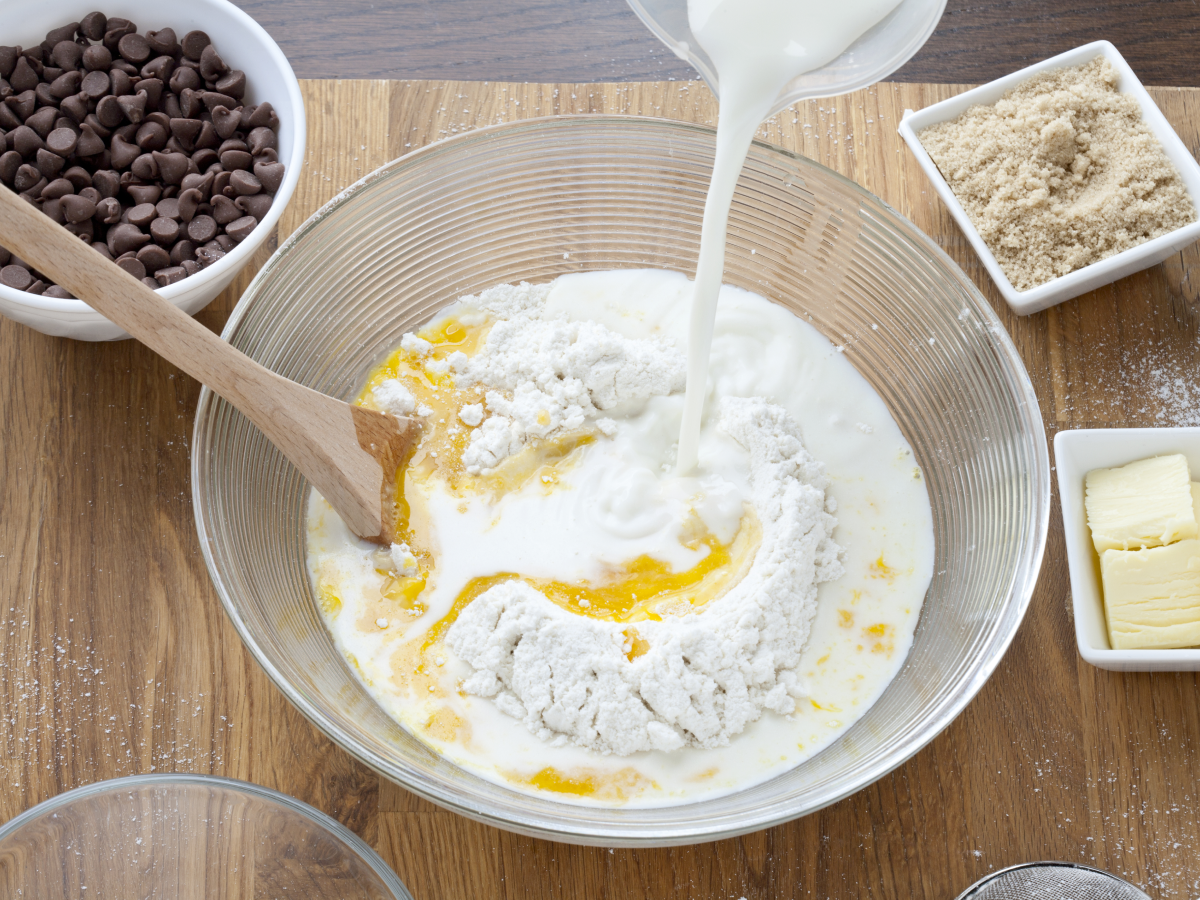
For Muffins and Quick Breads
Best: Any plant-based milk at 1:1 — oat, soy, almond, coconut (carton). Muffins and quick breads are the most forgiving recipes for milk substitution.
Pro tip: Oat milk is particularly excellent here because it's slightly sweet and adds tenderness. Many bakery muffins are made with oat milk for exactly this reason — moist, slightly sweet, and stays fresh longer.
Skip: Nothing really fails here. This is the safest category for milk substitution.
For Yeast Bread
Best: Soy milk at 1:1. This is the only category where the substitute matters significantly, because yeast bread needs protein for structure (the protein helps form gluten and creates the chewy texture you want in bread). Soy milk is the only common plant-based milk that matches dairy milk's protein content.
Decent: Whole milk diluted slightly with water if you have a small amount, or dairy milk powder reconstituted to specifications.
Skip: Almond milk, rice milk, and water in yeast breads where milk is the primary liquid. The bread will rise but won't have the same softness, browning, or shelf life. For dinner rolls, sandwich bread, and brioche specifically, milk's protein is doing real work — and most plant milks (except soy) don't replicate it.
For Pancakes and Waffles
Best: Any plant-based milk at 1:1 — oat, soy, almond, even coconut milk from a carton. Pancakes and waffles are essentially quick breads cooked on a griddle, so they handle substitutions beautifully.
Pro tip: Oat milk produces particularly tender, slightly sweet pancakes. Buttermilk-style pancakes can be made with any plant milk plus 1 tablespoon of lemon juice or vinegar per cup — let it sit 5 minutes to curdle slightly, then use as you would buttermilk.
Skip: Nothing really fails for pancakes. The high cooking temperature and short cooking time forgive most substitutions.
For Custards and Puddings
Best: Whole dairy milk if you have it. This is the trickiest category for substitutions because custards and puddings depend on milk proteins to set properly.
Decent (with adjustment): Soy milk at 1:1 — closest match for protein content.
Decent (with adjustment): Canned coconut milk (full-fat) at 1:1, but expect a coconut flavor in the final pudding.
Skip: Almond milk, oat milk, and rice milk for traditional baked custards. Without enough protein, the custard either won't set properly or will set unevenly. If almond or oat milk is your only option, add 1 extra egg yolk per cup of substitute milk to help with setting.
For Béchamel Sauce and Cream-Based Recipes
Best: Whole milk or half-and-half diluted with water (¾ cup cream + ¼ cup water = 1 cup milk equivalent).
Decent: Evaporated milk diluted 1:1 with water.
Decent: Soy milk at 1:1 — holds up to heat without curdling.
Skip: Almond milk and rice milk for béchamel-style sauces. They're too thin and don't thicken properly. If you must use them, increase the flour or butter slightly to build more structure.
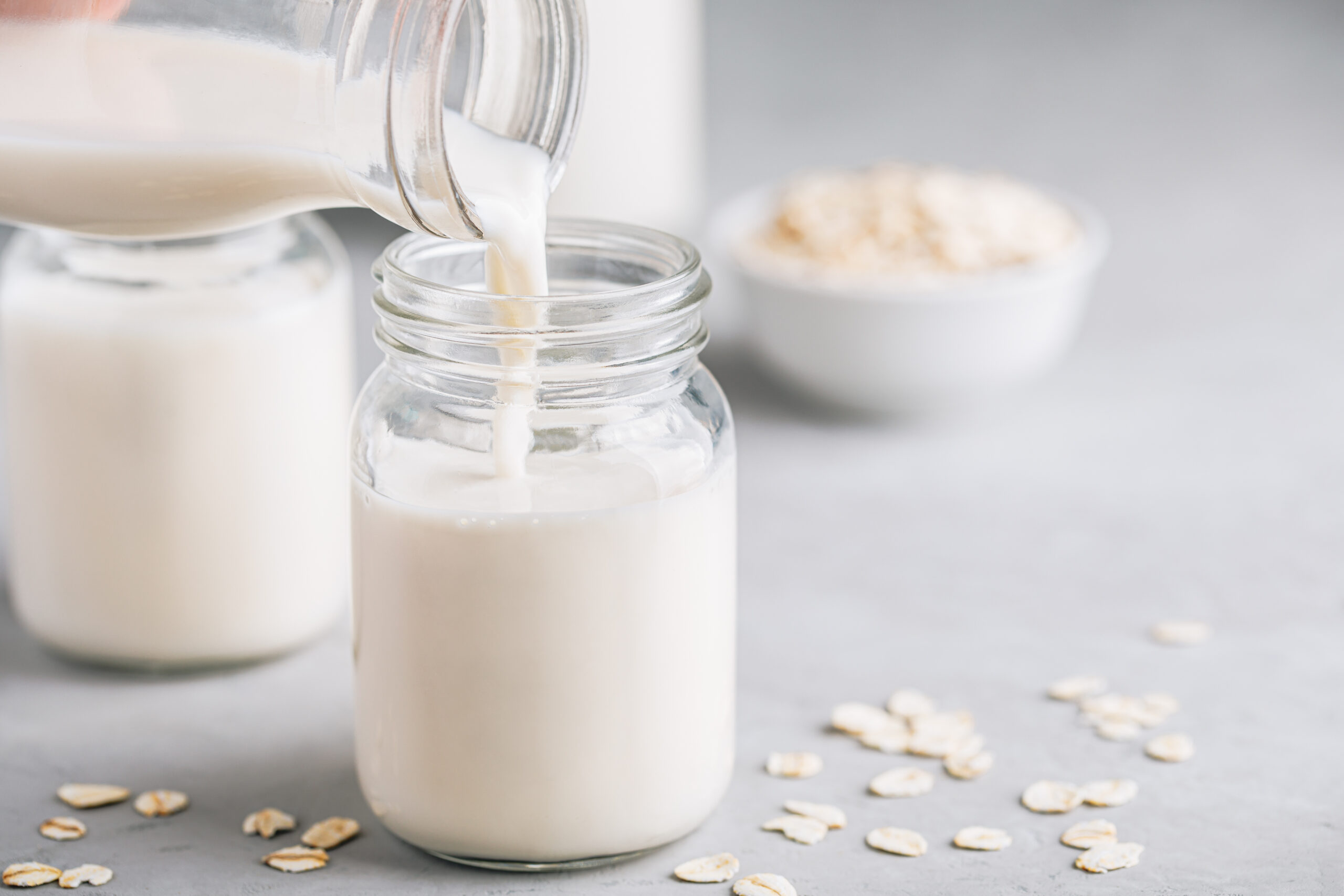
Why Milk Choice Affects Baked Goods (More Than You'd Think)
Most people think milk is just "liquid for the recipe." It's actually doing four different jobs at once, and the substitute you choose affects how well each job gets done.
Job 1: Moisture. This is the easy one. Milk adds water (it's about 87% water), which hydrates the flour, dissolves the sugar, and helps the batter come together. Almost any liquid can do this — water, plant milk, juice, dairy milk. This is why "just use water" works in a pinch.
Job 2: Protein for structure. Dairy milk contains about 8 grams of protein per cup. That protein helps build structure in yeast breads, helps custards set, and creates the chew in pancakes. Soy milk is the only common plant milk that matches this protein level (about 7-8 grams per cup). Oat milk has 2-4 grams, almond milk has 1-2 grams, rice milk has even less. The protein gap is why soy milk is the gold standard for yeast bread and why almond milk produces lighter, paler baked goods.
Job 3: Fat for richness. Whole milk has about 8 grams of fat per cup. That fat carries flavor, creates tenderness, and helps with browning. Most plant milks are lower in fat than whole milk — oat milk has about 5 grams, almond milk has 2-3 grams. That's why baked goods made with plant milk can taste slightly less rich than versions made with whole milk. The fix, when richness matters, is to add 1 tablespoon of melted butter or oil per cup of plant milk.
Job 4: Browning. This is the one nobody thinks about until they pull pale rolls out of the oven. Dairy milk contains lactose (a sugar) and proteins, which together drive the Maillard reaction — the browning and complex flavors that develop during baking. Plant milks generally produce paler results because they have less of both. Soy milk browns the closest to dairy. Almond and oat milks produce noticeably lighter crusts. If golden-brown crust matters in your recipe (dinner rolls, pie crusts, brioche), brush the top with a beaten egg or a little oil to compensate.
The recipe-specific guidance above accounts for all four jobs. Cakes and muffins mostly need Job 1 (moisture) — almost any swap works. Yeast breads need Jobs 2, 3, and 4 — that's why soy milk wins. Custards need Job 2 most of all — protein for setting. Knowing what milk is doing in your specific recipe tells you which substitute will actually work.
The 7 Best Milk Substitutes (Ranked)
1. Soy Milk — The Closest Match
Soy milk is the most chemically similar plant milk to dairy milk. Same protein content (7-8 grams per cup), similar thickness, similar browning behavior. If you're doing serious baking and only one plant milk has to do the job, this is the one.
The catch: Soy milk has a slightly beany flavor that some people taste, especially in delicate recipes (vanilla cakes, sugar cookies). Use refined or "creamy" varieties of soy milk for less beany taste. In most flavored or chocolate recipes, you won't notice.
Best for: Yeast breads, dinner rolls, brioche, cakes, custards, anything where protein matters. The single best dairy-free milk for baking from scratch.
Skip it for: Recipes where you can taste the beany flavor and don't want it (delicate vanilla cakes, plain custards).
Ratio: 1:1, no adjustments.
2. Oat Milk — The Creamy All-Rounder
Oat milk has become the favorite plant milk for baking because of its creamy texture and neutral, slightly sweet flavor. It's not the closest match to dairy on protein (only 2-4 grams per cup), but its fat content and natural sweetness make baked goods tender and moist. Many bakery muffins, scones, and cakes are made with oat milk.
The catch: Lower protein than dairy means lighter browning and slightly less structure. If you're making yeast bread or a recipe where browning matters, brush with egg wash or milk wash before baking to compensate.
Best for: Cakes, muffins, quick breads, pancakes, waffles, scones, anything where moisture and tenderness matter more than protein structure. Particularly excellent in chocolate baked goods.
Skip it for: Recipes that absolutely require dairy-like protein (high-end yeast breads, classic baked custards).
Ratio: 1:1, no adjustments.
3. Almond Milk — The Lighter Option
Almond milk is the most common plant milk in American kitchens and works well in casual baking. It's thinner than dairy milk, with much less protein (1-2 grams per cup) and minimal fat. Results will be slightly lighter in texture and color than dairy-made versions, but for everyday cakes, muffins, and pancakes, the difference is barely noticeable.
The catch: Browning is noticeably lighter. The protein gap means yeast breads won't have the same structure. Avoid in recipes where richness is the point.
Always unsweetened. Sweetened almond milk adds extra sugar to your recipe in ways that can throw off the balance. Buy unsweetened plain almond milk for baking — if you want sweetness, the recipe will add it.
Best for: Cakes, muffins, pancakes, waffles, cookies, quick breads. The most economical plant milk for everyday substitutions.
Skip it for: Yeast breads where protein and browning matter, custards, recipes where richness is the star.
Ratio: 1:1, no adjustments.
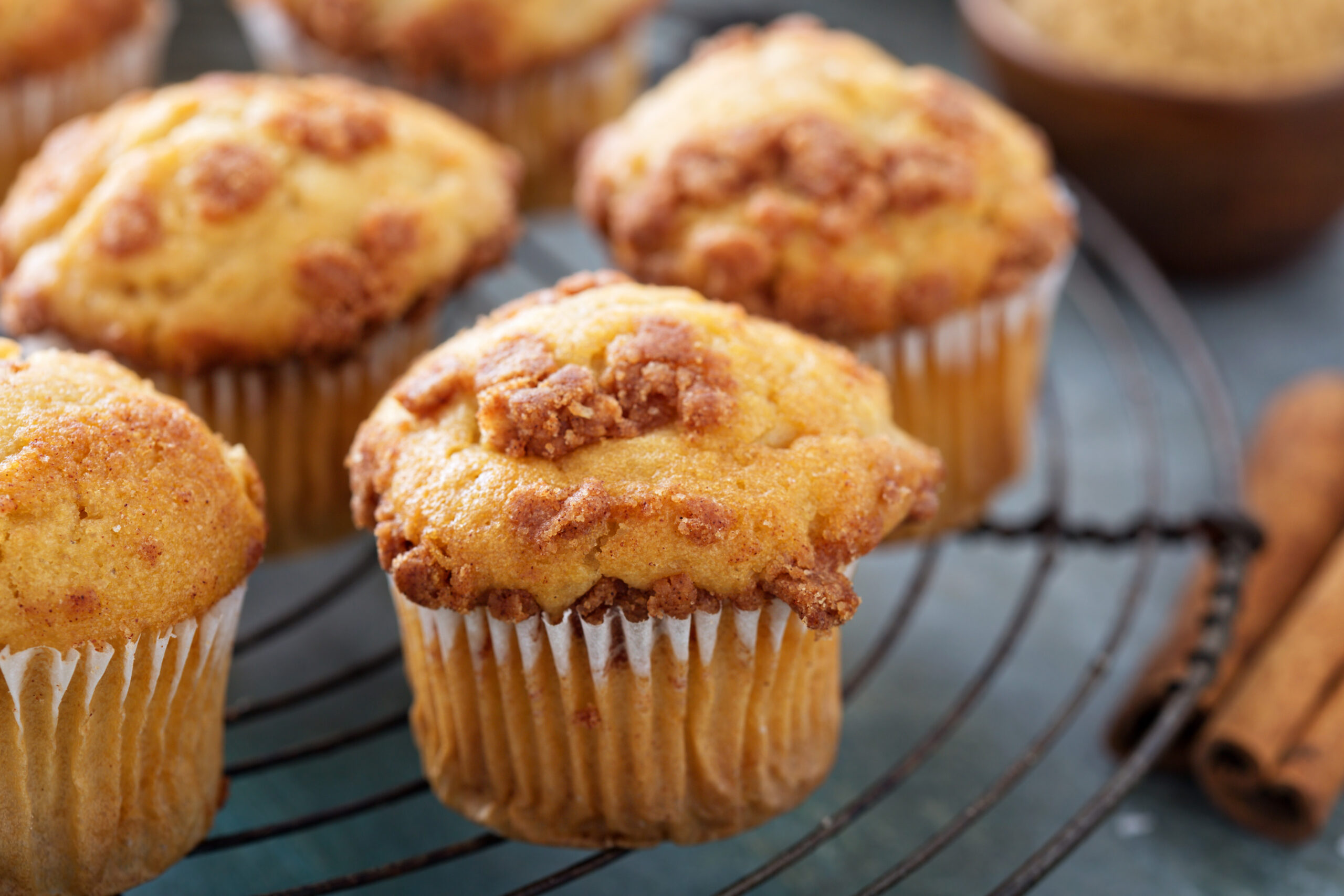
4. Coconut Milk (Carton) — The Slightly Sweet Option
Carton coconut milk is the drinking kind — thinner than canned coconut milk, designed to be used like dairy milk. It's slightly richer than almond milk and adds a subtle tropical flavor that works beautifully in some recipes and clashes in others.
Important distinction: Coconut milk in a carton (next to almond milk in the dairy aisle) is completely different from canned coconut milk (in the international aisle, used for curries). The carton version is for drinking and baking; the canned version is much richer and meant for cooking. Do not interchange them.
Best for: Chocolate cakes, banana bread, tropical desserts, coconut-flavored anything, pancakes (where a hint of coconut is a feature, not a bug).
Skip it for: Recipes where a coconut flavor would compete (vanilla cake, sugar cookies, plain dinner rolls). Also skip for delicate custards where the coconut flavor would dominate.
Ratio: 1:1, no adjustments.
5. Evaporated Milk + Water — The Pantry Backup
Evaporated milk is regular milk with about 60% of the water removed, which means it's essentially concentrated milk you can rehydrate. This is the best pantry-stable backup for when you're completely out of fresh milk.
The exact ratio: ½ cup evaporated milk + ½ cup water = 1 cup regular milk. America's Test Kitchen specifically tested this dilution and confirmed it produces baked goods nearly identical to ones made with fresh whole milk. Don't try to use evaporated milk straight — it'll make your baked goods overly browned, dense, and weirdly caramelized.
Pro tip: A 12-ounce can of evaporated milk diluted with 12 ounces of water gives you 24 ounces (3 cups) of milk equivalent. Stretches further than you'd think.
Best for: Any recipe that calls for whole milk. Particularly good for cream-based recipes (béchamel, gravy, scalloped potatoes) where the slight richness is a bonus.
Skip it for: Recipes where freshness is the point — fresh whipped cream, milk to drink, dishes where the slightly caramelized flavor of evaporated milk would compete.
Ratio: ½ cup evaporated milk + ½ cup water per 1 cup of milk needed.
6. Half-and-Half + Water — When You Want Richer Results
If you have half-and-half but no regular milk, dilute it with water to mimic whole milk. Half-and-half is about half cream and half milk, so it has more fat than whole milk and needs to be thinned.
The ratio: ¾ cup half-and-half + ¼ cup water = 1 cup whole milk.
Best for: Cakes, muffins, and quick breads where extra richness is welcome. Custards (no dilution needed — use straight). Cream sauces.
Skip it for: Recipes where you specifically want a lighter result, or savory recipes where the slight sweetness of cream would clash.
Ratio: ¾ cup half-and-half + ¼ cup water per 1 cup milk needed.
7. Water + Fat — The True Emergency Option
If you have literally nothing in the fridge or pantry, water plus a bit of fat is the absolute backup plan. It works because milk's main job (moisture) is handled by the water, and a small amount of butter or oil adds back the richness and tenderness milk would have provided.
The formula: 1 cup water + 1 tablespoon melted butter (or oil) = 1 cup milk equivalent for most recipes.
Best for: Pancakes, simple cakes, quick breads, anywhere a recipe needs liquid but not specifically dairy. Cookies where the milk amount is small (often just 1-2 tablespoons).
Skip it for: Yeast breads, custards, anything where protein matters. Also skip for recipes where milk is the primary ingredient (like a milk-based pudding) — water plus fat won't replicate enough of what milk does.
Ratio: 1 cup water + 1 tablespoon butter or oil per 1 cup milk.
Milk Conversion Chart
| Original Recipe | Best Swap | Notes |
|---|---|---|
| 1 cup milk | 1 cup soy or oat milk | Closest 1:1 swap |
| 1 cup milk | 1 cup almond milk | Slightly lighter result |
| 1 cup milk | ½ cup evaporated milk + ½ cup water | Best pantry backup |
| 1 cup milk | ¾ cup half-and-half + ¼ cup water | Richer result |
| 1 cup milk | 1 cup water + 1 tablespoon butter | Emergency swap |
| 1 cup milk | 1 cup plain yogurt thinned with 2-3 tablespoon water | For tangy results, like buttermilk |
| ½ cup milk | ¼ cup evaporated milk + ¼ cup water | Same dilution scaled |
| 2 cups milk | 1 cup evaporated milk + 1 cup water | Same dilution scaled |
| 1 cup milk for yeast bread | 1 cup soy milk | Only plant milk with enough protein |
| 1 cup milk in custard | 1 cup soy milk + 1 extra egg yolk | Helps with setting |
Common Mistakes (and How to Fix Them)
These are the mistakes that turn an easy milk swap into a frustrating baking failure.
Using Evaporated Milk Without Diluting
The single biggest mistake. Evaporated milk has 60% of the water removed, so substituting it straight produces dense, overly browned, weirdly caramelized baked goods. The recipe is now working with too little water and too much concentrated milk solids.
The fix: Always dilute evaporated milk 1:1 with water before substituting for fresh milk. ½ cup evaporated milk + ½ cup water = 1 cup regular milk.
Confusing Canned Coconut Milk with Carton Coconut Milk
These are completely different products despite the shared name. Canned coconut milk (for curries) is rich, thick, and meant for cooking. Carton coconut milk (for drinking and baking) is thinner, less rich, and similar to dairy milk in consistency.
The fix: For most baking, use carton coconut milk. The canned version will overwhelm cakes and muffins with coconut flavor and fat. If you only have canned, dilute it: ½ cup canned coconut milk + ½ cup water = roughly 1 cup of "regular" coconut milk for baking.
Using Fat-Free or Low-Fat Substitutes
Cutting fat sounds healthier but creates real baking problems. Fat carries flavor, builds tenderness, and helps with browning. Using fat-free almond milk in a cake produces a noticeably less tender, less flavorful result than using full-fat versions.
The fix: Always use full-fat or "original" versions of plant milks for baking. The calorie difference between unsweetened almond milk and reduced-fat almond milk is small; the texture difference in your baked goods is large.
Trying to Use Almond Milk in Yeast Bread
Yeast bread needs protein to build structure. Dairy milk and soy milk both have enough protein for this. Almond milk and oat milk (and rice milk especially) don't. Yeast bread made with almond milk rises but produces a less tender, paler, drier loaf than versions made with dairy or soy.
The fix: For yeast bread specifically, use soy milk if you need dairy-free. For other recipes, almond milk is fine.
Forgetting to Adjust for Browning
Plant milks generally don't brown as well as dairy milk because they have less protein and less natural sugar. This shows up most in recipes where browning matters: pie crusts, dinner rolls, croissants, anything that needs a deep golden top.
The fix: Brush the top of the baked good with a beaten egg, an egg yolk + 1 teaspoon water, or 1 tablespoon of milk before baking. This gives the surface the proteins and sugars it needs to brown properly. For sweet recipes, a small sprinkle of sugar on top also helps.
Using Sweetened Plant Milk
Most plant milks come in both sweetened and unsweetened versions, and the sweetened versions can throw off the sugar balance in your recipe. A cake recipe expects a specific amount of sweetness — adding sweetened almond milk on top of the recipe's sugar can produce overly sweet, weirdly textured results.
The fix: Always buy plain unsweetened plant milk for baking. If the recipe needs sweetness, the recipe will add it. Sweetened plant milks are for cereal and coffee, not for cooking.
FAQ
What is the best milk substitute for baking?
Soy milk and oat milk are the two best all-purpose substitutes. Soy milk matches dairy milk's protein content most closely, which makes it the best choice for yeast breads, custards, and anything where structure matters. Oat milk is creamier and slightly sweeter, making it excellent for cakes, muffins, quick breads, and pancakes. For most home bakers, oat milk is the easier daily-use choice.
Can I use water instead of milk in baking?
Yes, especially in recipes where milk is a minor ingredient (cookies, some quick breads). For better results, add 1 tablespoon of melted butter or oil per cup of water to replace the fat that milk would have contributed. This works well in pancakes, simple cakes, and muffins. Avoid water-only substitutions in yeast breads, custards, and recipes where milk is the primary liquid.
What is the best dairy-free milk for baking?
Soy milk for anything where protein matters (yeast breads, custards). Oat milk for cakes, muffins, and most other baking. Both work at 1:1 with no recipe adjustments. Almond milk is fine for casual baking but produces lighter, paler results because of its lower protein content.
Can I use evaporated milk instead of regular milk?
Yes, but you must dilute it first. Mix ½ cup evaporated milk with ½ cup water to make 1 cup of milk equivalent. This dilution ratio is verified by America's Test Kitchen as producing nearly identical results to whole milk in baked goods. Using evaporated milk straight (undiluted) makes baked goods overly dense, browned, and caramel-flavored.
Can I use almond milk in cake?
Yes — almond milk works well in most cake recipes at a 1:1 ratio. Cakes will be slightly lighter in color and texture than versions made with dairy milk, but for chocolate cakes, spice cakes, and most fruit-flavored cakes, the difference is barely noticeable. Use unsweetened plain almond milk to avoid throwing off the recipe's sugar balance.
Can I substitute milk in cookies?
Yes, easily. Cookie recipes usually call for very small amounts of milk (just 1-2 tablespoons in most recipes), so any substitute works fine. Soy milk, oat milk, almond milk, or even water will all produce nearly identical cookies. This is the most forgiving recipe category for milk substitution.
Does milk type affect baking results?
Yes, more than people realize. Milk does four jobs in baked goods: adds moisture, contributes protein for structure, provides fat for richness and tenderness, and helps with browning. Plant milks generally have less protein and less fat than dairy milk, which produces slightly less structured and slightly paler results. Soy milk matches dairy most closely; almond and rice milk diverge the most.
Can I use plant-based milk in yeast bread?
Soy milk yes; almond, oat, and rice milk much less successfully. Yeast bread needs protein to develop the gluten structure that creates the bread's chew and softness. Soy milk has nearly identical protein content to dairy milk (7-8 grams per cup). Almond milk has 1-2 grams; oat milk has 2-4 grams. Bread made with low-protein plant milks rises but produces a paler, less tender, less structured loaf.
How do I substitute milk for sour cream or yogurt in baking?
If a recipe calls for sour cream or yogurt and you only have milk, add 1 tablespoon of lemon juice or vinegar per cup of milk and let it sit 5 minutes. This creates a "buttermilk-like" liquid with the acidity that sour cream or yogurt would have provided. Note: this isn't a perfect swap (you lose the thickness), but it preserves the acidity that activates baking soda and tenderizes the recipe.
What about milk substitutes in custards and puddings?
This is the trickiest category. Custards rely heavily on milk proteins to set properly. Soy milk works at 1:1 because its protein content matches dairy. Almond and oat milk often produce custards that don't set fully — adding 1 extra egg yolk per cup of substitute helps compensate. For dairy-free custards and puddings, soy milk or full-fat canned coconut milk are your best options.
Final Thoughts
Here's what most milk substitute guides miss: not every plant milk performs the same way in every recipe. Soy milk is the chemistry-equivalent stand-in for dairy and the only plant milk worth using in yeast bread. Oat milk is the creamy, slightly sweet option that wins in cakes and muffins. Almond milk is the lighter, more economical choice for everyday baking where richness isn't the point. Evaporated milk is the underrated pantry hero — just dilute it before using.
For most baking, the rule stays simple: 1 cup of substitute per 1 cup of milk, with soy and oat as the closest matches. For yeast bread, only soy milk truly delivers. For everything in between, the recipe-by-recipe guide above tells you what works.
What I'd skip without a second thought: fat-free plant milks (the fat is doing real work), sweetened plant milks in unsweetened recipes (it throws off the balance), and evaporated milk used straight (always dilute 1:1 with water).
The best part of knowing this is that you stop being afraid of milk swaps. Out of dairy? Grab oat milk. Out of plant milk too? Grab evaporated milk and dilute it. Out of literally everything? Water plus a tablespoon of butter will get you through most recipes. The whole point of substitutions is keeping your baking on track when life happens — and now you've got the toolkit to do it.
If you're missing more than just milk, these guides cover the rest of your baking pantry:
- Heavy cream alternatives — for richness, sauces, and whipped toppings
- Buttermilk substitutes — for tangy flavor in pancakes, biscuits, and quick breads
- Butter substitutes — for baked goods when you're out of butter
- Oil substitute for butter — exact ratios for cakes, cookies, brownies, and more
- Cream cheese substitutes — for frosting, cheesecakes, and dips
- Cornstarch substitutes — for thickening sauces and adding structure
For the complete picture, the baking ingredient substitutions guide covers every common swap in one place — butter, milk, eggs, sugar, flour, and beyond.
Related
Looking for other recipes like this? Try these:

Pin to Pinterest