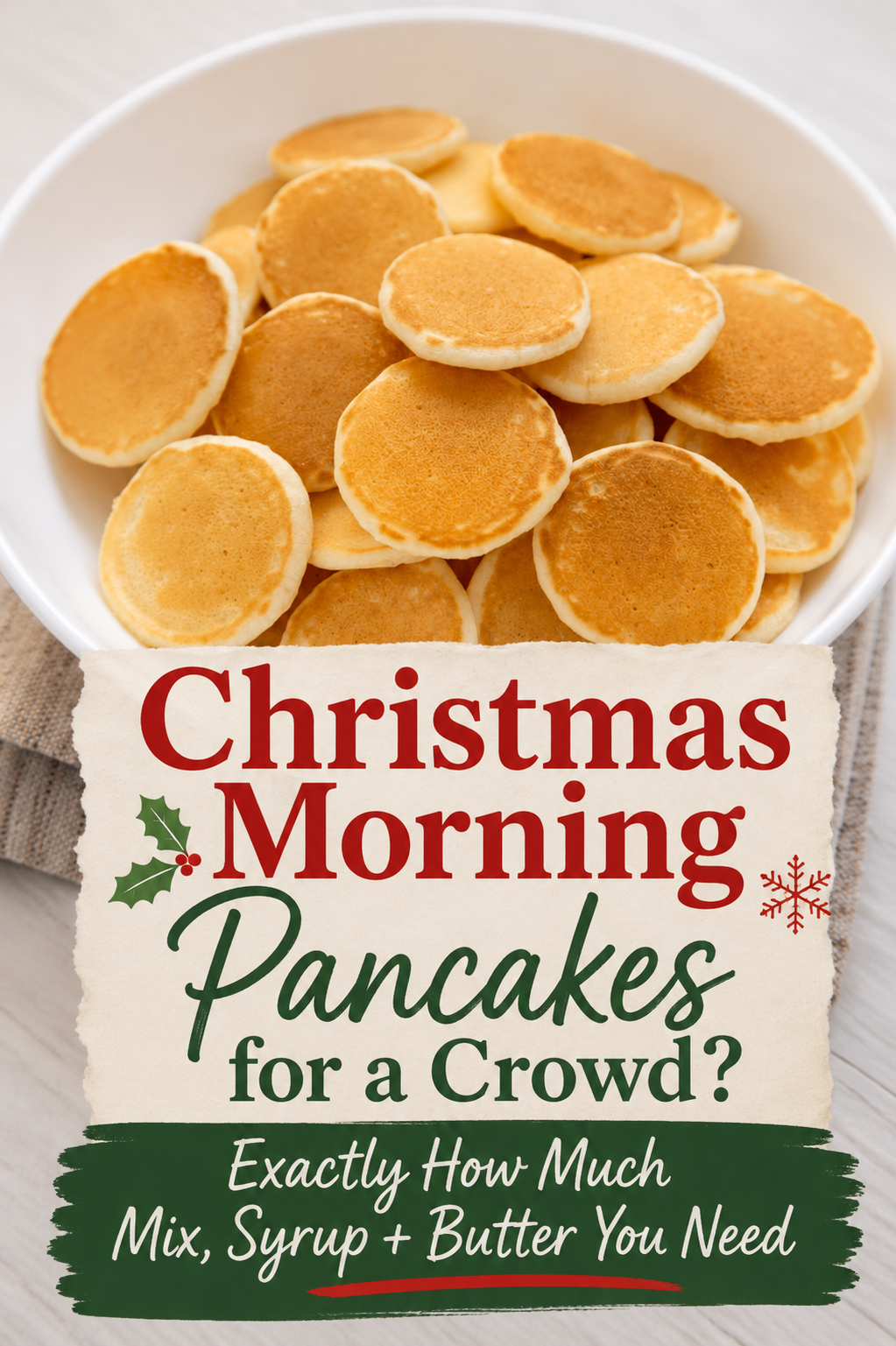
I have made pancakes for four people and for four hundred, and I can tell you the math does not scale the way your brain thinks it does. So I built you a calculator that does it for you.
Jump to:
- Quick Answer: How Many Pancakes Per Person?
- Jump to Calculator
- The Box Is Not Lying to You, But It Is Not Helping Either
- How Many Pancakes Per Person, Really
- Pancake Size Matters Less Than You'd Think
- How Much Mix to Buy
- Syrup and Butter: The Two Things Everybody Underbuys
- What This Looks Like for a Real Crowd
- Troubleshooting
- The Four Things Worth Owning
- Frequently Asked Questions
- Final Thoughts
- Pin to Pinterest
Quick Answer: How Many Pancakes Per Person?
Plan 4 four-inch pancakes per adult and half that for kids. One 32-ounce box of complete mix feeds about 10 adults — not the 20 the box claims.
Jump to Calculator
PANCAKE CALCULATOR
Exact pancake counts, boxes of mix, syrup and butter for any crowd — built on manufacturer yields, not guesses.
| Who | Pancakes | Notes |
|---|
| Adults | Light (2.6) | Standard (3.5) | Hearty (4.6) |
|---|---|---|---|
| 10 | 29 | 39 | 51 |
| 20 | 58 | 77 | 102 |
| 25 | 72 | 97 | 127 |
| 30 | 86 | 116 | 152 |
| 50 | 143 | 193 | 253 |
| 75 | 215 | 289 | 380 |
| 100 | 286 | 385 | 506 |
The calculator gives you exact counts, boxes of mix, syrup, and butter for your crowd. If you'd rather just eyeball it off a chart:
| Adults | Light | Standard | Hearty |
|---|---|---|---|
| 10 | 29 | 39 | 51 |
| 20 | 58 | 77 | 102 |
| 25 | 72 | 97 | 127 |
| 30 | 86 | 116 | 152 |
| 50 | 143 | 193 | 253 |
| 75 | 215 | 289 | 380 |
| 100 | 286 | 385 | 506 |
Four-inch pancakes, 10% buffer included. Light means pancakes are one thing on a big brunch table. Hearty means pancakes are the whole meal.
The Box Is Not Lying to You, But It Is Not Helping Either
Here's the thing about pancake mix packaging.
Flip a 32-ounce box of complete mix over and it'll tell you it holds about 20 servings. Twenty! You've got 18 people coming. One box, done, you're a genius.
Except a serving on that label is two four-inch pancakes. Two. Have you ever watched a grown adult eat two pancakes and push the plate away satisfied? I haven't. Not once, not in twenty years of feeding people.
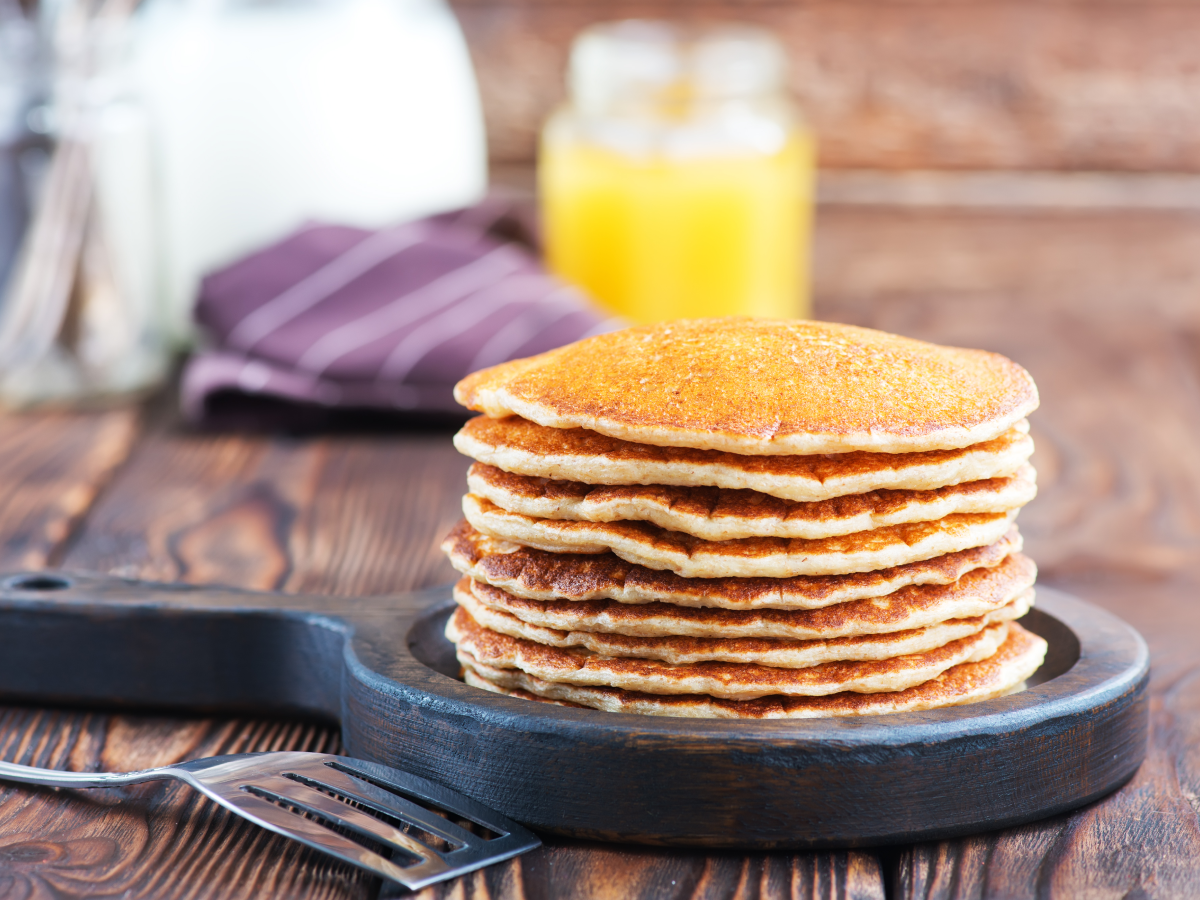
For crowd planning I use closer to four per adult. Which means that 20-serving box actually feeds about 10 of them.
This is one of the biggest reasons pancake breakfasts run short, and it's not anybody's fault. The label is technically accurate. It's just answering a different question than the one you're asking.
How Many Pancakes Per Person, Really
Three numbers, depending on what job the pancakes are doing.
Light — 2.6 per adult. Pancakes are one option among many. There's a fruit tray, there are eggs, somebody brought a breakfast casserole. People take one or two and move on.
Standard — 3.5 per adult. The normal one. Pancakes are the main event, maybe with a side. This is what you want most of the time.
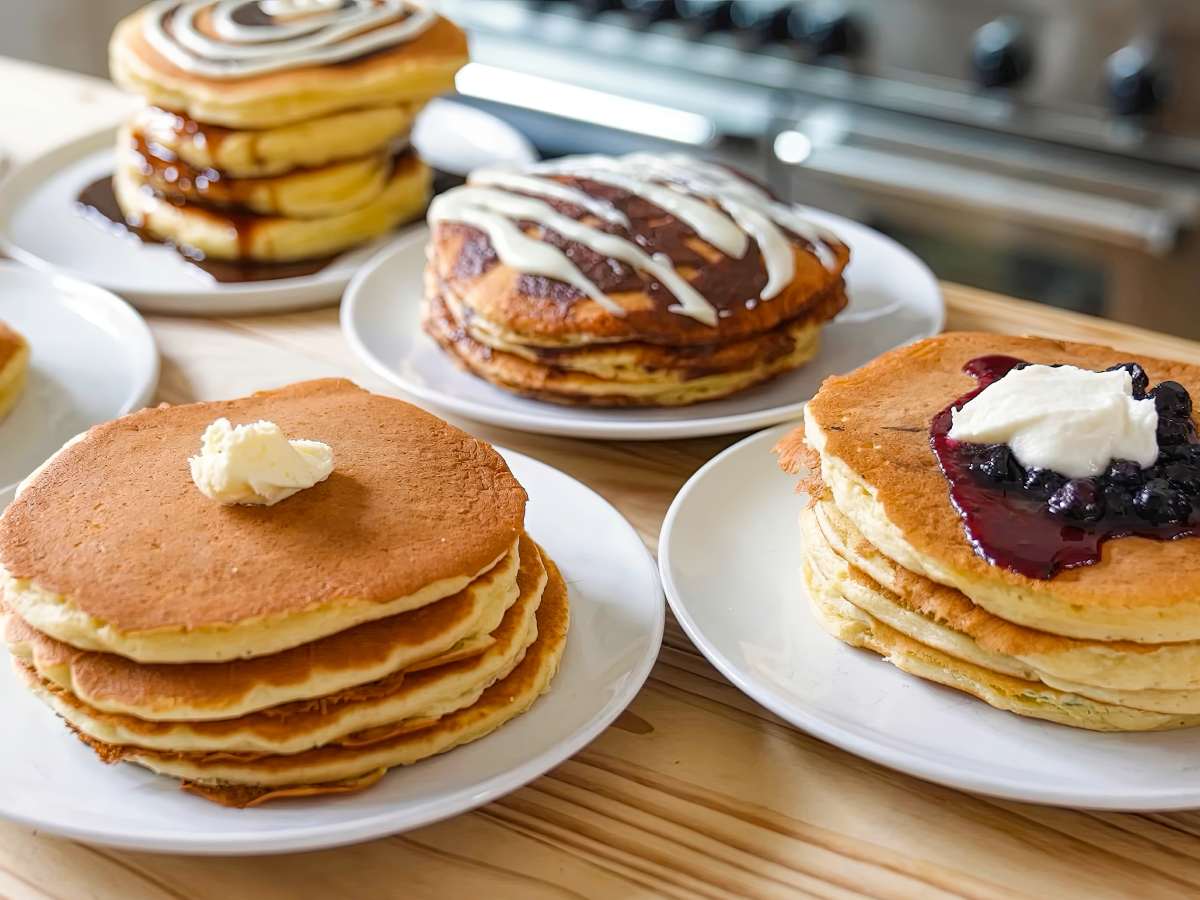
Hearty — 4.6 per adult. Pancakes are dinner. Or it's a fundraiser breakfast where the ticket says all-you-can-eat and people intend to test that.
Then two adjustments on top.
Kids eat half. A four-year-old eats one pancake and wears most of it. A nine-year-old eats two. Half an adult portion covers both and averages out fine across a group.
Teenagers are not kids. If you're feeding a youth group or a team, count them as adults and bump the appetite setting. I have watched a sixteen-year-old boy eat seven pancakes. He was not showing off. He was just hungry.
The calculator handles all of this, but I want you to see the actual numbers so you can sanity-check it against your own crowd. You know your people better than any formula does.
Pancake Size Matters Less Than You'd Think
This is my favorite part, and it's where almost every other pancake chart on the internet gets it wrong.
You'd assume a five-inch pancake takes a lot more batter than a four-inch one. Circle area goes up with the square of the diameter, so five-inch should need about 1.56 times the batter. That's the math you half-remember from tenth grade, and it's the math most calculators quietly use.
It's wrong, and Krusteaz's own foodservice spec sheet shows why.
Their published batch yields say five pounds of mix makes about 105 four-inch pancakes or about 82 five-inch. That's a 1.28 times difference, not 1.56 — and it's the conversion this calculator uses.
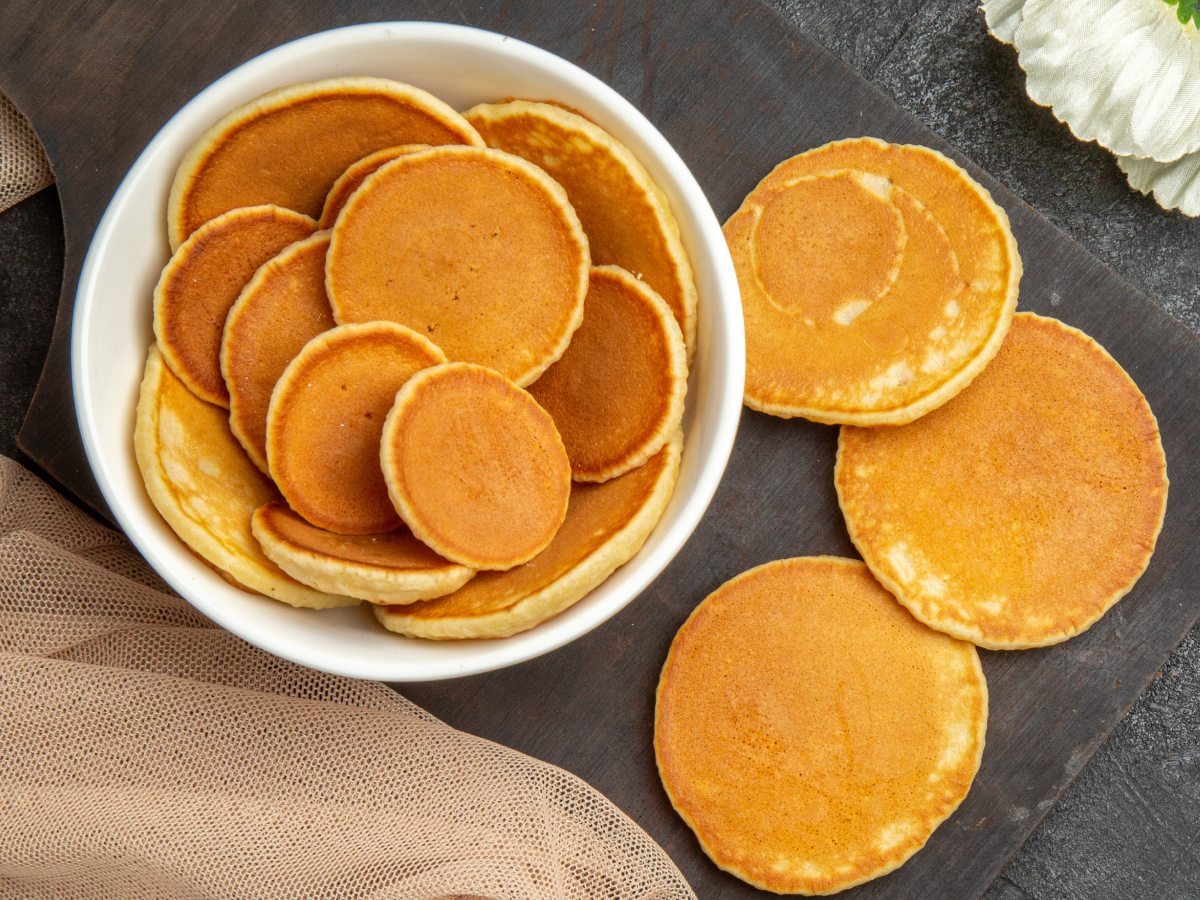
Their scoop guidance points the same direction. They portion a four-inch with a #20 scoop and a five-inch with a #16; in foodservice the scoop number is how many level scoops fill a quart, so that's 1.6 versus 2 fluid ounces, or 1.25 times.
The two figures aren't identical, and I'd rather say so than pretend. Scoops only come in standard sizes, so a portion between a #20 and a #16 isn't something you can hand a cook. The batch yields come from actually cooking the batch, which is why I use those for the math and treat the scoops as what they are — practical guidance for getting consistent pancakes.
Either way, both are a long way from 1.56.
What this means for you practically: switching pancake size changes how many pancakes you get, but barely changes how much mix you buy. Twenty adults need 3.85 pounds of mix whether you're making four-inch or five-inch. You'll just get 77 of the small ones or 61 of the big ones.
Trust me on this one. Buy for the batter, not the count.
If you want to go the other direction entirely, sourdough discard crepes stretch even further per cup of batter, because you're pouring them thin on purpose.
How Much Mix to Buy
Two kinds of boxed mix, and they don't behave the same.
Complete mix (just add water) makes about 20 four-inch pancakes per pound. A 32-ounce box is two pounds, so about 40 pancakes. That's roughly 10 adults per box.
Baking mix (the kind where you add milk and eggs) makes about 24 four-inch pancakes per pound, because you're contributing volume the box didn't. A 40-ounce box gets you about 60 pancakes, or roughly 15 adults.
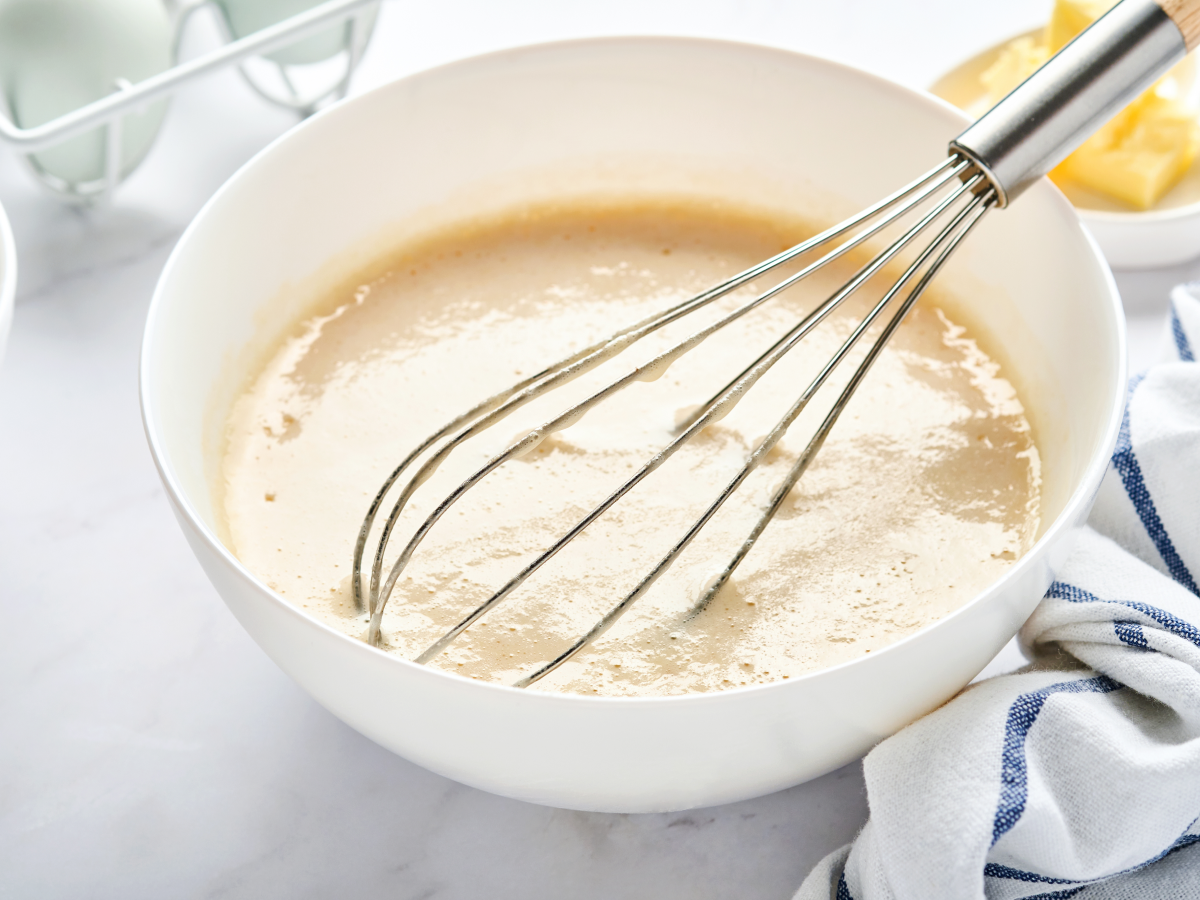
Both numbers come off manufacturer packaging rather than my own guessing. Worth being precise about what that does and doesn't prove: the two complete mixes I checked, Pearl Milling and Krusteaz, land within a few percent of each other at 20 and 21 per pound. Bisquick sits higher at 24 because you're adding milk and eggs it didn't supply. Brands measure yield with different recipes and different pancake sizes, so these are practical planning numbers, not laboratory constants. I use 20 per pound as the conservative default.
One honest note about small crowds: if you're feeding four people, you need less than a pound of mix and you're still buying a whole box. The calculator shows you both numbers — what you actually need and what you have to buy — so the leftover doesn't feel like a mistake. It isn't. Boxes just don't split.
Making them from scratch instead? Sourdough discard pancakes are my Saturday default, and the chocolate version is what I make when somebody's had a hard week.
Syrup and Butter: The Two Things Everybody Underbuys
Nobody plans for syrup. Everybody runs out of syrup.
Plan about half a fluid ounce of syrup per pancake. For a standard portion that's roughly 2 fluid ounces per person — 4 tablespoons, or a quarter cup. It sounds like a lot until you watch someone flood a stack.
Why per pancake instead of per person? Because someone eating five pancakes uses more syrup than someone eating three. The calculator scales it with your portion setting, so a light brunch lands near 1.4 ounces a head and an all-you-can-eat breakfast lands near 2.5.
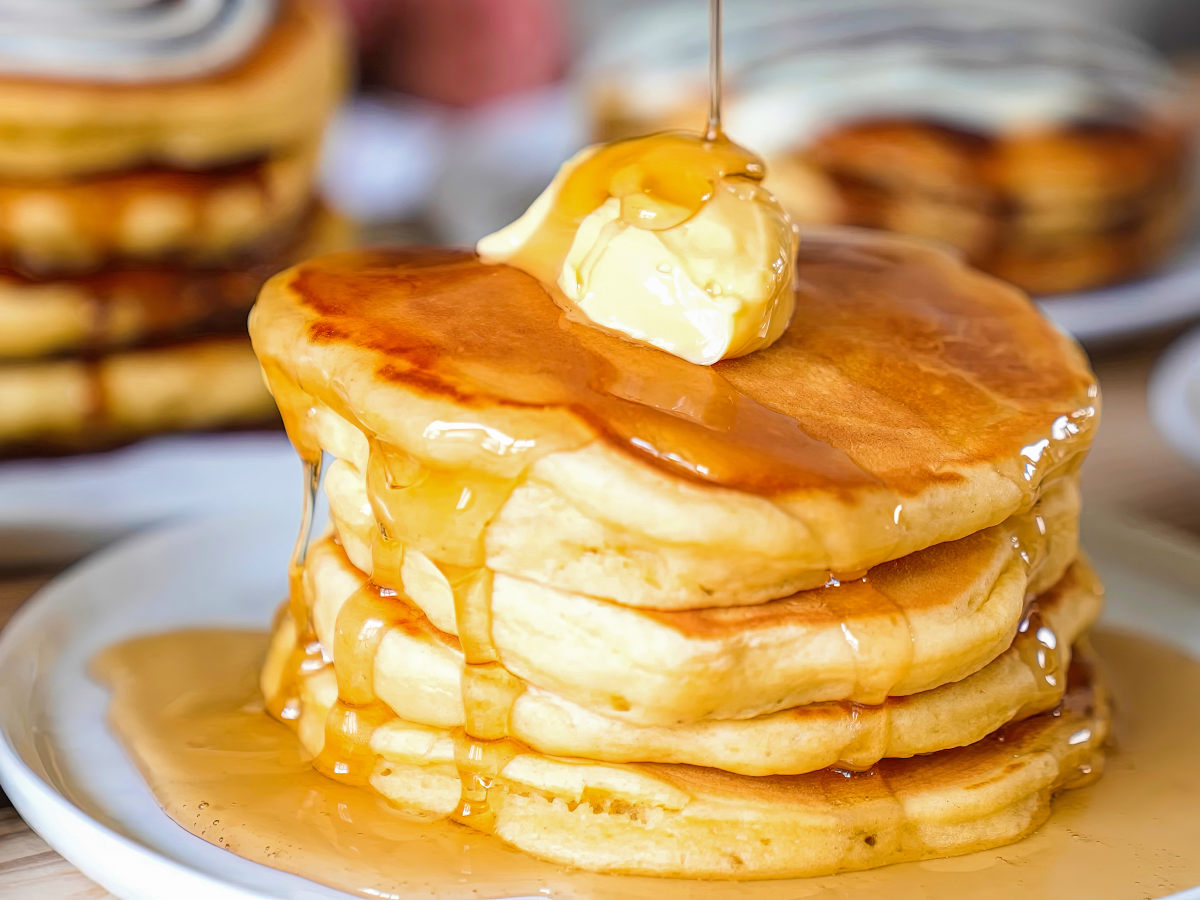
The number I trust here comes from foodservice: those little single-serve syrup cups at diners and catered breakfasts are 1.4 to 1.5 ounces, and they're portioned that way because somebody did the math on thousands of plates. Quantity-cooking guides land in the same place — one to two gallons per hundred people.
Here's the catch nobody warns you about. How you serve it changes how much disappears. Bottles on the table means people pour like they're at home, which is generously. Small pitchers or portion cups slow it way down. If you're feeding a crowd on a budget, that one decision matters more than which brand you buy.
Butter runs about a quarter tablespoon per pancake — right around one tablespoon per person at a standard portion, which is half an ounce. A stick covers eight people. It scales with the portion setting the same way syrup does. Smaller line item, vanishes just as fast, especially if you put out softened butter people can actually spread.
What This Looks Like for a Real Crowd
Say you're doing a church pancake breakfast. Seventy-five adults, all-you-can-eat, pancakes are the whole meal — so that's the hearty setting.
Here's your shopping list:
- 380 four-inch pancakes (or 297 if you're making them five-inch)
- About 19 pounds of complete mix — that's 10 of the 32-ounce boxes
- 190 fluid ounces of syrup — 8 bottles of the 24-ounce size
- 95 tablespoons of butter — 12 sticks, so 3 pounds
- About 76 cups of batter, which is going to need more than one bowl
Two of those deserve a note. The syrup and butter look high against the per-person figures above, and that's the hearty setting doing its job — 380 pancakes across 75 people is about five each, so the toppings scale up with them.
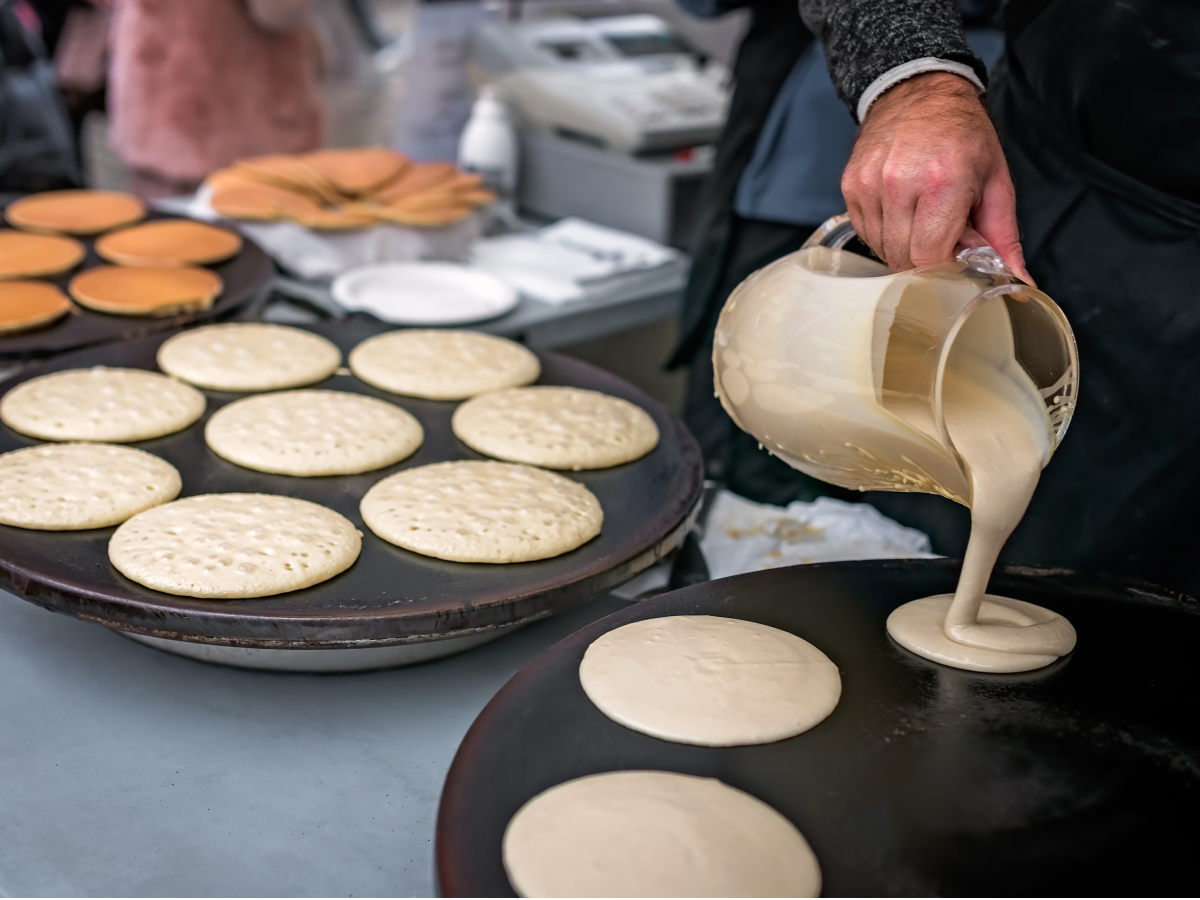
And 76 cups of batter is almost a five-gallon situation. You want a food-safe bucket and a ladle, not your biggest mixing bowl and hope.
Rounding out that table? Fruit per person covers the tray that makes a pancake breakfast feel like an actual meal, and if you're leaning more brunch than breakfast, deviled eggs per person is the other thing that always goes first.
Troubleshooting
"I made the right amount but everything got cold." This is the actual hard part of pancakes for a crowd, and it's not a quantity problem. Set your oven to 200°F and put finished pancakes on sheet pans in a single layer — that's King Arthur's method and it's the one I use. Stacking them traps steam and makes them soggy. Single layer, and check them rather than trusting a timer, since how long they hold depends on your oven and how full it is.
"My pancakes came out way bigger than four inches." Then your count will be off even though your batter is right. Retail boxes say "slightly less than a quarter cup," which is vague enough to drift. The foodservice number is tighter: 1.6 fluid ounces, or a bit over 3 tablespoons, for a four-inch pancake. That's what this calculator uses. Measure it once with a spoon so you know what it looks like in the pan, and eyeballing gets a lot more accurate after that. If you're cooking for a crowd more than once a year, a #20 portion scoop pays for itself in not having to think about it.
"I ran out anyway." Check whether you counted teenagers as kids. In my experience that's the easiest way to come up short, and I've done it myself. The other one: you had fewer sides than you planned, so people filled up on pancakes instead.
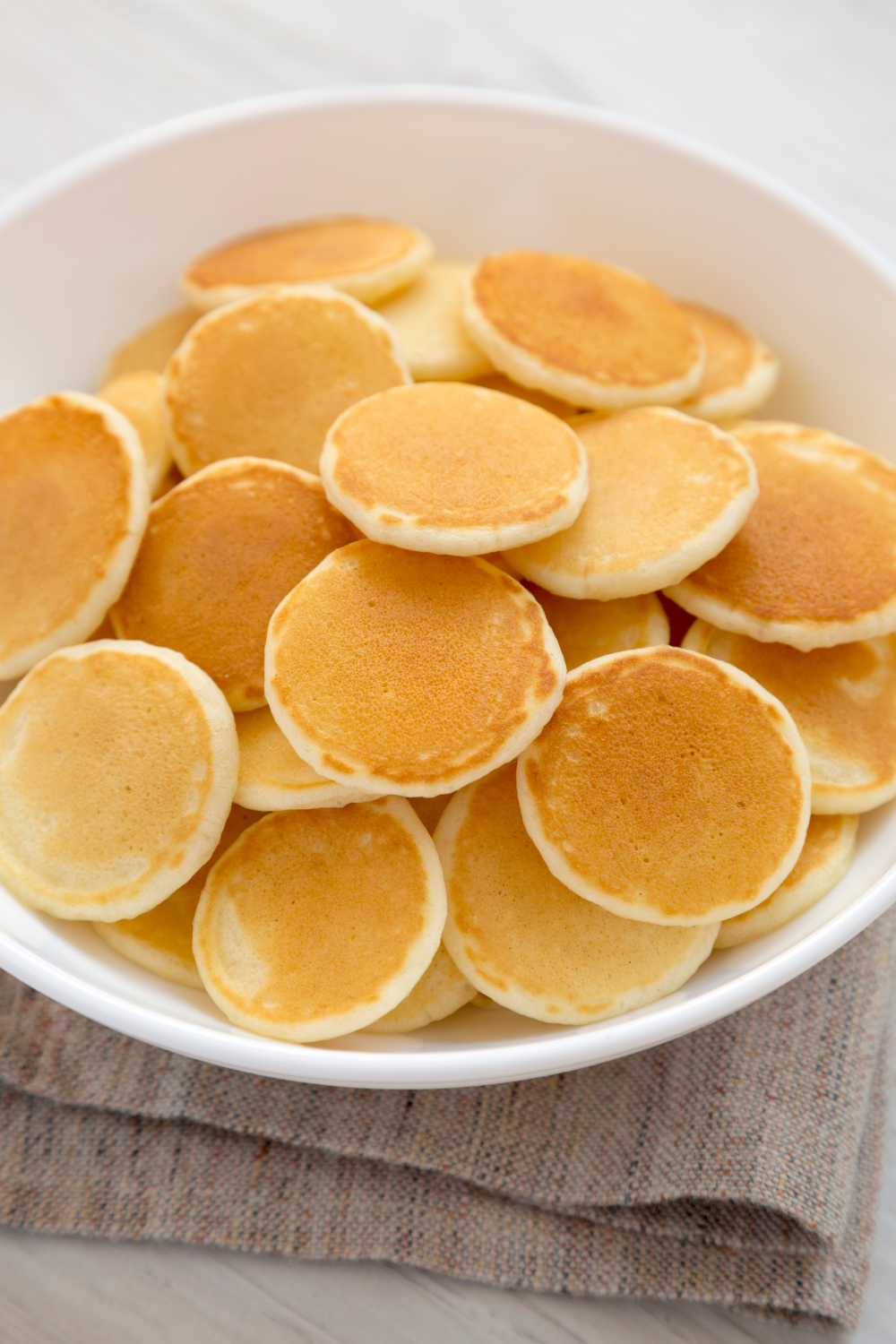
"I have a mountain of leftovers." Good news, pancakes freeze better than almost anything. Cool them completely, stack with parchment between, freeze flat in a bag. They toast straight from frozen. My kids eat more frozen pancakes than fresh ones, which is a little insulting but very convenient.
"One griddle isn't keeping up." On paper a standard electric griddle holds 6 to 8 four-inch pancakes and runs about 3 minutes a batch, which pencils out near 140 an hour. In practice you'll get less — pouring, flipping, clearing, regreasing, and waiting for the surface to recover all eat into it. Plan closer to 100 to 120 and you won't be disappointed. For anything over 200 pancakes, you want two griddles and two people, or an early start and a warm oven.
The Four Things Worth Owning
I am not going to tell you to buy a pancake gadget. But cooking for a crowd is a different job than cooking for your family, and there are four things that decide whether it goes smoothly.
A portion scoop. A #20 for four-inch pancakes, a #16 for five-inch. This is the one that actually changes your results, because it's the difference between your count matching the math and your count being a surprise.
A second griddle. Not a fancier one — a second one. Two griddles and two people is the difference between serving hot pancakes and serving a line.
Half sheet pans. For the single-layer hold in a 200°F oven. You need more of them than you think, because stacking is what makes pancakes go soggy.
A food-safe container with a lid. The calculator tells you your batter volume — when that number is bigger than your biggest bowl, you need a bucket. A lid also means you can mix somewhere other than where you're cooking.
For everything else — chafing dishes, serving tables, the stuff that matters at 100-plus guests — the ultimate party planning equipment list covers it properly.
Summer & Cinnamon is a participant in the Amazon Services LLC Associates Program. As an Amazon Associate I earn from qualifying purchases, at no extra cost to you.
Frequently Asked Questions
How many pancakes does one box of mix make? A 32-ounce box of complete mix makes about 40 four-inch pancakes, which feeds about 10 adults. A 40-ounce box of baking mix makes about 60, feeding about 15.
How many pancakes is a serving? The box says two. Real people eat three to four. Plan on 3.5 per adult for a standard breakfast and you'll be right far more often than the label will be.
How much batter per pancake? About 1.6 fluid ounces — a bit over 3 tablespoons — for a four-inch pancake, and 2 fluid ounces, which is a level quarter cup, for a five-inch. Those come from Krusteaz's foodservice scoop spec. Retail boxes phrase the four-inch as "slightly less than a quarter cup," which points the same direction but leaves more room to drift.
How many pancakes for 50 people? 193 four-inch pancakes at a standard portion, or 253 if pancakes are the whole meal. That's about 10 pounds of complete mix for the standard version.
How much syrup for a pancake breakfast? Half a fluid ounce per pancake. For 100 adults that works out to roughly 1.1 gallons for a light brunch, 1.5 gallons for a standard breakfast, or 2 gallons if it's all-you-can-eat. Lean high if you're putting bottles on tables instead of portioning it out.
Can I make pancake batter ahead of time? Not hours ahead, for the best rise. Most batters start reacting the moment wet meets dry, so a bowl that's been sitting since last night gives you flatter pancakes. A short rest is a different thing — some recipes call for 10 or 15 minutes on purpose. Measure your dry ingredients ahead if you want a head start, then mix reasonably close to cooking. And you can always cook the pancakes early and hold them in a warm oven.
Do kids really eat half? As a group average, yes. Individually you'll have a kid who eats one bite and a kid who eats five pancakes. It evens out across any group bigger than about six children.
Final Thoughts
The reason pancake breakfasts go sideways isn't that pancakes are hard. It's that the serving size printed on the box is answering a question nobody asked, and everybody trusts it anyway.
Plan 3.5 per adult, half that for kids, add ten percent, and buy for the batter rather than the pancake count. That's the whole thing.
Run your numbers through the calculator up top, screenshot the shopping list, and go enjoy your own party for once. And if you're planning the rest of the table too, the ultimate party food planning guide has every other number you're about to need.
Pin to Pinterest