Hosting a buffet is one of the easiest ways to feed a crowd — until you have to figure out how much food to actually make. Too little and you're watching guests hover awkwardly around an empty tray. Too much and you're packing leftovers into containers until midnight.
The good news: buffet planning doesn't have to be guesswork. With a few reliable portion guidelines, you can estimate exactly how much food to prepare — for every course, for any crowd size — so guests eat well and nothing goes to waste.
This guide breaks down how much to serve per person for every part of a buffet: protein, sides, salad, bread, dessert, and drinks. Whether you're planning a backyard birthday party, a holiday dinner, a casual potluck, or a formal reception, these numbers will get you there.
Jump to:
- Quick Answer: How Much Food Per Person for a Buffet?
- Buffet Portion Calculator (Exact Amounts for Any Guest Count)
- Why Portion Planning Matters for Buffets
- The Buffet Portion Formula
- Buffet Portion Guide by Food Category
- Buffet Planning Chart by Guest Count
- Factors That Affect How Much You Need
- Equipment & Setup Tips for a Smooth Buffet
- Example: Buffet Menu for 20 Guests
- Common Buffet Hosting Mistakes
- FAQ: Buffet Portions Per Person
- Final Thoughts
- Related
- Pin to Pinterest
Quick Answer: How Much Food Per Person for a Buffet?
For most buffet-style meals, plan on about 1 to 1¼ pounds of total food per adult guest — including everything on the table: protein, sides, salad, and bread combined. When you add dessert, real-world totals often land closer to 1¼ to 1½ pounds per person for a full spread with two or more sides.
Here's what a typical per-person breakdown looks like:
| Food Category | Amount Per Person |
|---|---|
| Protein — boneless | 6–8 oz |
| Protein — bone-in | 10–12 oz |
| Side dishes | 4–6 oz each |
| Salad | 3–5 oz |
| Bread or rolls | 1–2 pieces |
| Dessert | 1–2 servings |
| Drinks | 2 per hour (first hour) |
This is your starting point. The sections below show you how to apply these numbers and adjust for your specific event.
For a complete side-by-side view of how these numbers scale for larger groups, the how much food for 25–100 guests guide is a great companion to this one.
Buffet Portion Calculator (Exact Amounts for Any Guest Count)
Use this simple buffet portion calculator to figure out exactly how much food you need for your crowd—no guessing, no running out, and no overspending.
BUFFET PORTIONS CALCULATOR
Get exact food amounts for any crowd — protein, sides, salad, bread & dessert, all figured out for you.
Reading your range: Mostly teens and young adults? Plan toward the higher numbers — they eat more. Mostly older guests, or a midday/lunch event? The lower end is plenty.
| Food item | Amount needed | Notes |
|---|
| Guests | Boneless protein | Per side dish | Salad | Rolls |
|---|---|---|---|---|
| 10 | 4–5 lbs | 2–3 lbs | 2–3 lbs | 10–20 |
| 20 | 8–10 lbs | 4–5 lbs | 4–6 lbs | 20–40 |
| 30 | 11–14 lbs | 6–8 lbs | 6–9 lbs | 30–60 |
| 50 | 19–25 lbs | 10–13 lbs | 9–16 lbs | 50–100 |
| 75 | 28–38 lbs | 14–19 lbs | 14–24 lbs | 75–150 |
| 100 | 38–50 lbs | 19–25 lbs | 19–31 lbs | 100–200 |
Why Portion Planning Matters for Buffets
Buffets behave differently than plated dinners — and that difference matters for planning.
At a plated meal, everyone gets the same portion. At a buffet, guests make their own choices. Most take moderate first servings and return for seconds on the dishes they loved most. Some dishes disappear in twenty minutes. Others barely get touched.
Getting your quantities right before the event means you won't be mid-party, panicking because the mashed potatoes ran out. It also means you won't be throwing away three full trays of food nobody wanted.
Good portion planning lets you host confidently — and actually enjoy your own event.
The Buffet Portion Formula
The math behind buffet planning is simple:
Number of Guests × 1 to 1¼ lbs = Total Food Needed (main courses)
For 20 guests at average appetites:
- 20 × 1.25 lbs = 25 lbs of total food
You can break that roughly into:
- ~8–10 lbs protein
- ~8–10 lbs sides (across 2 dishes)
- ~4–6 lbs salad
- ~2–3 lbs bread
The more variety you offer, the smaller each individual dish needs to be. A buffet with six sides needs less of each side than one with two. This is one of the best ways to manage cost without guests feeling shorted.
Buffet Portion Guide by Food Category
Main Dishes — Protein
Boneless cuts (chicken breast, pulled pork, baked salmon, fillets): Plan for 6–8 ounces of cooked boneless protein per guest. This is the standard for a well-stocked buffet with two or more side dishes.
Bone-in cuts (ribs, chicken legs, chicken thighs, bone-in roasts): Plan for 10–12 ounces per person — not 8. Bone weight is significant, and guests end up with much less edible meat per ounce than with boneless cuts. Under-buying bone-in protein is one of the most common buffet planning mistakes.
If you're offering two main dishes, guests will typically take smaller portions of each — plan about 4–5 ounces boneless per person per dish rather than the full 6–8.
For detailed guidance on specific proteins, the how much meat per person guide covers BBQ, pulled pork, and chicken with exact amounts by guest count.
Side Dishes
Plan 4–6 ounces per person per side dish. Most buffets include two to four sides, so guests naturally take smaller portions of each.
Heavier, starchy sides like mashed potatoes or mac and cheese tend to get eaten in larger quantities than lighter vegetable sides — keep that in mind when deciding how much of each to make.
For mashed potatoes specifically — almost always the first side to run out — the how much mashed potatoes per person guide gives exact pound amounts from 6 to 30+ guests.
Salad
At a self-serve buffet, plan 3–5 ounces of dressed salad per person. This is the correct range for a buffet setting, where guests serve themselves and frequently take more than a plated serving.
The 2–3 oz figure often quoted online is the standard for a plated dinner — not a buffet. At self-serve events, guests typically take a full cup or more, which lands at 3–5 oz depending on the greens.
If salad is the only vegetable on the table (no other vegetable dish), move toward the higher end of that range. For a detailed breakdown by guest count, the how much salad per person guide covers buffet and plated amounts separately.
Bread and Rolls
Plan 1–2 rolls per person. Guests at a buffet often grab bread alongside saucy mains or to fill the last bit of plate space — it goes quickly.
If you're serving a saucier main dish like pulled pork, butter chicken, or anything braised, lean toward the higher end. Bread doubles as a vehicle for the sauce, and guests will use more of it than you'd expect.
Appetizers
If you're serving appetizers before the buffet opens, plan for 3–5 pieces per person — enough to keep guests comfortable during the wait without spoiling appetite for the main meal.
If appetizers replace the buffet as the primary food, increase to 8–12 pieces per person. The full appetizer portions per person guide covers both scenarios with exact piece counts by guest count.
For a charcuterie or grazing board as the pre-buffet appetizer, the charcuterie board portions guide gives exact meat, cheese, and cracker quantities for any crowd size.
Dessert
Plan 1–2 dessert servings per guest. When multiple dessert options are available — like a cookie platter alongside brownies and sheet cake — guests typically take smaller portions of each, so the 1–2 serving rule holds across the whole spread.
For dessert quantities by guest count, the how many cookies per person guide and the wedding dessert table guideboth cover larger groups in detail.
Drinks
A reliable rule: 2 drinks per guest for the first hour, then 1 drink per guest per additional hour.
For a 3-hour event with 30 guests: 30 × 2 + 30 × 2 = 120 total drinks. When alcohol is being served, food consumption also goes up — revisit your food quantities at the same time. The how many drinks per person guide covers this in full for events of any length.
Buffet Planning Chart by Guest Count
Quick reference for average appetites, two side dishes, casual buffet:
| Guests | Protein (boneless) | Protein (bone-in) | Per Side | Salad | Rolls | Dessert |
|---|---|---|---|---|---|---|
| 10 | 4–5 lbs | 6–8 lbs | 2–3 lbs | 2–3 lbs | 10–20 | 10–20 srv |
| 20 | 8–10 lbs | 12–15 lbs | 4–5 lbs | 4–6 lbs | 20–40 | 20–40 srv |
| 30 | 11–14 lbs | 19–23 lbs | 6–8 lbs | 6–9 lbs | 30–60 | 30–60 srv |
| 50 | 19–25 lbs | 31–38 lbs | 10–13 lbs | 9–16 lbs | 50–100 | 50–100 srv |
| 75 | 28–38 lbs | 47–56 lbs | 14–19 lbs | 14–24 lbs | 75–150 | 75–150 srv |
| 100 | 38–50 lbs | 63–75 lbs | 19–25 lbs | 19–31 lbs | 100–200 | 100–200 srv |
When in doubt, round up slightly — a little extra is always better than running short with 45 minutes left in the party.
Factors That Affect How Much You Need
Time of Day Lunch buffets typically see 10–15% lighter portions than dinner buffets. If you're hosting a midday event, trim comfortably toward the lower end of every range.
Number of Dishes The more variety you offer, the smaller portions guests take of each individual dish. A buffet with six sides needs less per side than one with two. More variety is often the most cost-effective way to stretch your budget without guests feeling shorted.
Guest Demographics Teenagers and young adults usually eat significantly more than children or older guests. Mixed-age groups tend to balance out. If it's mostly young adults, lean to the higher end of every range.
Alcohol When alcohol is served, food consumption typically goes up by about 10%. Don't forget to plan drink quantities at the same time you plan your food.
Buffet vs. Plated Self-serve buffets generate slightly higher consumption than plated meals — guests control their own portions and frequently return for seconds on favorites. Always prepare 10–15% extra on your most popular dish.
Equipment & Setup Tips for a Smooth Buffet
The right setup affects how smoothly food gets served and how evenly it gets eaten. For a complete pre-event checklist, the Ultimate Party Planning Equipment List covers everything worth having on hand.
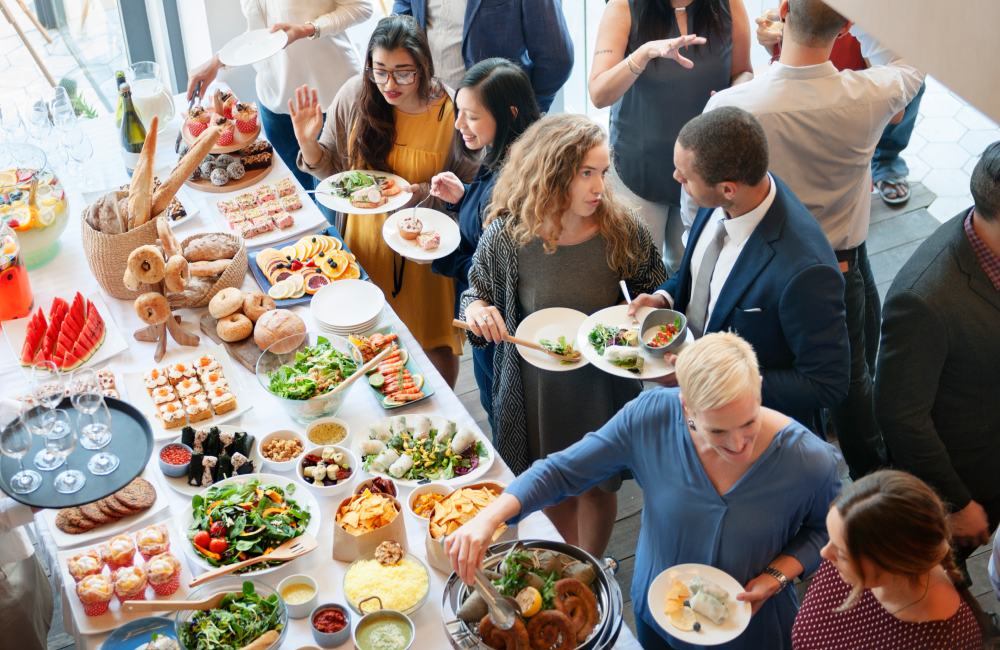
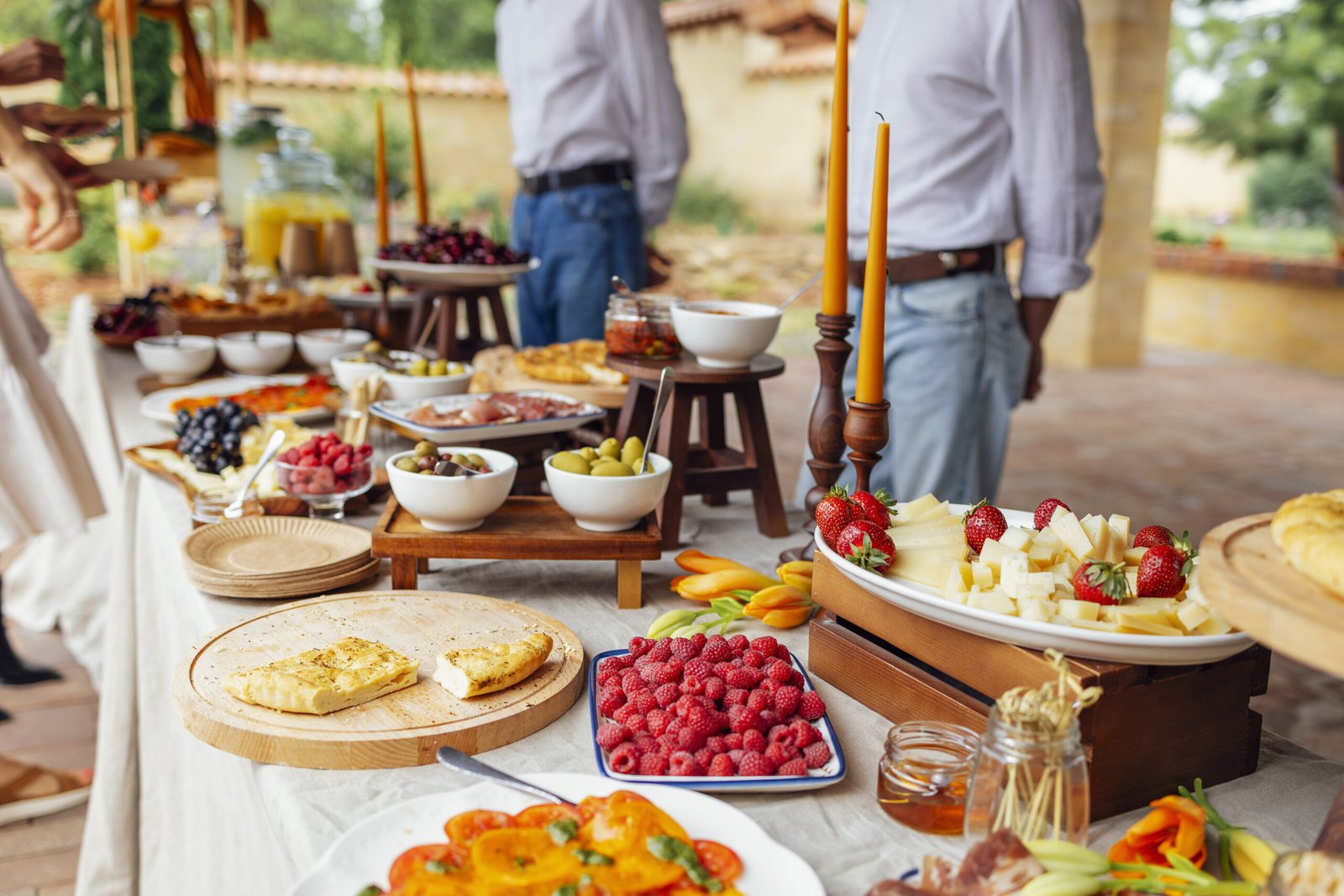
Set up for flow. Plates at the start, then mains, then sides, then bread and condiments. Put dessert on a separate table if you can — it keeps the main line clear and makes the dessert spread feel like its own moment.
Temperature control is non-negotiable. Chafing dishes or warming trays for hot items. Chilled platters or ice trays for seafood and dairy-based dishes. Food held at the right temperature stays appealing, which means it gets eaten at a steadier pace rather than ignored after the first pass.
Pre-portion before guests arrive. Counting and measuring before the event starts is the single most reliable way to hit your quantities. Once guests start serving themselves, the counts are gone.
Label every dish. A simple label card prevents the "what's in this?" question and helps guests with allergies or dietary restrictions make decisions quickly. For a grazing board station, the charcuterie board guide has tips for labeling and portioning.
Example: Buffet Menu for 20 Guests
Here's what a balanced buffet looks like for 20 people at a casual party or birthday gathering.
Main Dish — Roasted Chicken (bone-in) Plan for 12–15 lbs bone-in, or 8–10 lbs boneless. Chicken holds well on a buffet and is universally crowd-pleasing. For boneless pulled chicken or shredded breast, the how much meat per person guide has exact quantities.
Side 1 — Mashed Potatoes About 10 lbs raw potatoes. Mashed potatoes almost always go first — make plenty. The mashed potatoes per person guide has exact pound amounts from 6 to 30+ guests.
Side 2 — Roasted Vegetables Around 5–6 lbs. Broccoli, carrots, and zucchini roast well in large batches and hold their texture on a buffet table.
Salad 4–6 lbs dressed for a buffet — not the 2–3 lbs you'd use for a plated dinner. Guests serve themselves more at a buffet, especially when it's sitting right in front of them. The how much salad per person guide gives buffet-specific quantities.
Bread 25–35 dinner rolls — about 1.5 per person on average.
Dessert 20–30 servings. A mix of brownies and cookies is ideal for a buffet — easy to grab, easy to portion, popular with every age group.
Drinks For a 2-hour event: 20 × 2 (first hour) + 20 × 1 (second hour) = 60 drinks total. See the drinks per person guide for longer events.
Common Buffet Hosting Mistakes
Buying bone-in protein using boneless quantities. This is the most expensive mistake on the list. Bone-in needs 10–12 oz per person — not 6–8. If you buy bone-in at boneless rates, you'll run short.
Getting the salad amount wrong. 2–3 oz per person is for plated dinners. At a self-serve buffet, plan 3–5 oz. It's a small difference per person that adds up to several pounds across a crowd.
Only making one heavy dish. When there's one crowd favorite and nothing else similar, it's gone in minutes. Always have at least two protein or starch options so consumption is distributed.
Underestimating the event duration. A 4-hour party eats more than twice as much as a 2-hour one. Use the drinks and food formula based on actual event length. The party food planning guide has a full menu checklist that accounts for duration.
No 10% buffer on popular dishes. For your most-loved dish — whatever it is — always make 10–15% more than you think you need. Running short on the one dish everyone wanted is the thing guests remember.
FAQ: Buffet Portions Per Person
How much food should I make per person for a buffet? Plan for 1 to 1¼ pounds of food per adult guest for the main courses combined — protein, sides, salad, and bread. With dessert included, real totals for a full spread are often 1¼ to 1½ pounds per person.
How much bone-in protein do I need? Plan 10–12 ounces per person for bone-in cuts like ribs, chicken legs, or thighs. The bone weight is significant — under-buying is the most common protein mistake at buffets.
How much salad is right for a buffet? Plan 3–5 ounces per person at a buffet — not 2–3 oz, which is the standard for a plated dinner. At a self-serve buffet, guests take larger portions than you'd expect.
Should I make extra just in case? Yes — prepare 10–15% more of your most popular dishes. It's much easier to have a little left over than to run short while guests are still in line.
What foods hold up best on a buffet table? Casseroles, braised dishes, roasted meats, rice, and pasta all hold temperature and texture well. Delicate items like cream sauces or fresh salads need more attention — refresh them throughout the event rather than setting them out all at once.
What if I'm serving a mix of adults and children? Count each child as half a guest when calculating totals. A group of 30 adults and 10 children should be treated as approximately 35 portions.
How does a lunch buffet differ from dinner? Lunch buffets typically need about 10–15% less food overall. Guests eat lighter midday, and events usually run shorter. Use the lower end of all your portion ranges.
Final Thoughts
A well-planned buffet isn't about making as much food as possible — it's about making the right amount of the right things. Start with the 1 to 1¼ pounds per person rule, break it down by category, and adjust for your event type, crowd, and menu.
Most hosts do best when they:
- Use 10–12 oz for bone-in protein — not 6–8
- Budget 3–5 oz of salad per person for a buffet — not 2–3
- Plan more of the dishes most likely to be popular
- Prep a 10–15% buffer on crowd favorites
- Set up the table for flow, not just appearance
Do those things and your buffet will feel generous and effortless — without the stress of wondering whether you made enough.
For a complete menu planning approach that covers every course from appetizers through dessert, the full Party Food Guide has serving charts for every dish and crowd size.
Related
Looking for other recipes like this? Try these:
Pin to Pinterest