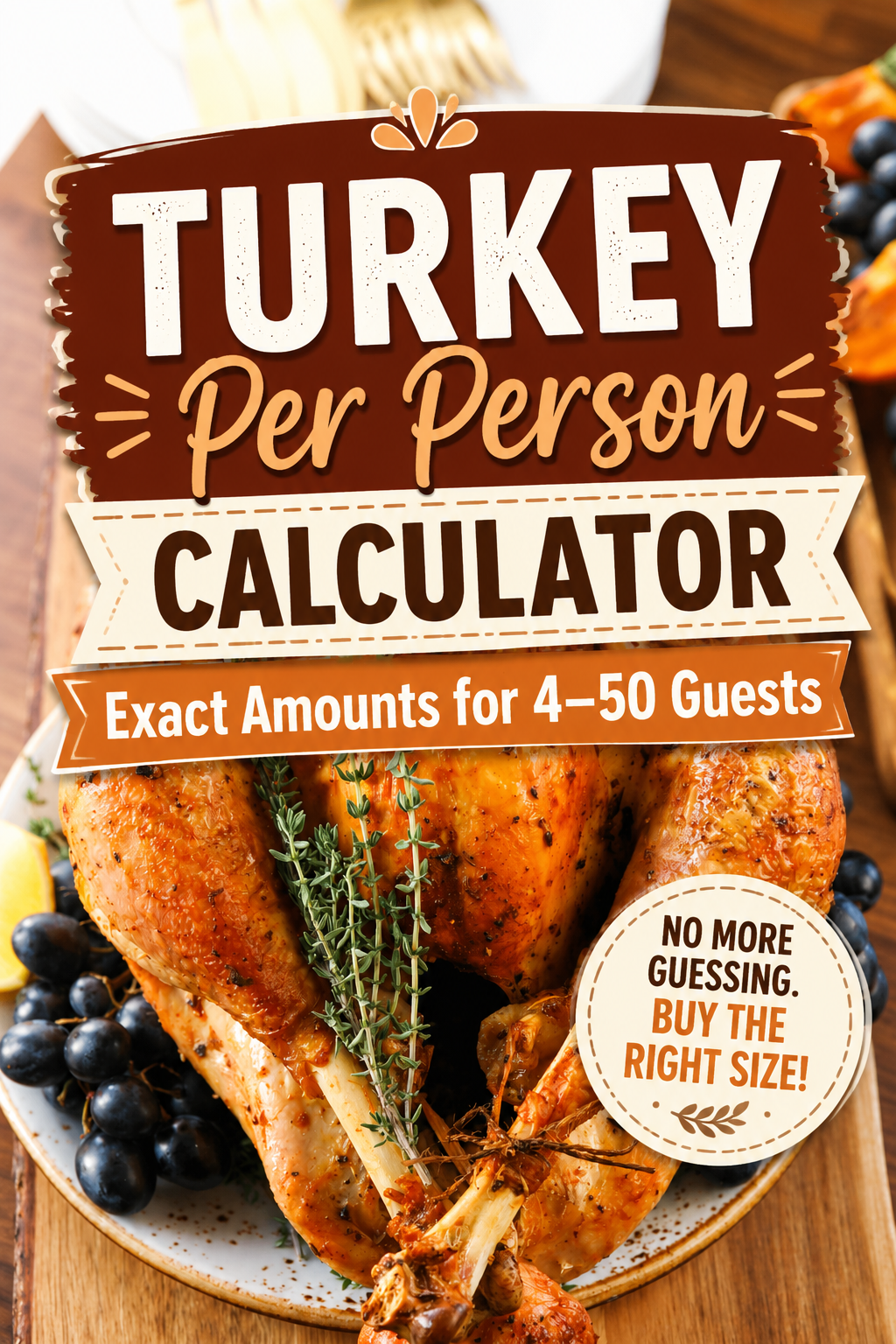
The short answer: plan 1.25 pounds of whole turkey per adult for a traditional Thanksgiving spread, and bump it up to 1.5 pounds per person if you want leftovers (which, let's be honest, is the whole point). Bone-in turkey breast is 1 pound per person. Boneless breast is half a pound per person.
That's the headline. Now let's get you the exact size bird to actually buy.
Jump to:
- Quick Answer Chart
- Turkey Calculator
- Tell me about your crowd
- How are you serving turkey?
- Any adjustments?
- Why the Per-Person Number Isn't One-Size-Fits-All
- The Three Turkey Cuts (And When to Use Each)
- How to Pick the Right Bird Size
- A Real Example
- When Things Don't Go According to Plan
- FAQ
- Plan the Rest of Your Thanksgiving
- Final Thoughts
- Related
- Pin to Pinterest
Quick Answer Chart
Here's what you need based on your guest count and how you're serving turkey. These numbers already account for traditional Thanksgiving sides — meaning a normal spread, not a turkey-only situation.
| Guests | Whole Turkey | Bone-In Breast | Boneless Breast |
|---|---|---|---|
| 6 | 8–10 lb bird | 6 lbs | 3 lbs |
| 10 | 14–16 lb bird | 10 lbs | 5 lbs |
| 15 | 20–22 lb bird | 15 lbs | 8 lbs |
| 20 | Two 14 lb birds | 20 lbs | 10 lbs |
| 30 | Two 20 lb birds | 30 lbs | 15 lbs |
| 50 | Three 22 lb birds | 50 lbs | 25 lbs |
These numbers are for an all-adult crowd with traditional Thanksgiving sides, before the 10% safety buffer. The calculator below adds the buffer for you.
Turkey Calculator
Get the exact turkey size for your crowd in seconds. Adjust for kids, leftovers, big eaters, and the number of sides you're serving—no Thanksgiving guesswork required.
Turkey Per Person Calculator
Get exact pounds and the right turkey size for any crowd — whole bird, bone-in breast, or boneless, figured out for you.
Tell me about your crowd
How are you serving turkey?
Any adjustments?
| Who | Pounds | Notes |
|---|
| Guests | Whole Turkey | Bone-in Breast | Boneless Breast |
|---|---|---|---|
| 6 | 8–10 lb bird | 6 lbs | 3 lbs |
| 10 | 14–16 lb bird | 10 lbs | 5 lbs |
| 15 | 20–22 lb bird | 15 lbs | 8 lbs |
| 20 | Two 14 lb birds | 20 lbs | 10 lbs |
| 30 | Two 20 lb birds | 30 lbs | 15 lbs |
| 50 | Three 22 lb birds | 50 lbs | 25 lbs |
Why the Per-Person Number Isn't One-Size-Fits-All
Here's the thing — every guide on the internet will tell you "1 to 1.5 pounds per person" and call it a day. That's fine if you're cooking for a Hallmark-movie family of four. But you're hosting actual humans, and actual humans have variables.
The three things that really shift how much turkey you need:
- What else is on the table. A turkey-and-three-sides meal eats turkey faster than a 10-side spread with a charcuterie pre-game. More food on the table = less turkey per plate. (If you're doing a charcuterie board for pre-dinner appetizers, that absolutely counts as filler — your turkey numbers can lean toward the lower end.)
- Who's at the table. Teens and big eaters change the math. So do toddlers (in the other direction).
- Whether you want leftovers. If you're not planning sandwiches, soup, and "take some home with you" plates, you can buy less. But come on. It's Thanksgiving!
That's why the calculator above asks about your spread style — light, traditional, or big spread. Most calculators skip this, but it's the single biggest variable that nobody talks about.
The Three Turkey Cuts (And When to Use Each)
Whole turkey (bone-in)
The classic. Plan 1.25 pounds per adult for a traditional spread, 1.5 pounds if you've got teenagers or big eaters, and 1.75 pounds if you've got big eaters and want leftovers.
One catch: smaller turkeys have more bone for their size, so they give you a little less meat per pound. That's why the calculator always rounds up to the next bird size — if your number lands right on a boundary, you get the bigger bird.
Bone-in turkey breast
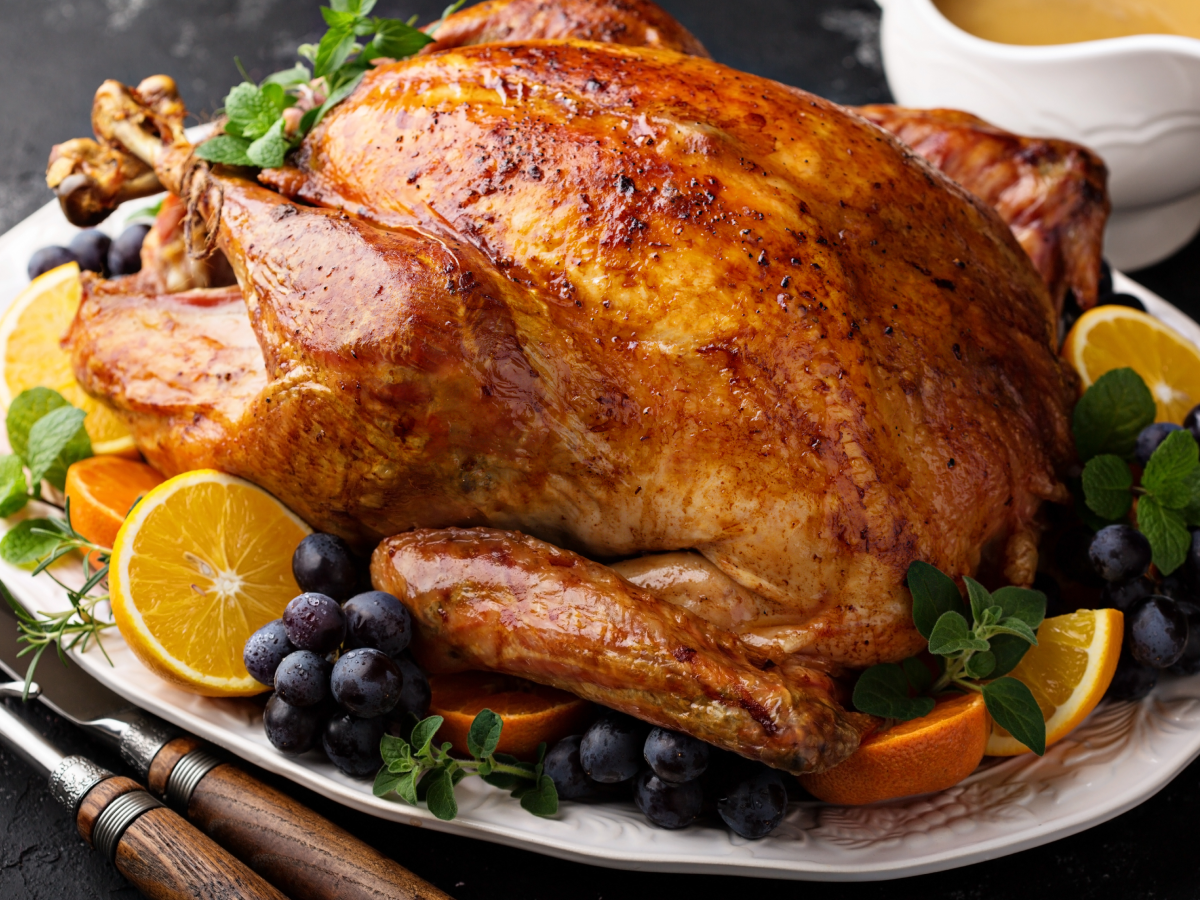
This is what I'd grab if your crowd is white-meat-only or you don't want to deal with a 20-pound bird. Plan 1 pound per person. The bone counts toward the weight, but it adds flavor and helps the meat stay juicy.
Pair it with extra dark meat from the deli counter if some of your people are dark-meat people. (If you're hosting a non-Thanksgiving crowd that's split between turkey skeptics and turkey enthusiasts, my meat per person guide covers backup proteins.)
Boneless turkey breast
The most efficient cut by weight — no waste from bones. Plan half a pound per person. It cooks fast, carves easy, and is honestly underrated for smaller groups. If you're hosting six adults and don't want to wrangle a whole bird, a 3-pound boneless breast does the job.
How to Pick the Right Bird Size
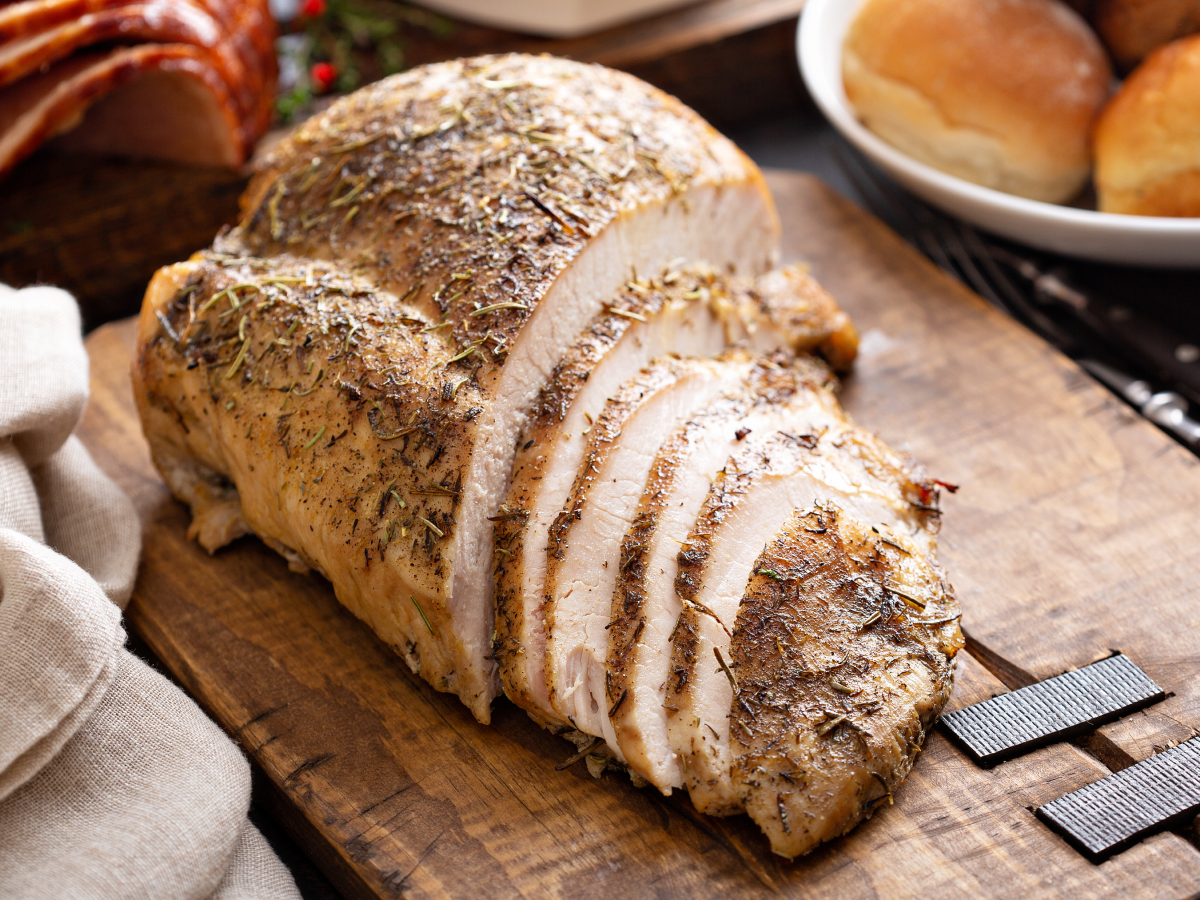
Math says you need 14 pounds. But you can't walk into the grocery store and ask for a 14-pound bird on command — turkeys come in standard weight ranges, usually 12–14 lb, 14–16 lb, 16–18 lb, and so on.
Always round up to the next available size. A 14-pound need rounds to a 14–16 lb bird. A 17-pound need rounds to an 18–20 lb bird. Wings are cheap. Leftovers are great. Running short is the only outcome you can't fix.
For groups over 20 people, you've got a choice: one massive turkey or two smaller ones. I'd vote for two smaller every time. Two smaller birds usually cook faster and more evenly than one giant turkey. The calculator splits it for you: two 14-pound birds for 20 people, two 20-pound birds for 30.
A Real Example
Let's say you're hosting 10 adults and 4 kids, traditional Thanksgiving spread, and you definitely want leftovers (because Friday turkey sandwiches are a sacred American institution).
Adults: 10 × 1.5 lb (1.25 base + 0.25 leftovers) = 15 lbs Kids: 4 × 0.65 lb (0.5 base + 0.15 leftovers) = 2.6 lbs Subtotal: 17.6 lbs. With 10% safety buffer: 17.6 × 1.1 = 19.36 lbs, rounded up to 20 lbs
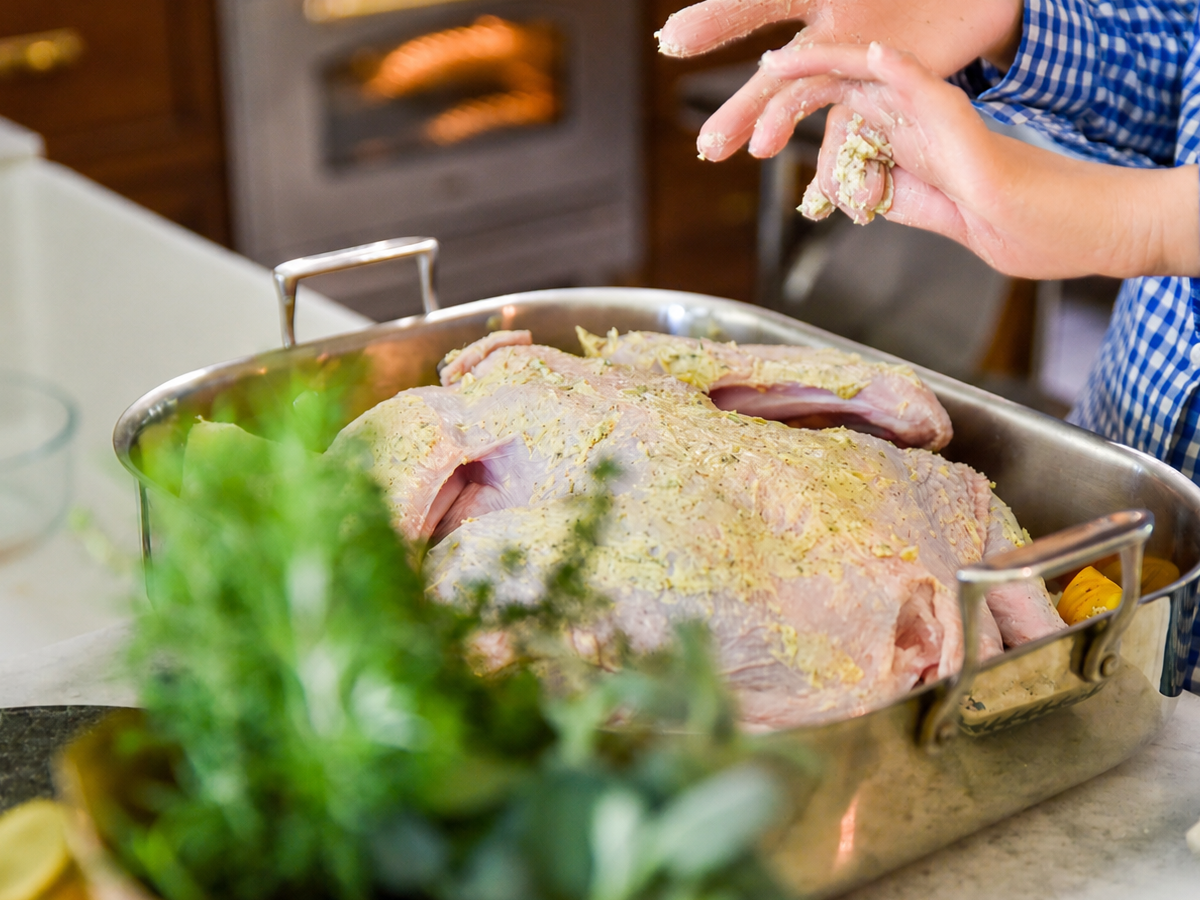
Round up to the next available bird size: a 20–22 lb turkey, or two smaller birds (two 10–12 lb turkeys would work beautifully). I'd lean toward two birds for that crowd — easier in the oven, faster to cook, and you can carve them at the same time.
While you're at it, plan your gravy per person and mashed potatoes at the same time — they're the two sides that scale right alongside the turkey, and it's easier to do all your portion math in one sitting.
When Things Don't Go According to Plan
My turkey came out smaller than I expected. Most pre-packaged turkeys are sold by weight range (12–14 lb), so the actual bird could be at the low or high end. If you're worried about coming up short, grab a small bone-in breast on top of your whole bird as backup. Or call the butcher and ask for a fresh bird at a specific weight — most will accommodate.
I have way too much leftover turkey. Best problem to have. Shred it for sandwiches with cranberry sauce and stuffing, layer it onto pasta, or save it for a turkey soup later in the week — leftover turkey holds up beautifully in the fridge for 3–4 days.
I'm hosting more people than I planned for. Add a 3-pound boneless turkey breast or a couple extra turkey thighs from the meat counter. Both cook fast and stretch your bird without ordering a whole second turkey.
My oven can't fit a turkey big enough for my crowd. Two smaller birds. This is also just better turkey science — they cook more evenly than one giant one. If you only have one oven, you can roast one earlier in the day, carve it, refrigerate the meat, and reheat gently in broth or gravy right before serving — while the second bird is resting.
I forgot to thaw my turkey. USDA guidance: 24 hours of fridge thawing per 4 pounds of turkey. So a 16-pound bird needs 4 days. If you're behind, the cold-water method works (30 minutes per pound, change water every 30 minutes), but the bird has to cook immediately after.
FAQ
Is 1 pound of turkey per person enough?
For a whole bird, it's cutting it close. Even with a big spread of 8+ sides and appetizers, the calculator plans 1.125 pounds per person, and a traditional spread needs 1.25. One pound per person is exactly right for bone-in turkey breast, though, since there's less bone. Want leftovers from a whole bird? Plan 1.5 pounds.
How big a turkey do I need for 10 people?
A 14–16 pound turkey for a traditional spread. If you want leftovers or you've got big eaters at the table, go up to an 18–20 pound bird. Leftovers and big eaters? 20–22 pounds. (All of these include the 10% safety buffer.)
What size turkey for 20 people?
Two 14-pound birds for a traditional spread. That's the 28 pounds you need with the safety buffer, and two smaller birds cook more evenly than one 28-pound monster. You also get two sets of legs and wings. Want leftovers? You'll need 33 pounds, so go with two 18-pound birds.
Should I get a fresh or frozen turkey?
Fresh turkeys can have slightly better texture, but many frozen birds taste just as good once properly thawed and cooked. Fresh skips the thaw window. Frozen is usually cheaper and lets you shop weeks ahead — just plan for 24 hours of fridge thawing per 4 pounds. While the bird is thawing, you can make sourdough discard gravy ahead and freeze it — one less thing to make on the big day.
How much turkey breast per person?
Bone-in: 1 pound per person. Boneless: half a pound per person. Want leftovers? Add 0.25 pound per person for bone-in or 0.15 pound for boneless.
Can I just buy turkey legs and thighs instead of a whole bird?
Absolutely — and if your crowd loves dark meat, this is a great option. Since you're buying bone weight, use the same math as a whole bird: 1.25 pounds per person for a traditional spread, 1.5 if you want leftovers.
Do kids really eat half what adults do?
Pretty close. The calculator plans half a pound of whole turkey per kid under 12, which is a little less than half of an adult's 1.25 pounds. Toddlers eat even less. Teens, on the other hand, eat more than adults. Don't let the "kids" label fool you on a 14-year-old.
Plan the Rest of Your Thanksgiving
Once you've got your turkey size locked in, the rest of the meal needs to scale to match. Mashed potatoes, gravy, pie — every dish has its own per-person math. The good news: I've already done it for you.
Get the gravy per person numbers (and a sourdough discard gravy recipe that goes with it), figure out mashed potatoes per person, and make sure your meat per person backup plan is solid if you've got skeptics in the crowd.
If you're putting out appetizers before the meal, my appetizers per person guide covers exactly how much to put out. And don't forget drinks per person — Thanksgiving runs long, so build in a wider margin than you would for a dinner party.
For the full party plan, the ultimate party food planning guide walks through every category, and the 25–100 guests guide is built for big-crowd hosts.
Final Thoughts
Turkey is the one Thanksgiving dish you can't fake your way through. Mashed potatoes, you can scale on the fly. Pie, you can grab another from the bakery. But if you didn't buy enough turkey, you're stuck — and nothing kills the vibe of Thanksgiving dinner faster than passing a sad, picked-clean platter around the table.
Buy more than you think you need. Round up. Trust the calculator. And when in doubt, get two smaller birds instead of one giant one.
You've got this.
Related
Looking for other recipes like this? Try these:

Pin to Pinterest