Exact cups and quarts for any crowd — holiday dinner, Sunday roast, or anything in between.
Here's what nobody tells you about hosting a big dinner: gravy is the one thing that runs out first, every single time. It goes on the turkey and the potatoes and the stuffing, and people go back for more of all three. I've watched a gravy boat run dry halfway down the table more times than I want to admit — everything else perfect, and the gravy gone.
Jump to:
- Quick Answer: How Much Gravy Per Person
- Jump to the Calculator
- Why ⅓ Cup Is the Magic Number
- The Full Chart: 10 to 100 Guests
- Make It the Day Before. Seriously.
- Troubleshooting: When Something Goes Wrong
- Serving Gravy for a Crowd: What You Actually Need
- FAQ
- Plan the Rest of Your Meal
- Final Thoughts
- Related
- Pin to Pinterest
Quick Answer: How Much Gravy Per Person
If you need a number right now:
| Serving Style | Per Person | For 12 People | For 20 People | For 30 People |
|---|---|---|---|---|
| Weeknight / lots of other sauces | ¼ cup | 3 cups | 5 cups | 7½ cups |
| Thanksgiving / holiday dinner | ⅓ cup | 4 cups | 6⅔ cups | 10 cups |
| Mashed potato bar / gravy-heavy plate | ½ cup | 6 cups | 10 cups | 15 cups |
The baseline rule: ⅓ cup per person. That's a practical planning baseline for most holiday dinners. These amounts are before any buffer. The calculator below adds 15% for seconds and rounds up to the next whole cup, so for 12 people at a holiday dinner it'll tell you to make 5 cups. If your crowd drowns everything in gravy, turn on Gravy fans. Lots of other sauces or a lighter meal? Go down to ¼ cup.
Jump to the Calculator
Your exact number, based on your guest count, the occasion, and how your crowd eats, is in the calculator below.
GRAVY CALCULATOR
Know exactly how much gravy, broth, flour, and butter to make — for Thanksgiving, Christmas, Sunday dinner, or any crowd, figured out for you.
| Ingredient | Amount | Notes |
|---|
| Guests | Total gravy | Starting broth | Flour | Butter |
|---|---|---|---|---|
| 8 | 4 cups | 4 cups | 6 tbsp | 6 tbsp |
| 10 | 4 cups | 4 cups | 6 tbsp | 6 tbsp |
| 15 | 6 cups | 6 cups | 8 tbsp | 8 tbsp |
| 20 | 8 cups | 8 cups | 11 tbsp | 11 tbsp |
| 30 | 12 cups | 12 cups | 16 tbsp | 16 tbsp |
| 50 | 20 cups | 20 cups | 27 tbsp | 27 tbsp |
| 75 | 29 cups | 29 cups | 39 tbsp | 39 tbsp |
| 100 | 39 cups | 39 cups | 52 tbsp | 52 tbsp |
Why ⅓ Cup Is the Magic Number
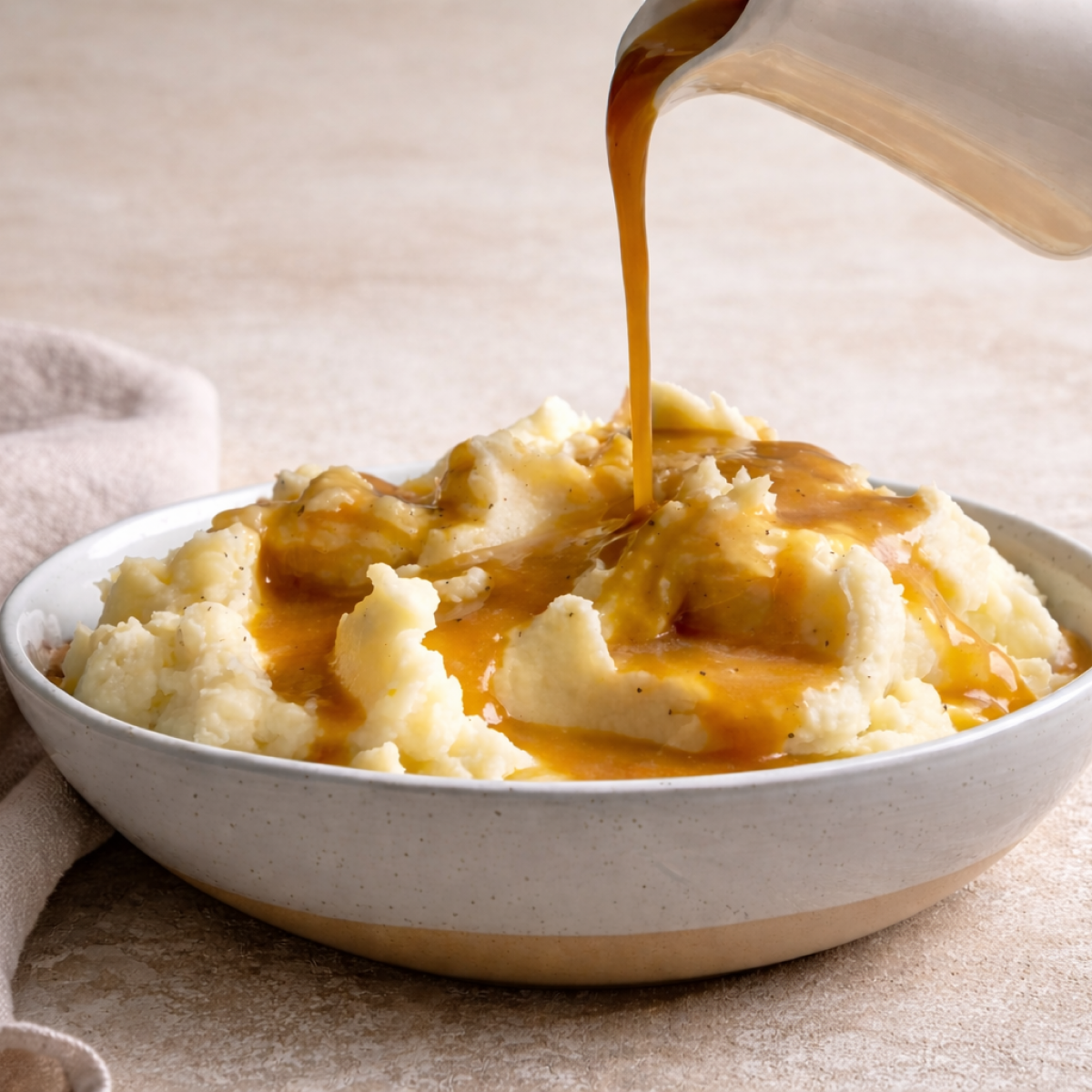
Most people use gravy the same way. They spoon it over the potatoes. They spoon it over the turkey or roast. They might go back for a little more. That pattern holds pretty consistently from table to table, which is why ⅓ cup works so well as a starting point — it accounts for the doubling up on mashed potatoes and the main protein without over-planning.
Where it shifts is the sides, and how your people pour.
Mashed potatoes are the biggest gravy driver on any table. People pour generously over a mountain of mash in a way they don't over other sides. Stuffing is a close second. If both are on the table and your crowd goes heavy (you know who you are), turn on Gravy fans in the calculator. It adds 30%, which works out to about 0.43 cup per person — and once the 15% buffer goes on top, you're making right around ½ cup a head. That setting applies to the adult portions; kids stay at ¼ cup each, because a kid's gravy is limited by plate size more than enthusiasm.
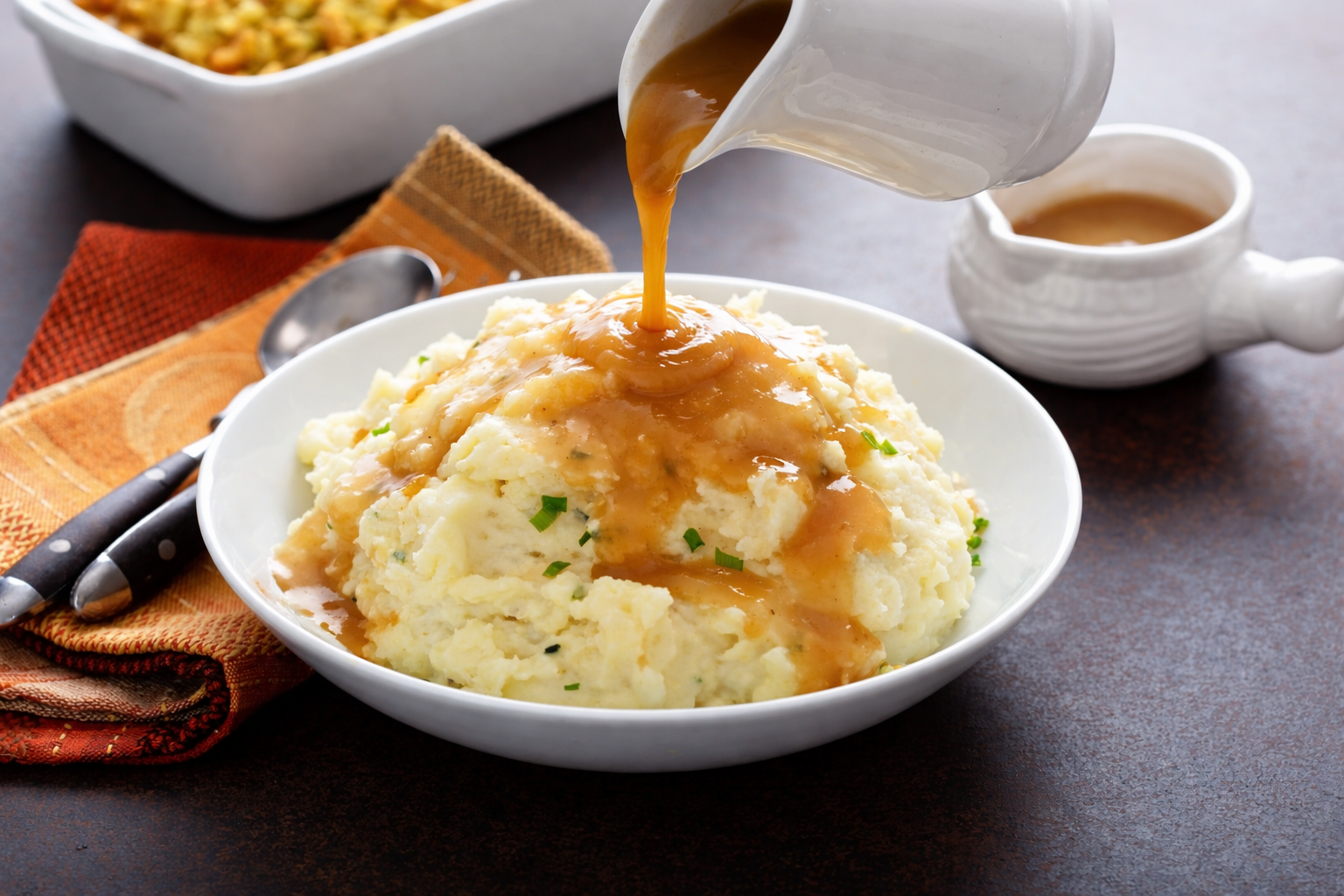
Doing a mashed potato bar, where gravy is basically the main event? Start from ½ cup per person instead. Pick Mashed potato bar in the calculator. That's a different serving style than Gravy fans, even though the two land in a similar place: one changes the baseline portion, the other adds 30% to the holiday portion. Choosing the mashed potato bar setting gives you a larger starting portion than the standard holiday setting with Gravy fans enabled. Turn on both and you're planning about ¾ cup per person, which is a generous option rather than the standard for a potato bar — worth it if you know your crowd pours heavy, and more than most tables need.
Lots of other sauces on the table, or a lighter weeknight meal? ¼ cup can be enough. That's the Weeknight setting.
Pick the setting that matches your table, and the calculator does the rest. Now you know why.
The Full Chart: 10 to 100 Guests
Cups to make for every crowd size and every serving style. For larger batches, I've included quarts because that's how you'll be thinking when you're scaling this up.
| Guests | Light (¼ cup pp) | Standard (⅓ cup pp) | Gravy Lovers (½ cup pp) |
|---|---|---|---|
| 6 | 1½ cups | 2 cups | 3 cups |
| 10 | 2½ cups | 3⅓ cups | 5 cups |
| 15 | 3¾ cups | 5 cups | 7½ cups |
| 20 | 5 cups / 1¼ qt | 6⅔ cups / 1¾ qt | 10 cups / 2½ qt |
| 25 | 6¼ cups / 1¾ qt | 8⅓ cups / 2¼ qt | 12½ cups / 3¼ qt |
| 30 | 7½ cups / 2 qt | 10 cups / 2½ qt | 15 cups / 3¾ qt |
| 40 | 10 cups / 2½ qt | 13⅓ cups / 3½ qt | 20 cups / 5 qt |
| 50 | 12½ cups / 3¼ qt | 16⅔ cups / 4¼ qt | 25 cups / 6¼ qt |
| 75 | 18¾ cups / 4¾ qt | 25 cups / 6¼ qt | 37½ cups / 9½ qt |
| 100 | 25 cups / 6¼ qt | 33⅓ cups / 8½ qt | 50 cups / 12½ qt |
Cups are exact amounts before any buffer. Quarts are rounded up to the nearest ¼ quart. The calculator adds a 15% buffer on top and rounds up to the next whole cup.
Why Turkey Drippings Alone Won't Cover It
This is where most hosts get blindsided. You roast a whole turkey, you're feeling good about the drippings situation, and then you strain the pan and realize what you actually have is nowhere near enough for your crowd.
The amount of usable turkey drippings varies considerably depending on your roasting method, whether the turkey was brined and how much liquid you added to the roasting pan. Rather than counting on a specific amount, strain your drippings, separate the fat and measure the remaining juices. Supplement with unsalted stock as needed.
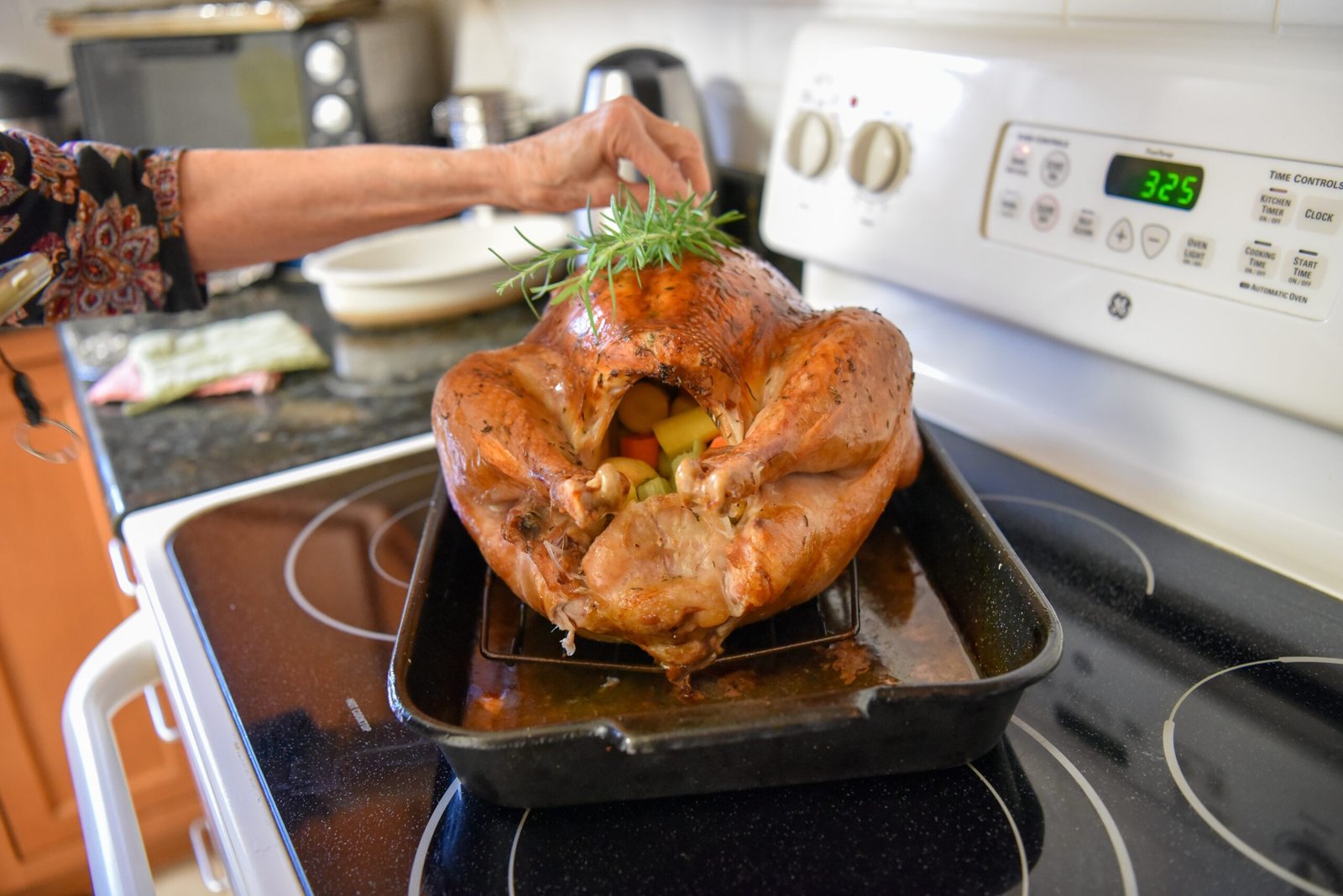
Here's the part that matters: even the National Turkey Federation's gravy recipe combines just ¼ cup of turkey drippings with 2 cups of stock. The drippings provide concentrated roasted flavor, while stock supplies most of the liquid. For a table of 12 at the standard ⅓ cup serving, you need 4 cups of finished gravy, or 5 with the 15% buffer, so most of that is coming from stock no matter how well your bird cooperates. Use your drippings and enough unsalted stock to make the gravy, adjusting the liquid as it cooks until you reach your desired finished quantity and consistency.
One note on measuring: if you're using pan drippings instead of butter for the roux, separate the fat first and measure that. The juices left behind count toward your stock, not your fat.
My sourdough discard gravy recipe is worth trying here if you're open to it — the discard adds a subtle depth that tastes like you've been simmering bones for hours. People always ask about it.
Make It the Day Before. Seriously.
I know this sounds like extra work, but it's actually the opposite. Making gravy base the day before is one of the single best things you can do for your sanity on a big hosting day.
Here's the method:
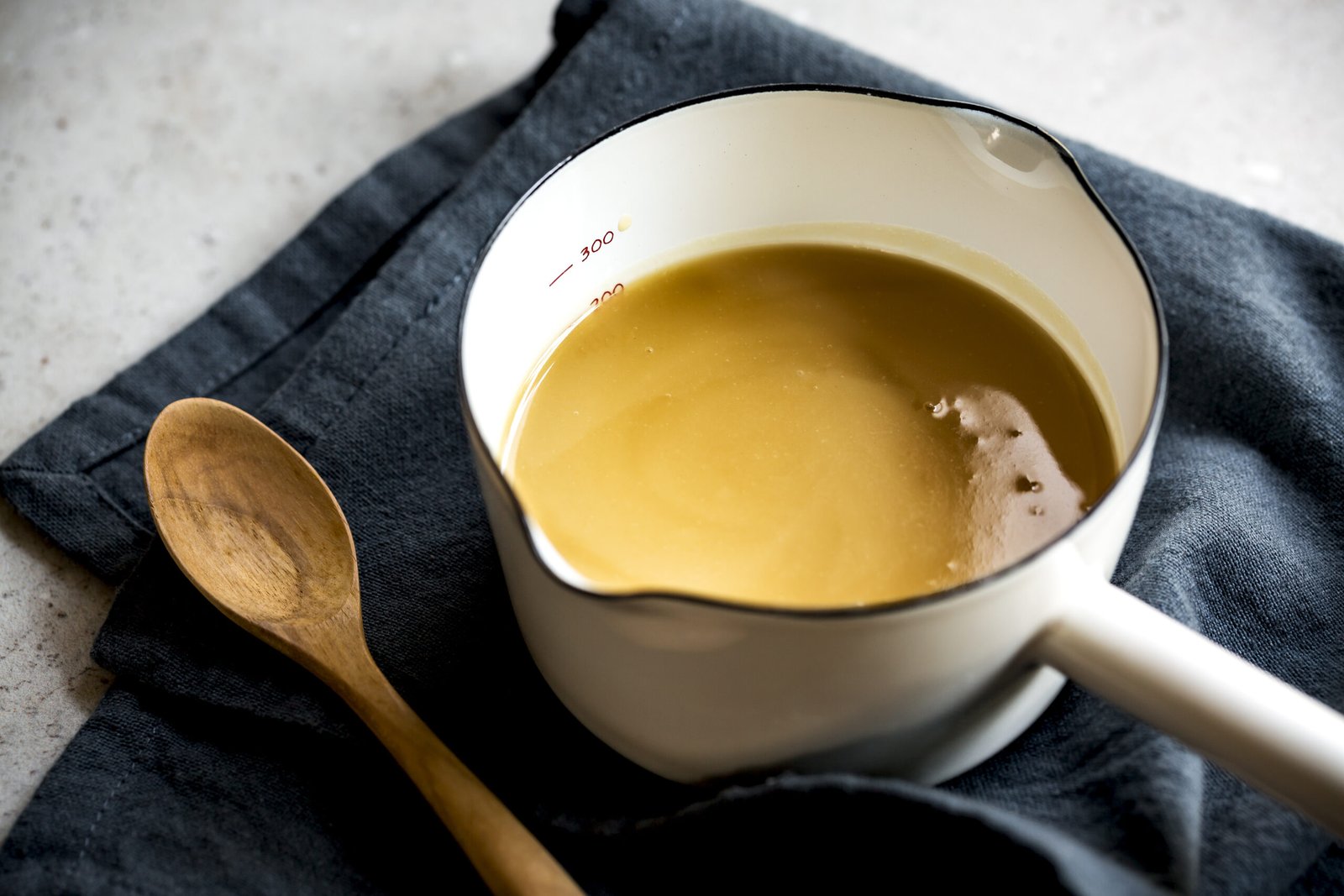
The day before: Make a base gravy using butter, flour, and good unsalted stock. Start with 1⅓ tablespoons each of butter and flour per cup of stock for a lighter, pourable gravy. Prefer yours thicker? Try 2 tablespoons each per cup of stock. The National Turkey Federation also uses 2 tablespoons of flour per cup of stock in its turkey gravy recipe, although it uses mixed turkey drippings rather than butter. Adjust the thickness to your preference. Make the base a little thicker than you want to serve, because the drippings will thin it tomorrow. Season it lightly; you'll adjust at the end. Then cool it quickly in shallow containers and get it in the fridge within two hours of it coming off the heat.
The day of: Roast your turkey. Strain the drippings and separate the fat. Warm the base gently, whisk the drippings in gradually, then bring the combined gravy to a rolling boil. Simmer to the consistency you want, adding more stock if it needs thinning. Taste before you salt — especially if your turkey was brined or your stock is salted.
What you end up with tastes like day-of gravy, because the fresh drippings bring the roasted flavor with them. What you don't have to do is stand over the stove making gravy while simultaneously carving a turkey and fielding questions about when everything will be ready.
Storage times:
- Homemade gravy: 3–4 days in the refrigerator, cooled quickly in shallow containers and refrigerated within two hours
- Frozen gravy: up to 3 months — cool rapidly in shallow containers, store in airtight containers, reheat on the stove to a rolling boil, whisking
- Cream- and milk-based gravies can separate or turn grainy after freezing, so they're better made fresh
If you're planning the full spread and want to see how gravy fits into the bigger picture, the Buffet Portions Per Person guide will help you balance every dish on the table, not just the gravy.
Troubleshooting: When Something Goes Wrong
Even when you've planned perfectly, gravy can still surprise you. Here's how to fix the most common problems fast.
Too thin. Simmer it longer uncovered — this is usually the fix. One caution: reducing concentrates the salt along with everything else, so if your gravy is already well-seasoned, thicken it instead. Whisk a teaspoon of cornstarch into a tablespoon of cold water and stir it in gradually. Don't dump it all at once.
Too thick. Add stock a splash at a time, whisking constantly. Warm stock blends in fastest, but cold works too as long as you go slowly and keep whisking.
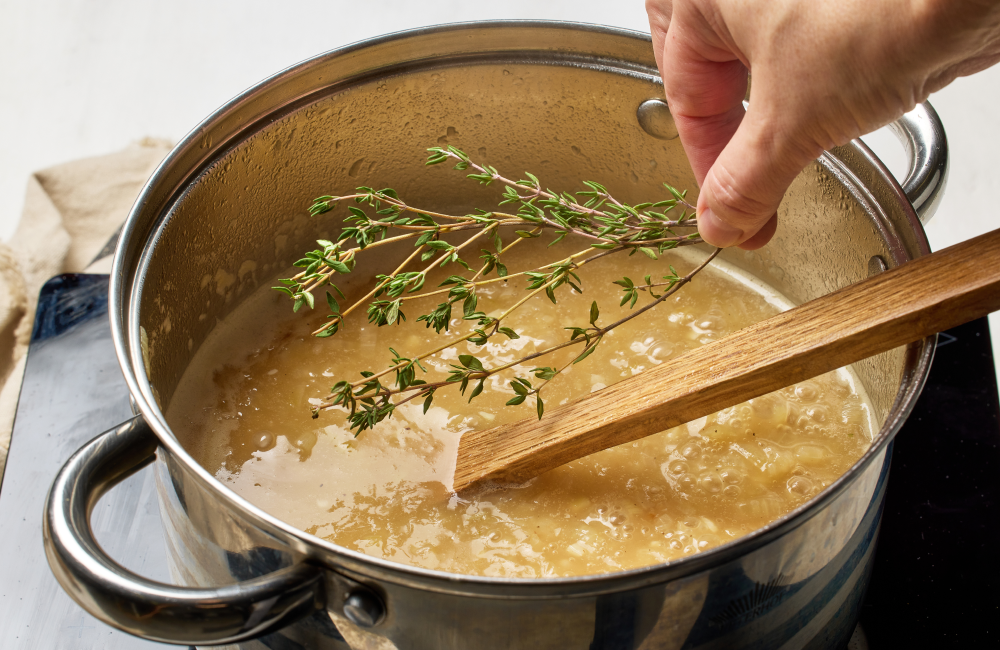
Bland. Taste it first — gravy made with seasoned stock or a brined turkey's drippings is often saltier than you'd expect. If it's flat rather than salty, it needs salt, probably more than you think. Taste it over a piece of bread or a bite of potato to get the true flavor, because gravy tasted off a spoon always seems more intense than it does on a plate. A small splash of Worcestershire or a tiny pinch of poultry seasoning quietly fixes a lot of flat gravy.
Lumpy. Strain it through a fine mesh strainer. An immersion blender for thirty seconds will smooth out most lumps too, though it won't catch every one and it can change the texture slightly.
Too salty. Add unsalted stock to dilute it, a little at a time. Keep in mind this grows the batch, so you may need a touch more roux to bring the body back. (Skip the raw potato trick. It soaks up some of the salty liquid, but what's left is just as salty.)
Not enough of it. This is the one you're trying to avoid. If you find yourself short the day of, heat additional stock in a separate pot, season it well, and whisk in a simple butter-flour roux — start with 1⅓ tablespoons each per cup of stock, the same starting point the calculator uses, then simmer until it matches the consistency of your main batch. It won't have the dripping depth, but combined, it stretches your supply and holds up fine on the plate.
Serving Gravy for a Crowd: What You Actually Need
Gravy boats. Capacity varies a lot; mine hold somewhere around 1½ to 2 cups, so check yours. For a table of 12 at the standard portion, plan on two boats so both ends of the table can reach without passing. For buffet service, use a wider-mouthed pitcher or a small ladle setup so it doesn't drip everywhere.
Holding it hot for buffets. A slow cooker on warm is my favorite move for a crowd, with one rule: it's for holding gravy that's already hot, not for reheating it from the fridge. Bring the gravy to a boil on the stove first, then transfer it to a preheated cooker and keep it at 140°F or above. USDA says the same thing — reheat on the stove, in the microwave, or in the oven, then use the slow cooker to hold. A chafing dish or any other temperature-controlled setup works just as well.
Ladle size matters. A 2-ounce ladle is ¼ cup, the standard for gravy service. Self-serve guests usually take two, which is ½ cup — worth knowing, since that's more than the ⅓ cup you planned on.
Keep it warm at the table. Gravy gets thick and gluey fast once it cools. For a plated dinner, warm your gravy boat with hot water before filling it. For longer meals, keep additional gravy in a temperature-controlled slow cooker or another suitable warming appliance at 140°F or higher, and refill the boat as needed. Refrigerate any gravy that hasn't been kept at a safe temperature within two hours.
For everything else you need for a big gathering, the Ultimate Party Planning Equipment List has the full breakdown — from serving vessels to coolers to what size slow cooker actually feeds a crowd.
FAQ
Every answer below gives the exact amount at ⅓ cup per person, then what the calculator tells you to make with the 15% buffer on, rounded up to the next whole cup. The Gravy fans numbers include the buffer too.
How much gravy do I need for 10 people? 3⅓ cups at ⅓ cup each. With the buffer, make 4 cups. Gravy fans? Make 5.
How much gravy for 12 people? 4 cups (1 quart) at ⅓ cup each. With the buffer, make 5 cups. If your crowd drowns their mash and stuffing, make 6.
How much gravy for 15 people? 5 cups at ⅓ cup each. With the buffer, make 6 cups. Gravy fans: 8 cups.
How much gravy for 20 people? 6⅔ cups at ⅓ cup each. With the buffer, make 8 cups (2 quarts). Gravy fans: 10 cups.
How much gravy for 25 people? 8⅓ cups at ⅓ cup each. With the buffer, make 10 cups. Gravy fans: 13 cups.
How much gravy for 30 people? 10 cups at ⅓ cup each. With the buffer, make 12 cups (3 quarts). Gravy fans: 15 cups.
How much gravy for 50 people? 16⅔ cups at ⅓ cup each. With the buffer, make 20 cups (5 quarts). This is where holding it in a slow cooker or chafing dish earns its keep.
How much gravy for 100 people? 33⅓ cups at ⅓ cup each. With the 15% buffer, you'll need approximately 38⅓ cups. The calculator rounds that to 39 cups, or 9¾ quarts. For easier preparation, round up to 10 quarts. Work in 2-quart batches and hold it in equipment that keeps it at 140°F or above.
How much flour and butter do I need? The calculator figures this for you at 1⅓ tablespoons each per cup of stock. For 4 cups of gravy that's 6 tablespoons of each; for 12 cups it's 16 tablespoons of each. Amounts are rounded up to whole tablespoons, so small batches land a touch thicker than large ones.
Can I make gravy the day before? Yes — and honestly, you should. Make the base with butter, flour, and unsalted stock the day before, slightly thicker than you want it. On the day of, whisk in your fresh drippings and bring it to a rolling boil. It tastes like you made it that morning, and it's one less thing to manage.
How long does homemade gravy keep? 3–4 days in the refrigerator, cooled quickly and refrigerated within two hours. Up to 3 months in the freezer. Reheat to a rolling boil either way.
How do I know if I made enough? The honest answer: most people underestimate. Running the calculator with the 15% buffer on is what reduces the risk of coming up short. If you eyeballed it, make a little more.
Plan the Rest of Your Meal
If gravy is on the menu, you're probably planning a full dinner. Here's what belongs alongside this post:
- How Much Meat Per Person — the protein math that most people get wrong. Covers turkey, beef, chicken, pork, and pulled meat by guest count.
- How Much Potato Salad Per Person — if it's a summer spread instead of a holiday dinner, this one's your companion calculator.
- Buffet Portions Per Person — planning a full buffet with multiple dishes? This tells you how to balance every item on the table.
- How Many Drinks Per Person — the other thing people almost always underestimate.
- How Much Food for 25 to 100 Guests — planning the whole menu at once? Start here.
- Ultimate Party Food Planning Guide — the full picture, every category, one place.
Final Thoughts
Gravy is one of those things that doesn't get enough credit until it runs out. Then suddenly it's the only thing anyone is thinking about.
The math isn't complicated. Start with ⅓ cup per person. Add a little more if mashed potatoes and stuffing are both on the table. Make it the day before if you can. Add your 15% buffer. Keep it hot.
Then pour generously, and enjoy the dinner you worked hard to put on the table — without watching the gravy boat run dry halfway through.
That's the whole thing. You've got this.
Portion amounts are my own planning estimates from years of hosting and catering-style math: ⅓ cup per person as the baseline, ¼ cup for lighter meals, ½ cup for gravy-heavy plates. Broth, flour, and butter amounts are starting quantities — adjust the liquid as it cooks to reach the finished volume and consistency you want. Food-safety guidance follows USDA recommendations for cooling, reheating, and hot holding.
Related
Looking for other recipes like this? Try these:
Pin to Pinterest