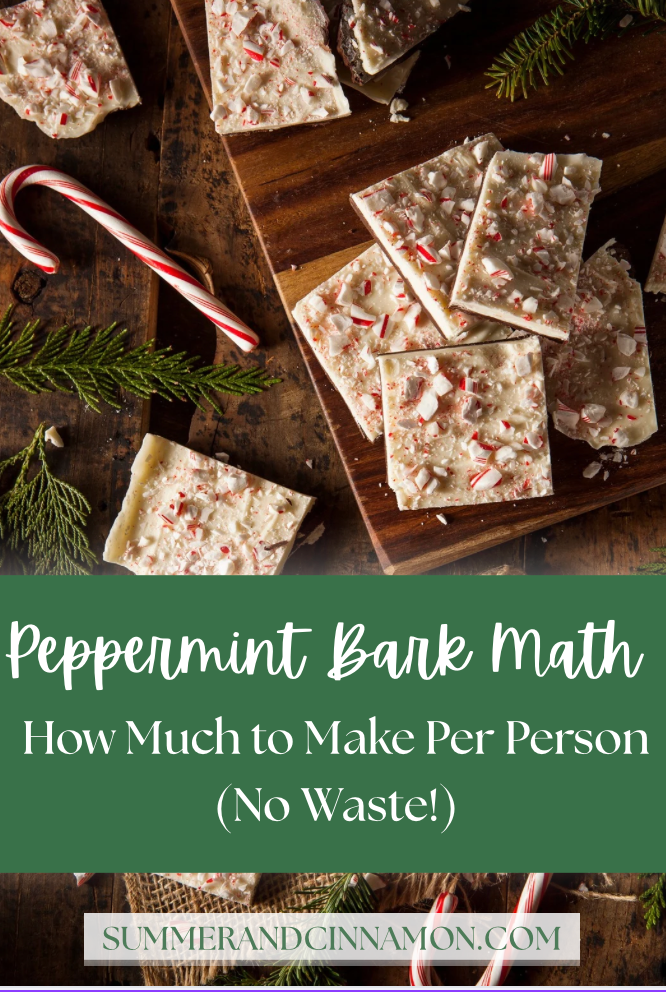
Peppermint bark is the sneaky MVP of holiday baking. You melt two kinds of chocolate, throw some crushed candy canes on top, and somehow end up with the thing everyone fights over at the cookie exchange. Here's the thing — because it's rich, pretty, and easy to package, people tend to over-make it or under-make it. Almost never the right amount.
So this is the post I wish I'd had the first year I made bark for a crowd. It tells you exactly how many pieces, how many pans, and how many pounds of chocolate to buy — whether you're filling one gift bag or feeding a party of 100.
Jump to:
- Peppermint Bark Per Person Calculator (Get the Right Amount Without Guessing)
- Why Peppermint Bark Is Easier to Plan Than Cookies
- The Peppermint Bark Formula (What Actually Makes a "Batch")
- Thickness Matters More Than You'd Think
- How to Use the Calculator
- Real Example: 30-Person Cookie Exchange
- Troubleshooting: Common Peppermint Bark Mistakes
- Peppermint Bark Storage
- Frequently Asked Questions
- Plan the Rest of Your Holiday Baking
- Final Thoughts
- Related
- Pin to Pinterest
Quick Answer: How Much Peppermint Bark Per Person
Here's the fast version, no scrolling required:
- Dessert table or party tray: 2 pieces per person (~2 oz)
- Cookie exchange: 2–3 pieces per person (~2–3 oz)
- Gift bags or favors: 4–6 pieces per bag (~4–6 oz)
- Main dessert (bark only): 4 pieces per person (~4 oz)
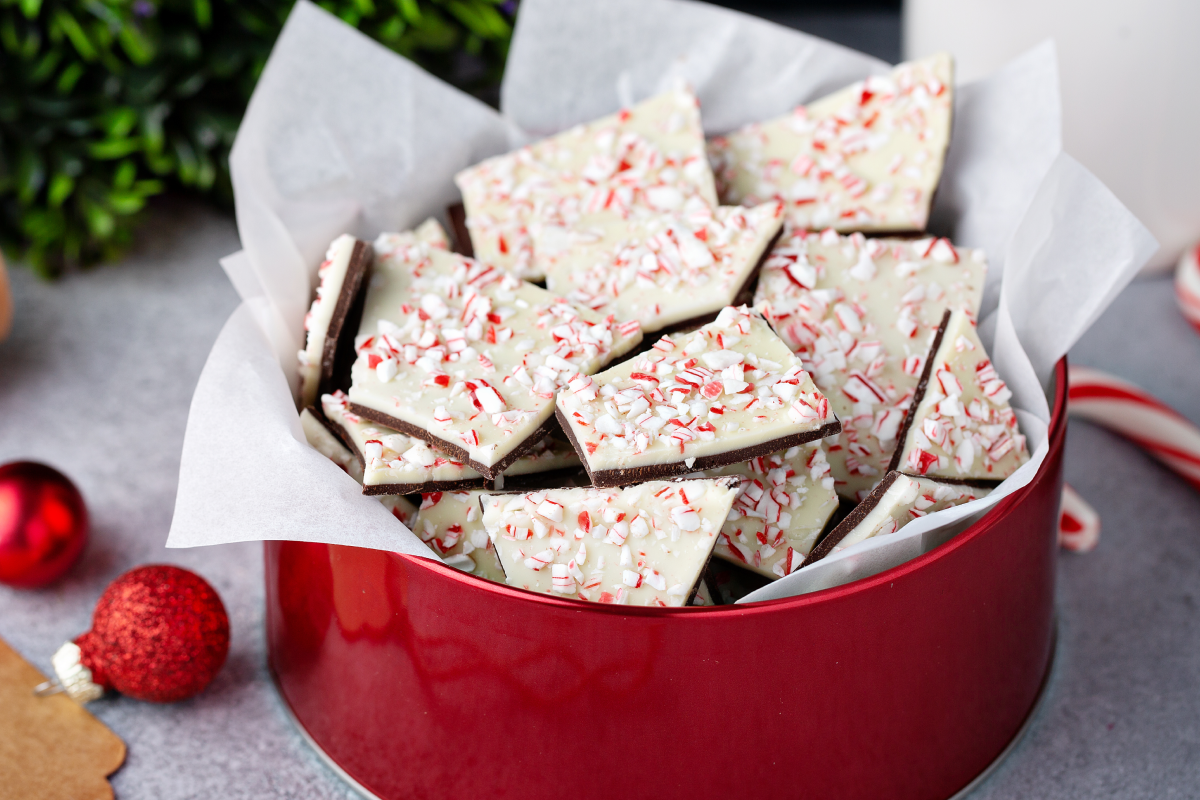
One standard 9×13 pan yields about 1½–2 pounds of bark — roughly 24–32 snack-size pieces, or enough for 12–16 people on a dessert table.
The calculator below does all the math for you — including pounds of chocolate to buy and how many pans to prep.
Peppermint Bark Per Person Calculator (Get the Right Amount Without Guessing)
This calculator is built around real serving behavior, factoring in portion size and whether it’s a main dessert or part of a larger spread, so you can make the right amount without running out or overdoing it.
PEPPERMINT BARK CALCULATOR
Get exact pieces, pans, and shopping amounts for any crowd — whether you're filling gift bags or feeding a dessert table.
| Who | Pieces | Notes |
|---|
| Guests | Dessert table (2 pp) | Cookie exchange (3 pp) | Gift bags (5 pp) | Main dessert (4 pp) |
|---|---|---|---|---|
| 10 | 20 pcs1 pan | 30 pcs2 pans | 50 pcs3 pans | 40 pcs2 pans |
| 20 | 40 pcs2 pans | 60 pcs3 pans | 100 pcs5 pans | 80 pcs4 pans |
| 25 | 50 pcs3 pans | 75 pcs4 pans | 125 pcs6 pans | 100 pcs5 pans |
| 30 | 60 pcs3 pans | 90 pcs4 pans | 150 pcs7 pans | 120 pcs5 pans |
| 50 | 100 pcs5 pans | 150 pcs7 pans | 250 pcs11 pans | 200 pcs9 pans |
| 75 | 150 pcs7 pans | 225 pcs10 pans | 375 pcs16 pans | 300 pcs13 pans |
| 100 | 200 pcs9 pans | 300 pcs13 pans | 500 pcs21 pans | 400 pcs17 pans |
Why Peppermint Bark Is Easier to Plan Than Cookies
Unlike cookies (where yields swing wildly depending on how big you scoop), peppermint bark scales with math. You know the pan size. You know the thickness. You know the weight. That means you can calculate a party batch on a napkin — no baker's intuition required.
Which is exactly why bark shows up on so many holiday planning lists — it's the closest thing to a foolproof gifting dessert. If you're building a broader holiday spread, the ultimate party food planning guide walks through how to balance sweet and savory for any crowd size.
The Peppermint Bark Formula (What Actually Makes a "Batch")
Classic peppermint bark is just three things:
- Bottom layer — dark or semi-sweet chocolate
- Top layer — white chocolate
- Finish — crushed candy canes or peppermint candy
The ratio most home bakers land on after a few tries:
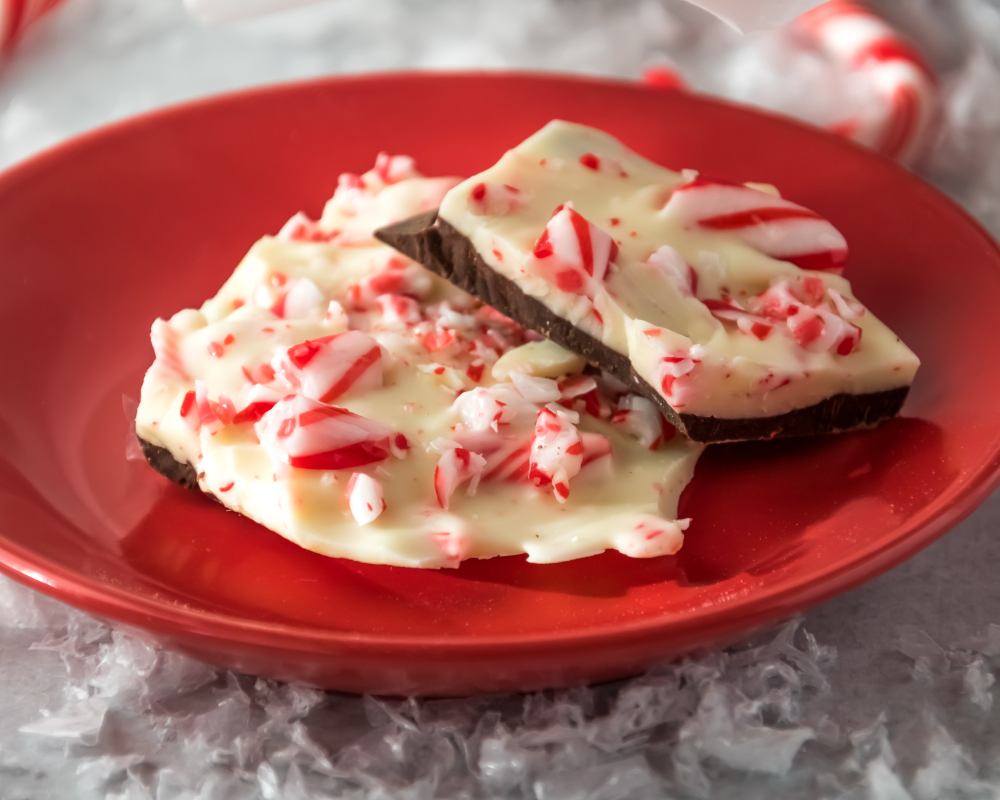
12 oz dark chocolate : 12–16 oz white chocolate : ⅓ cup crushed peppermint
That's one standard 9×13 batch. The white chocolate layer is usually a little heavier because it's the "pretty" layer — you want it thick enough to hold the peppermint without cracking when you break the bark apart.
Pan size → yield cheat sheet:
- 8×8 pan → ~1 lb bark → 12–16 pieces
- 9×13 pan → ~1½–2 lb bark → 24–32 pieces
- Half sheet pan (13×18) → ~3–4 lb bark → 48–64 pieces
Trust me on this — if you're making bark for more than 20 people, skip the 9×13 and go straight to a half sheet pan. One pan, done.
Thickness Matters More Than You'd Think
This is the piece most recipes skip, and it's where batches go sideways. Thickness changes two things: how much chocolate you pour into the pan, and how people naturally break and serve the finished bark.
¼ inch thick (thin and snappy) — best for gift bags, cookie exchange swaps, and cookie trays. A 9×13 uses about 10 oz dark + 12 oz white. Because thin bark is fragile, it breaks into smaller shards — you'll end up with around 30 bite-size pieces per pan.
⅜ inch thick (classic) — the Williams-Sonoma-style bark most people picture. A 9×13 uses about 12 oz dark + 14 oz white. Cuts into clean medium shards — around 24 pieces per pan.
½ inch thick (chunky) — more of a dessert bar than a candy. A 9×13 uses about 16 oz dark + 18 oz white. Each piece feels substantial on its own, so you naturally cut bigger chunks — around 18 pieces per pan. Good for platters, not great for neat gift bags.
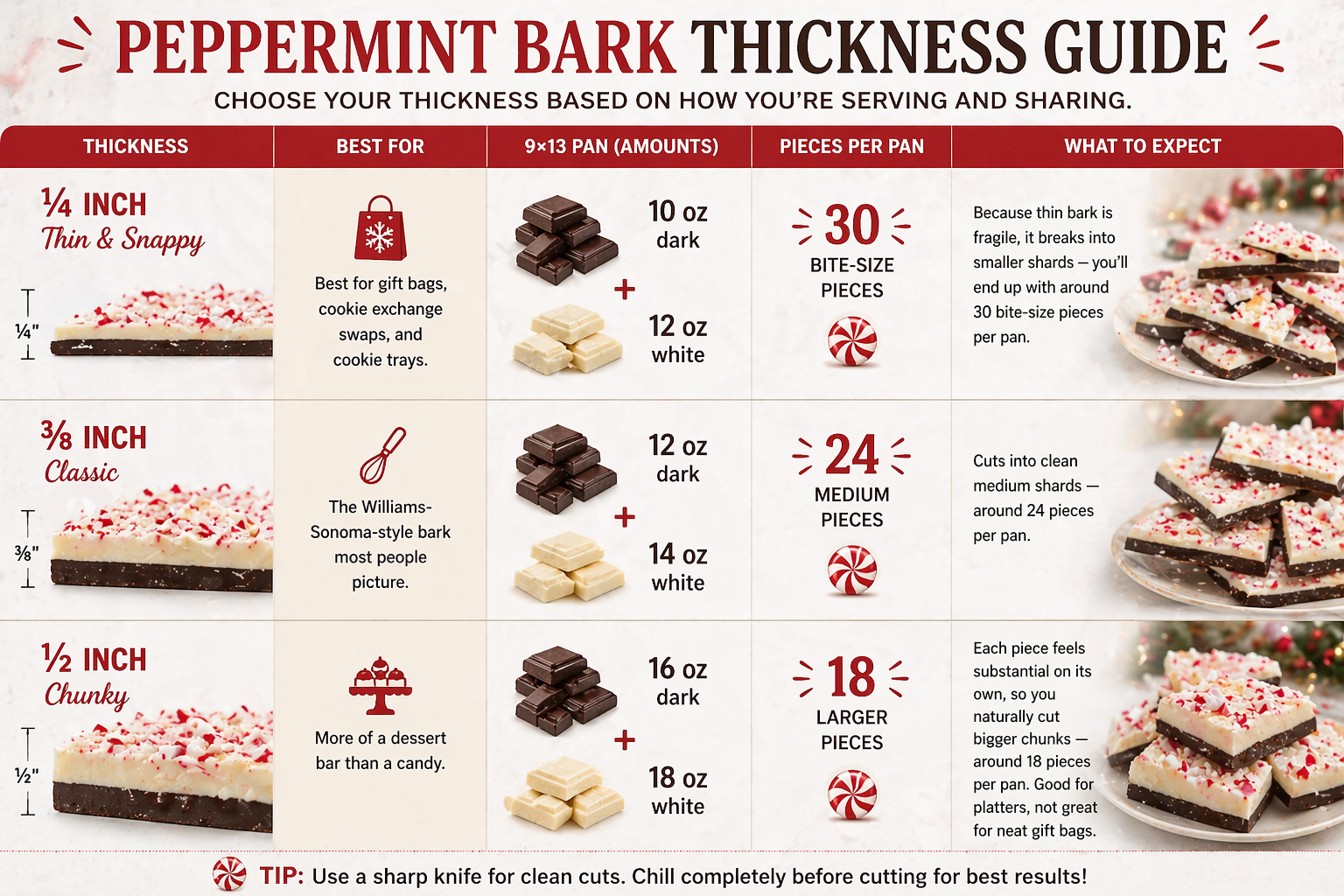
Here's the honest version: piece counts come down to how you cut it. Thinner bark breaks into smaller shards because a big thin piece snaps in your hand anyway. Thicker bark gets cut into bigger pieces because each one is already a lot of chocolate — nobody wants a tiny brick. The calculator uses these standard yields for shopping estimates. If you cut bigger or smaller, adjust from there.
If you're building a full dessert table, the dessert table portion guide covers how much of each treat to plan for when bark is sharing space with cookies, brownies, and bars.
How to Use the Calculator
Three steps, under a minute:
- Enter your guest count — adults only, since kids typically eat about half a serving of rich chocolate.
- Pick how you're serving it — dessert table, cookie exchange, gift bags, or main dessert. This sets the pieces per person.
- Choose your thickness and pan size — the calculator does the rest and tells you total pieces, total pounds of bark, pounds of chocolate to buy, and how many pans to make.
The shopping list output breaks down dark chocolate, white chocolate, and crushed peppermint separately so you can take it straight to the store.
Real Example: 30-Person Cookie Exchange
Let's say you're hosting a cookie exchange for 30 people, and peppermint bark is one of the items everyone will grab.
Plan: 3 pieces per person → 90 pieces total
Math:
- At ¼ inch thickness, one 9×13 pan yields ~30 pieces
- 90 ÷ 30 = 3 pans of 9×13 bark
Shopping list:
- 36 oz (2¼ lbs) dark chocolate
- 42 oz (2⅝ lbs) white chocolate
- 1 cup crushed peppermint, or about 9 regular candy canes
- ¾ teaspoon peppermint extract (optional — stir into the white chocolate layer)
One Saturday morning, three pans, done. And because bark keeps in the fridge for up to 3 weeks, you can make it well ahead.
Troubleshooting: Common Peppermint Bark Mistakes
I've done this enough times to know every way bark can go wrong. Here are the issues that come up most:
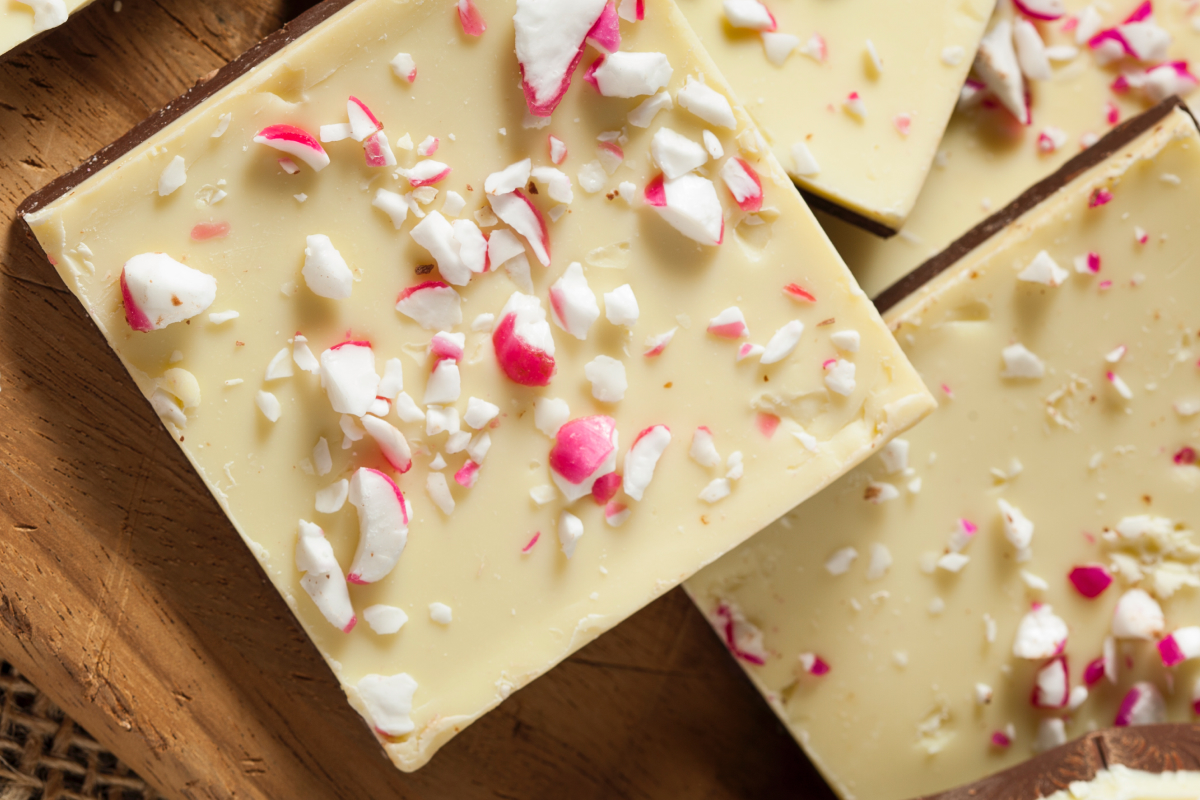
The layers separate when you break it. This is the big one. The dark chocolate layer got too cold before you poured the white chocolate on top, so they never bonded. Fix: let the dark layer set until it's firm but not ice-cold — about 10–15 minutes in the fridge, not 45.
White chocolate seizes or goes grainy. White chocolate is finicky. It hates water, steam, and overheating. Melt it in 30-second microwave bursts at 50% power, stirring between each one. If it seizes, a teaspoon of coconut oil or neutral shortening can sometimes rescue it.
The bark blooms (white streaks). This is temperature swing, not a mistake you made while cooking. Store bark in a cool, dry place — not on top of the fridge, not near a warm oven. Humidity is the enemy.
The peppermint falls off. You added it after the white chocolate already set. Sprinkle the crushed candy canes on while the white chocolate is still wet and press them in gently with the back of a spoon.
Too much peppermint = bitter bark. Cap it at ⅓ cup crushed peppermint per 9×13 pan. More than that tips into mouthwash territory.

Peppermint Bark Storage
Bark keeps better than almost any other homemade Christmas treat, which is why it's such a good make-ahead.
- Cool room / pantry: up to 2 weeks in an airtight container
- Refrigerator: up to 3 weeks
- Freezer: up to 2 months (break into pieces first, then freeze in a zip-top bag with parchment between layers)
If you're gifting, make it on a Saturday, package it in bags with ribbon by Sunday, and it'll still be perfect a week later when you hand it over.
Frequently Asked Questions
How many pieces are in a pound of peppermint bark? Roughly 16 pieces per pound at standard snack size (about 1 oz each). A 9×13 pan yielding 1½–2 lbs gives you 24–32 pieces.
How much chocolate do I need for 50 people? For a dessert table (2 pieces per person), plan on 100 pieces — about 2 pans of 9×13 or one half sheet pan. You'll need roughly 24 oz dark chocolate and 28 oz white chocolate. The calculator above spells out exact amounts.
Can I use chocolate chips instead of chocolate bars? Yes, but chips contain stabilizers that make them harder to melt smoothly. If you're using chips, stir in 1 teaspoon coconut oil per 12 oz to help it pour cleanly. Baking chocolate bars or melting wafers work better if you want that glossy, snappy finish.
Do I need to temper the chocolate? Only if you want bakery-style snap and shine. For home bark served at family parties, melting and setting in the fridge is completely fine — it just won't be as glossy, and you should store it cold to keep the texture firm.
How far in advance can I make peppermint bark for Christmas? Up to 3 weeks in the fridge, or 2 months in the freezer. Most people make it right after Thanksgiving and portion it out through December.
What's the best chocolate for peppermint bark? For the dark layer: any semi-sweet or bittersweet bar you'd eat plain (Ghirardelli and Guittard are reliable). For the white layer: look for white chocolate made with real cocoa butter — it melts smoother and tastes less waxy. Read the ingredient label; if "cocoa butter" isn't near the top, keep looking.
Can I make peppermint bark without a candy thermometer? Absolutely. Peppermint bark is one of the few chocolate-based treats that doesn't require tempering for a good result at home. A microwave and a silicone spatula are all you need.
Plan the Rest of Your Holiday Baking
Bark is almost never the only thing on the tray. If you're planning a full dessert spread or a bake-and-gift marathon, these guides cover the rest:
- How many cookies per person for a party — bark and cookies together is the classic holiday combo
- Sugar cookie calculator — for the decorated sugar cookies on the same tray
- Dessert charcuterie board guide — how to style bark and cookies together
- How much food for 25–100 guests — for holiday parties where bark is just the dessert
- Ultimate party food planning guide — the full library of scaling tools
Final Thoughts
Peppermint bark is one of those recipes that feels impressive and costs you almost nothing in effort — as long as you make the right amount. Too little and it vanishes before half your guests get any. Too much and you're eating bark for breakfast through January.
The calculator above handles the math so you don't have to. Pick your crowd, pick your thickness, and go buy chocolate.
Save a pan for yourself. You earned it.
Related
Looking for other recipes like this? Try these:


Pin to Pinterest