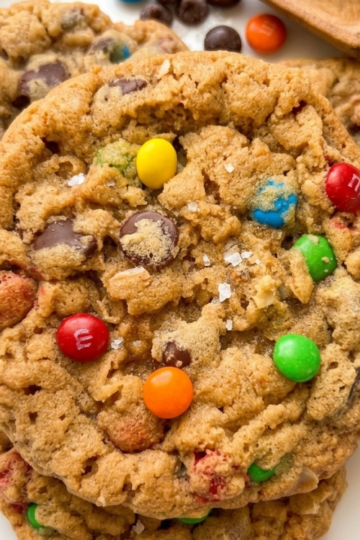
Few things are more disappointing than pulling a tray of cookies from the oven… and finding thin, greasy, pancake-like discs instead of thick, soft bakery-style cookies.
If your cookies turned out flat, don’t worry — this is one of the most common baking problems. The good news? It’s almost always fixable.
Let’s walk through the real reasons cookies spread too much — and exactly how to prevent it next time.
Jump to:
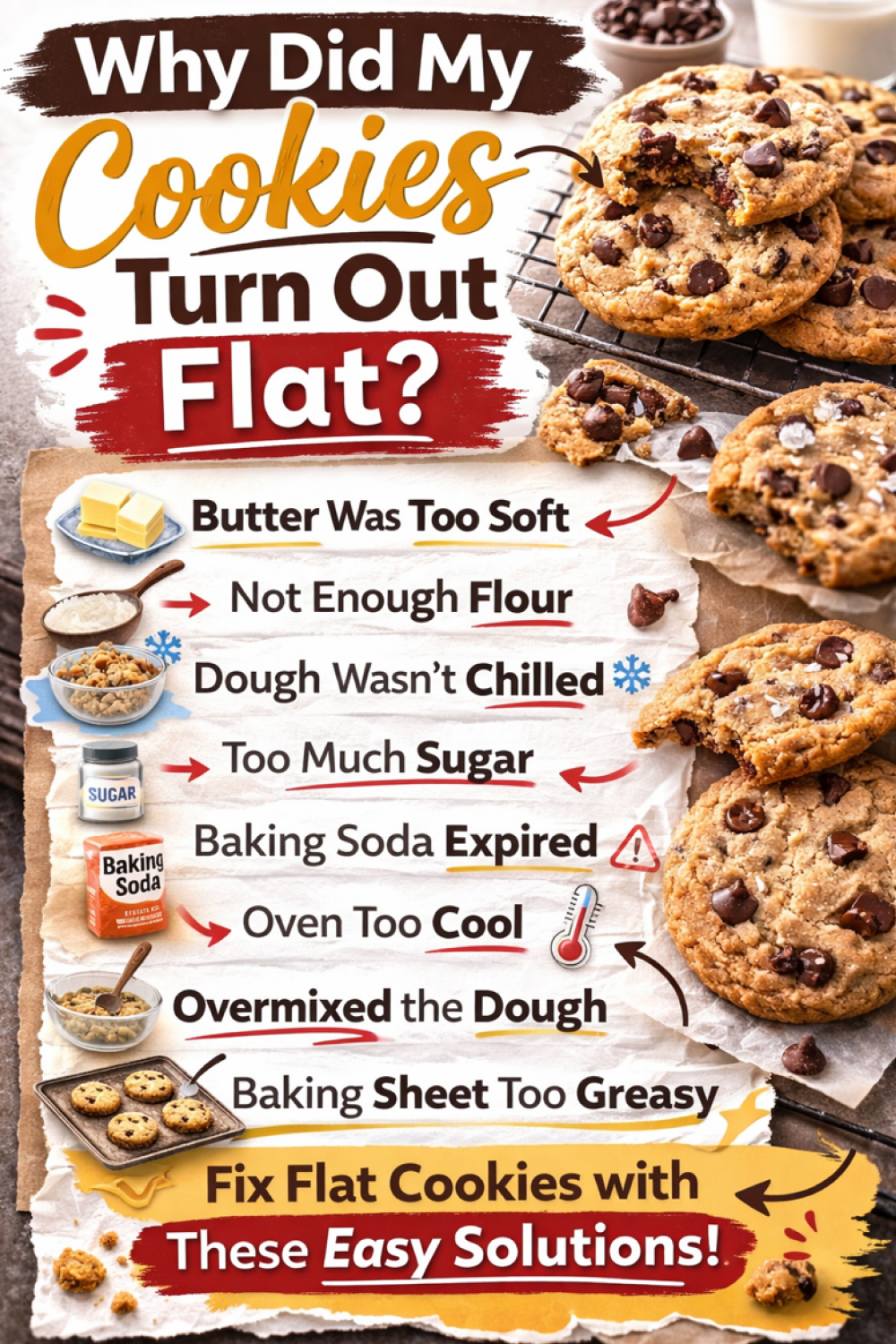
- 1. Your Butter Was Too Soft (or Melted)
- 2. Not Enough Flour
- 3. Your Butter-to-Sugar Ratio Is Too High
- 4. Dough Wasn’t Chilled
- 5. Your Baking Soda or Baking Powder Is Old
- 6. Oven Temperature Is Too Low
- 7. Your Baking Sheet Is Too Greased
- 8. You Overmixed the Dough
- 9. Your Kitchen Is Too Warm
- Related
- Pin to Pinterest
1. Your Butter Was Too Soft (or Melted)
This is the #1 cause of flat cookies.
Butter that’s overly soft — or fully melted — causes cookies to spread before the structure has time to set in the oven.
What “Properly Softened” Butter Actually Means
- Cool room temperature
- Slightly firm in the center
- You can press a finger in, but it doesn’t collapse
If your butter looks shiny, greasy, or partially melted, your dough is already headed toward flat territory.
Fix:
Let butter soften naturally at room temperature. Avoid microwaving unless you’re extremely careful.
2. Not Enough Flour
Even being off by a few tablespoons can make a big difference.
Too little flour = not enough structure = excessive spread.
This often happens when:
- Flour is scooped directly with the measuring cup
- Cups are packed too tightly or too loosely
- The recipe was written in grams and converted incorrectly
Fix:
Spoon flour into the measuring cup and level it off. Even better? Use a kitchen scale.
3. Your Butter-to-Sugar Ratio Is Too High
More butter and sugar means more spread.
White sugar, especially, encourages spreading. Brown sugar adds more moisture but slightly more structure because of the molasses.
If a recipe is unbalanced, cookies can flatten dramatically.
Fix:
Choose well-tested recipes. If troubleshooting your own, slightly increase flour (1–2 tablespoons) or reduce butter by a tablespoon.
4. Dough Wasn’t Chilled
Chilling dough solidifies the fat. Cold fat melts slower in the oven, giving cookies time to puff before they spread.
If you skipped chilling — especially in warm kitchens — that could be your answer.
Fix:
Chill dough at least 30–60 minutes. For thick cookies, even longer is better.
5. Your Baking Soda or Baking Powder Is Old
Leavening agents create lift. If they’re expired, your cookies won’t puff properly — they’ll just spread outward.
Baking soda loses strength over time, especially if stored open.
Fix:
Replace baking soda every 6–12 months.
6. Oven Temperature Is Too Low
If your oven runs cool, cookies will melt before they set.
Many home ovens are off by 10–25 degrees without you realizing it.
Fix:
Use an oven thermometer to check accuracy. Most cookies bake best at 350–375°F.
7. Your Baking Sheet Is Too Greased
Excess grease encourages spreading.
If you’re using:
- Heavy cooking spray
- Butter on the pan
- A shiny, overly slick sheet
Your cookies may spread more than intended.
Fix:
Use parchment paper or a silicone baking mat instead of greasing.
8. You Overmixed the Dough
Overmixing develops gluten, which can affect texture and spread — especially in thinner cookies.
While this more commonly causes toughness, it can sometimes alter structure enough to change spreading behavior.
Fix:
Mix just until combined once flour is added.
9. Your Kitchen Is Too Warm
This one surprises people.
If your kitchen is warm:
- Butter softens quickly
- Dough relaxes faster
- Cookies spread more aggressively
This is especially noticeable in summer.
Fix:
Chill shaped dough balls before baking.

How to Guarantee Thicker Cookies
If thick cookies are your goal, here’s your quick checklist:
- Use cool, properly softened butter
- Measure flour accurately
- Chill the dough
- Bake on parchment
- Don’t overcrowd the sheet
- Verify oven temperature
You can also:
- Add 1–2 tablespoons extra flour
- Use slightly more brown sugar than white
- Make dough balls taller instead of perfectly round
If you love thick and chewy cookies try out Grandmas Molasses Cookie Recipe.
When Flat Cookies Are Actually Normal
Not all flat cookies are “failed.”
Some recipes are meant to spread, like:
- Thin and crispy sugar cookies
- Classic chocolate chip cookies
- Lace cookies
The key is whether the texture matches the recipe’s intention.
Quick Troubleshooting Summary
If your cookies are flat and greasy → butter issue.
If they’re thin and dry → too much sugar or not enough flour.
If they’re flat and pale → oven temperature problem.
If they spread wildly → dough too warm.
Need an easy no fail cookie recipe? Try out these Gooey Chocolate Crinkle Cookies.
Final Thoughts
Flat cookies aren’t a baking disaster — they’re feedback.
Once you understand how butter, flour, sugar, and temperature interact, you can control your cookie texture with confidence.
The next batch? Thick, soft, bakery-style perfection.
Here is my printable Cookie Troubleshooting Chart:
Related
Looking for other recipes like this? Try these:



Pin to Pinterest