
Croissants, Puff Pastry, Danish & More
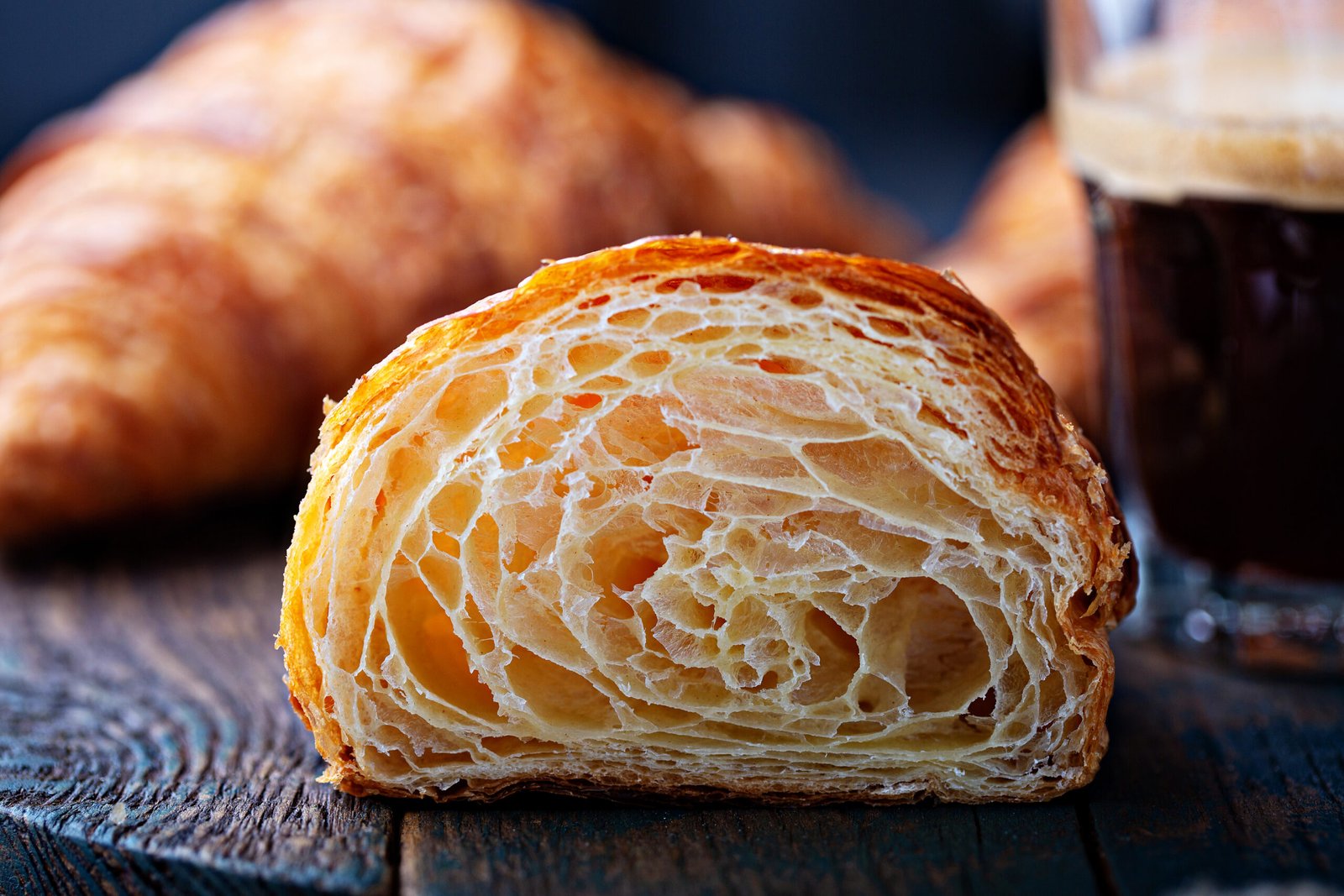
Laminated dough is one of the most beautiful (and intimidating) things you can make in the kitchen. Those dramatic, flaky layers don’t happen by accident — they’re created through precise layering of butter and dough.
And the good news?
Laminated dough freezes exceptionally well.
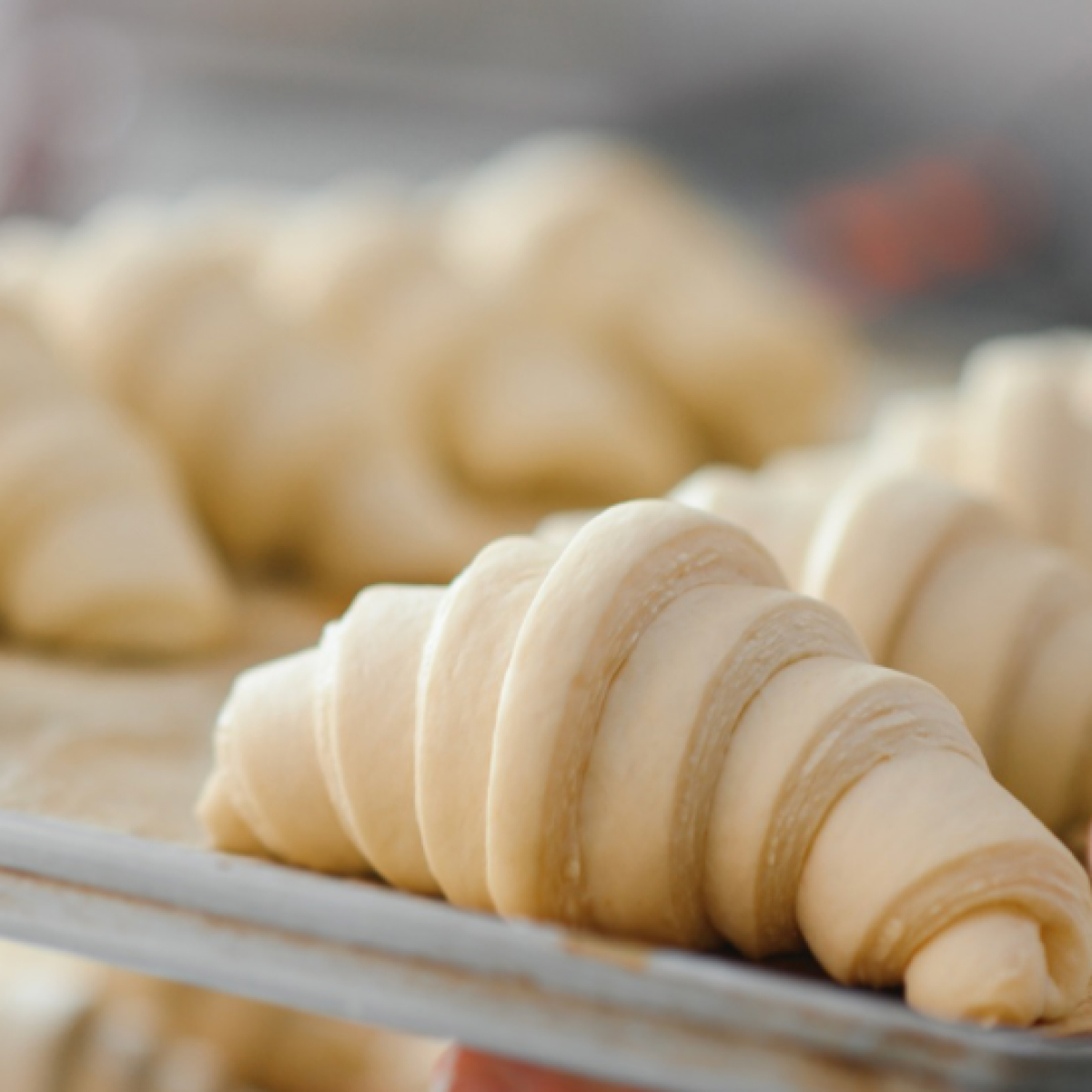
In fact, professional bakeries rely on freezing to manage production and maintain consistent quality.
This guide will walk you through exactly how to freeze laminated dough properly — when to freeze it, how long it lasts, how to thaw it, and how to avoid ruining those precious layers.
Jump to:
What Is Laminated Dough?
Laminated dough is dough that has been folded repeatedly with butter to create alternating layers.
Common laminated doughs include:
- Croissant dough
- Danish pastry
- Puff pastry
- Kouign-amann
- Rough puff
Those thin butter layers create steam in the oven — which lifts the dough and produces flakiness.
Freezing must preserve those layers.
Can You Freeze Laminated Dough?
Yes — and it’s often recommended.
You can freeze laminated dough:
- After lamination but before shaping
- After shaping but before proofing
- After shaping and partial proofing (with caution)
Freezing at the right stage is critical.
I’ve linked all my favorite baking tools on my Shop My Kitchen page if you’d like to see what I use regularly.
Best Stage to Freeze Laminated Dough
Option 1: After Final Fold (Best Overall)
Freeze after your last fold, before shaping.
Why this works:
- Butter layers are set
- Dough is stable
- Minimal risk of distortion
- Flexible for future use
How to freeze:
- Wrap tightly in plastic wrap.
- Place in freezer-safe bag.
- Freeze flat.
Shelf life: Up to 2 months.
Option 2: After Shaping
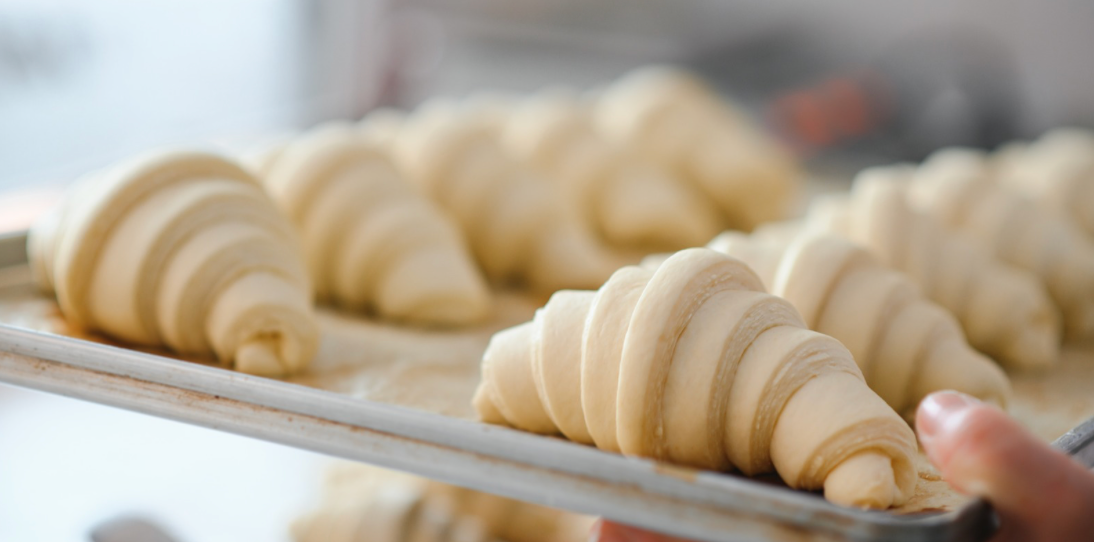
Shape croissants or danish first.
Freeze on a baking sheet until solid.
Transfer to airtight container.
This is ideal for:
- Make-ahead breakfast
- Holiday prep
- Batch baking
Shelf life: 1–2 months.
What About Freezing After Proofing?
Not ideal.
Fully proofed laminated dough can collapse or suffer structural damage during freezing.
If needed:
- Freeze during early proof stage.
- Expect slightly reduced lift.
Best practice: Freeze before proofing.
How to Thaw Laminated Dough
Thawing properly is just as important as freezing.
If Frozen as a Block (Unshaped):
- Transfer to refrigerator overnight.
- Let sit 30–60 minutes at room temperature.
- Roll and shape.
Never thaw laminated dough at room temperature fully — butter can melt into the dough, destroying layers.
I’ve linked all my favorite baking tools on my Shop My Kitchen page if you’d like to see what I use regularly.
If Frozen After Shaping:
- Place frozen pastries on baking sheet.
- Cover loosely.
- Thaw overnight in refrigerator.
- Proof at room temperature until puffy.
Then bake as usual.
Why Freezing Works
Butter is solid at freezer temperatures.
When frozen quickly:
- Butter layers remain intact.
- Water inside butter forms small ice crystals.
- Structure stays preserved.
If frozen slowly or poorly wrapped:
- Large ice crystals form.
- Layers may rupture.
- Butter can migrate into dough.
Proper wrapping prevents freezer burn and moisture loss.
How Long Can Laminated Dough Stay Frozen?
- Ideal window: 1–2 months
- Maximum: 3 months (quality declines)
After 2 months, expect:
- Slightly less rise
- Possible butter leakage
- Reduced flake definition
Use within 8 weeks for best results.
Signs Frozen Laminated Dough Has Gone Bad
Discard if you notice:
- Freezer burn
- Strong freezer odor
- Cracked or dried edges
- Visible ice crystals inside layers
Well-wrapped dough should look unchanged.
Common Freezing Mistakes
❌ Not wrapping tightly
❌ Freezing near strong-smelling foods
❌ Thawing too quickly at room temperature
❌ Allowing butter to melt before baking
❌ Refreezing thawed laminated dough
Avoid temperature swings.
Butter stability is everything.
Can You Freeze Store-Bought Puff Pastry?
Yes.
Keep frozen until ready to use.
Thaw in refrigerator.
Use while cold.
If you partially use a sheet:
- Rewrap tightly.
- Refreeze once (if still cold).
Pro Tips for Perfect Results
- Freeze dough flat, not folded awkwardly.
- Label with date.
- Double-wrap to prevent odor absorption.
- Chill shaped pastries before freezing to firm butter.
- Work quickly when shaping to prevent softening.
Make-Ahead Croissant Schedule Example
Day 1:
- Mix dough
- Laminate
- Freeze after final fold
Day 2 (or later):
- Thaw overnight
- Shape in morning
- Proof
- Bake fresh
Freezing gives flexibility without sacrificing quality.
Final Thoughts
Freezing laminated dough is not just possible — it’s strategic.
When done correctly:
- Layers stay intact
- Butter remains distinct
- Rise stays strong
- Texture stays flaky
The key is freezing at the right stage and thawing gently.
Master that, and you can bake croissants or danish on your schedule — not the dough’s.
Pin to Pinterest
Related
Looking for other recipes like this? Try these: