The first time you use an air fryer, it can feel a little unpredictable.
It looks like a small countertop oven. It promises crispy food in less time. And yet, the cooking times never seem to match what you’re used to in a traditional oven.
Vegetables brown faster than expected. Chicken cooks more quickly than you planned. You find yourself pulling the basket out repeatedly just to check.
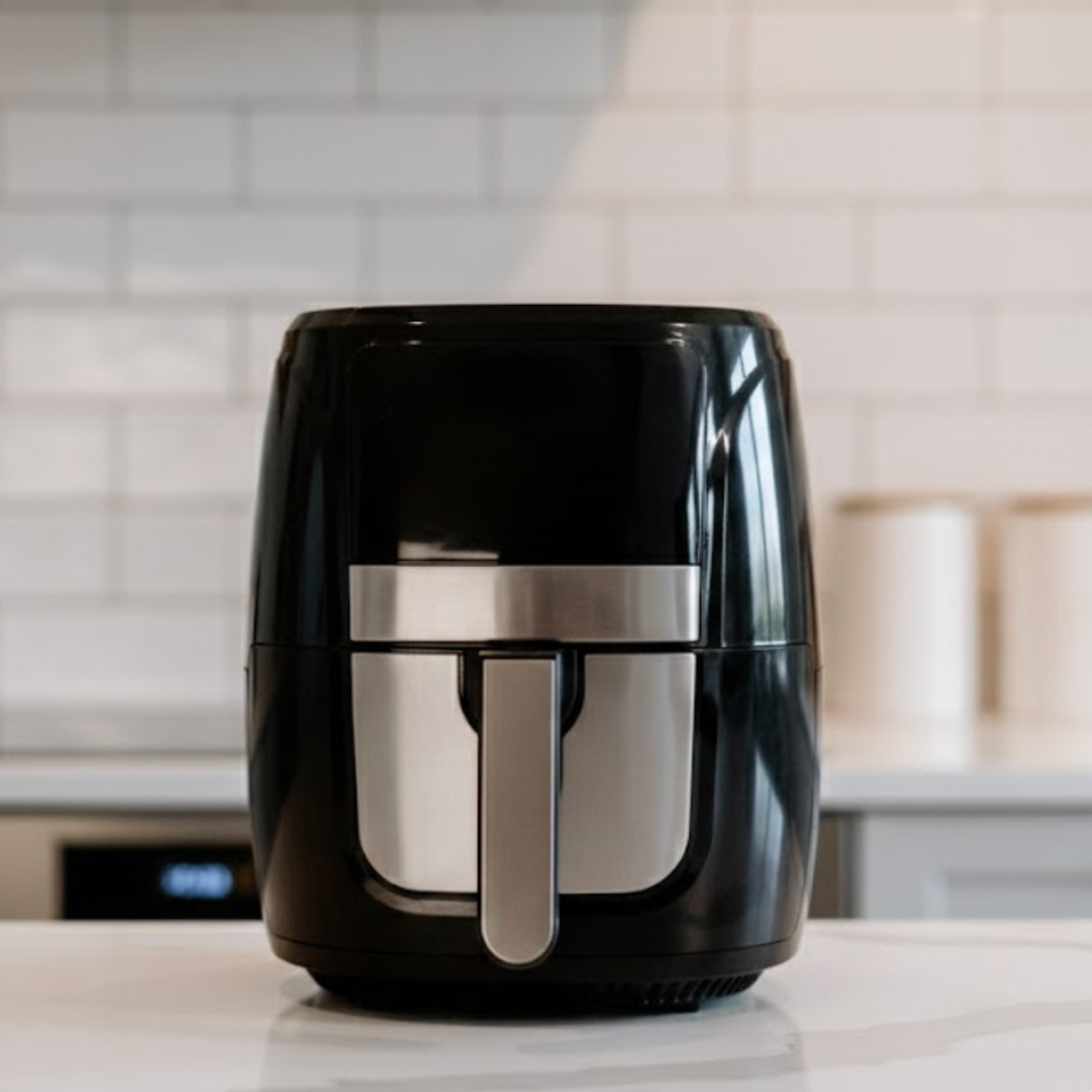
The good news? Air frying isn’t complicated once you understand a few key principles.
In this guide, you’ll find a complete air fryer cooking times chart, plus a beginner-friendly breakdown of temperatures, conversions, and common mistakes — so you can cook confidently without constant guesswork.
How Air Fryers Actually Work
Air fryers use rapid hot air circulation to cook food.
Instead of heating from the bottom like a conventional oven, they move hot air around the food at high speed. This creates:
- Faster cooking
- More even browning
- Crispier surfaces
- Shorter cook times
Because the heat moves efficiently, most air fryers cook 20–30% faster than traditional ovens.
That’s why understanding timing adjustments is essential.
Converting Oven Recipes for the Air Fryer
If you’re adapting a traditional oven recipe, use this simple conversion method:
- Reduce the temperature by 25°F
- Reduce the cooking time by 20%
- Check food early
For example:
If a recipe calls for:
400°F for 20 minutes in the oven
Start with:
375°F for about 15–16 minutes in the air fryer
From there, adjust in small increments.
Small changes produce better results than dramatic ones.
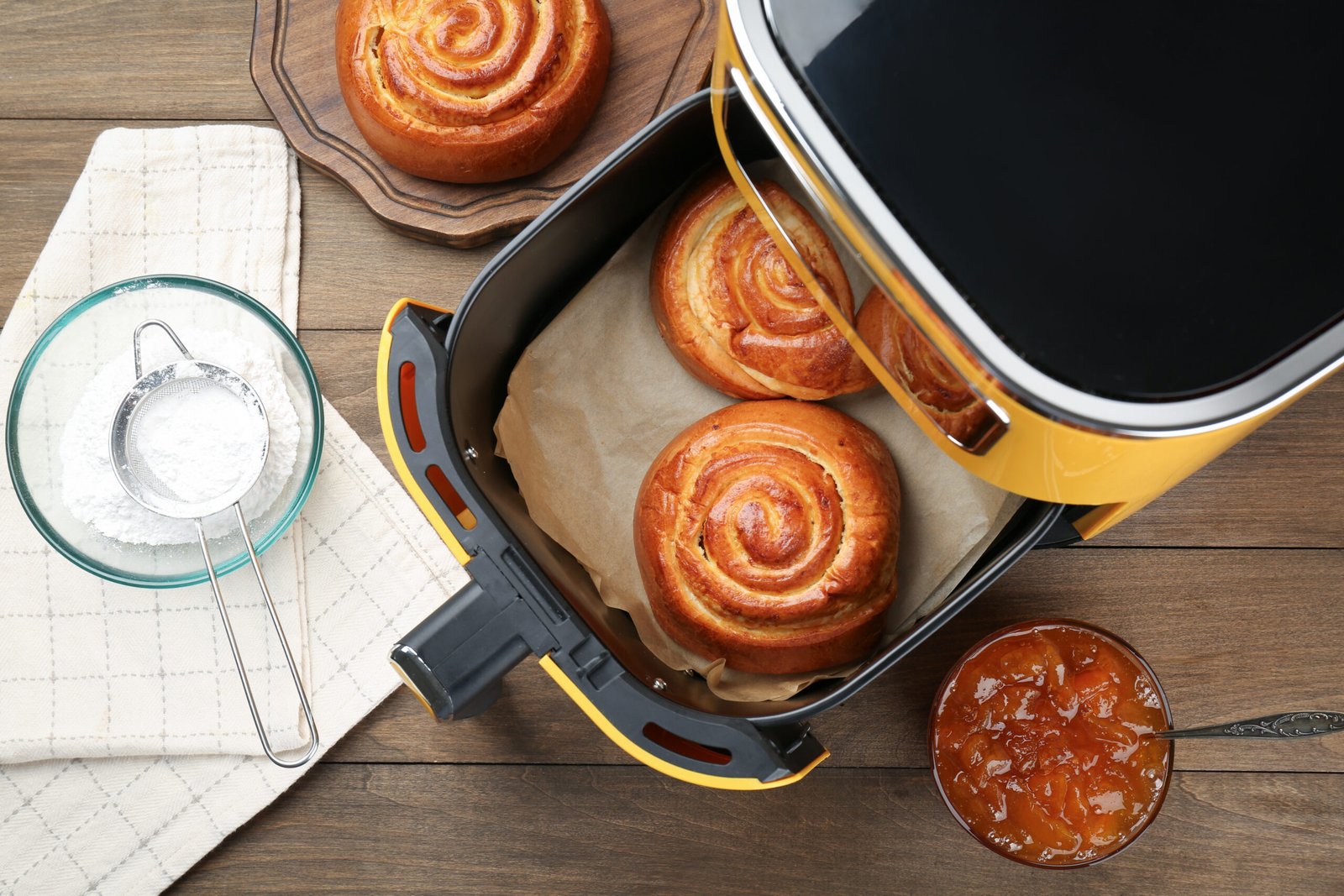
The Ultimate Air Fryer Cooking Times Chart
Use this chart as a reliable starting point. Always check food a few minutes early the first time you cook it, since air fryer models vary.
Vegetables
| Food | Temperature | Time |
|---|---|---|
| Broccoli florets | 375°F | 8–10 minutes |
| Brussels sprouts | 375°F | 12–15 minutes |
| Carrots (sliced) | 380°F | 12–15 minutes |
| Zucchini | 375°F | 8–10 minutes |
| Cauliflower | 375°F | 10–12 minutes |
| Sweet potato cubes | 380°F | 12–15 minutes |
| Baked potato (whole) | 400°F | 35–40 minutes |
For best browning, toss vegetables lightly in oil before cooking.
Chicken
| Food | Temperature | Time |
|---|---|---|
| Chicken breast (boneless) | 375°F | 15–18 minutes |
| Chicken thighs (boneless) | 380°F | 16–20 minutes |
| Chicken wings | 400°F | 18–22 minutes |
| Chicken tenders | 375°F | 10–12 minutes |
| Frozen chicken nuggets | 400°F | 10–12 minutes |
Chicken should reach an internal temperature of 165°F.
Beef & Pork
| Food | Temperature | Time |
|---|---|---|
| Steak (1-inch thick) | 400°F | 8–12 minutes |
| Pork chops | 380°F | 12–15 minutes |
| Burgers | 370°F | 10–14 minutes |
| Meatballs | 380°F | 10–12 minutes |
Flip halfway through cooking for even browning.
Seafood
| Food | Temperature | Time |
|---|---|---|
| Salmon fillets | 400°F | 7–10 minutes |
| Shrimp | 390°F | 6–8 minutes |
| Fish fillets | 375°F | 8–12 minutes |
| Frozen fish sticks | 400°F | 8–10 minutes |
Seafood cooks quickly — begin checking at the lower end of the range.
Frozen Foods
| Food | Temperature | Time |
|---|---|---|
| French fries | 400°F | 12–15 minutes |
| Tater tots | 400°F | 12–15 minutes |
| Mozzarella sticks | 390°F | 6–8 minutes |
| Egg rolls | 390°F | 8–10 minutes |
Shake the basket halfway through for even crisping.
How to Use This Chart Successfully
The chart provides guidance — not strict rules.
For best results:
- Preheat for 3–5 minutes if your model recommends it.
- Avoid overcrowding the basket.
- Flip or shake food halfway through cooking.
- Check food 2–3 minutes before the timer ends.
- Adjust in small increments as needed.
Once you cook a recipe once, timing becomes extremely consistent.
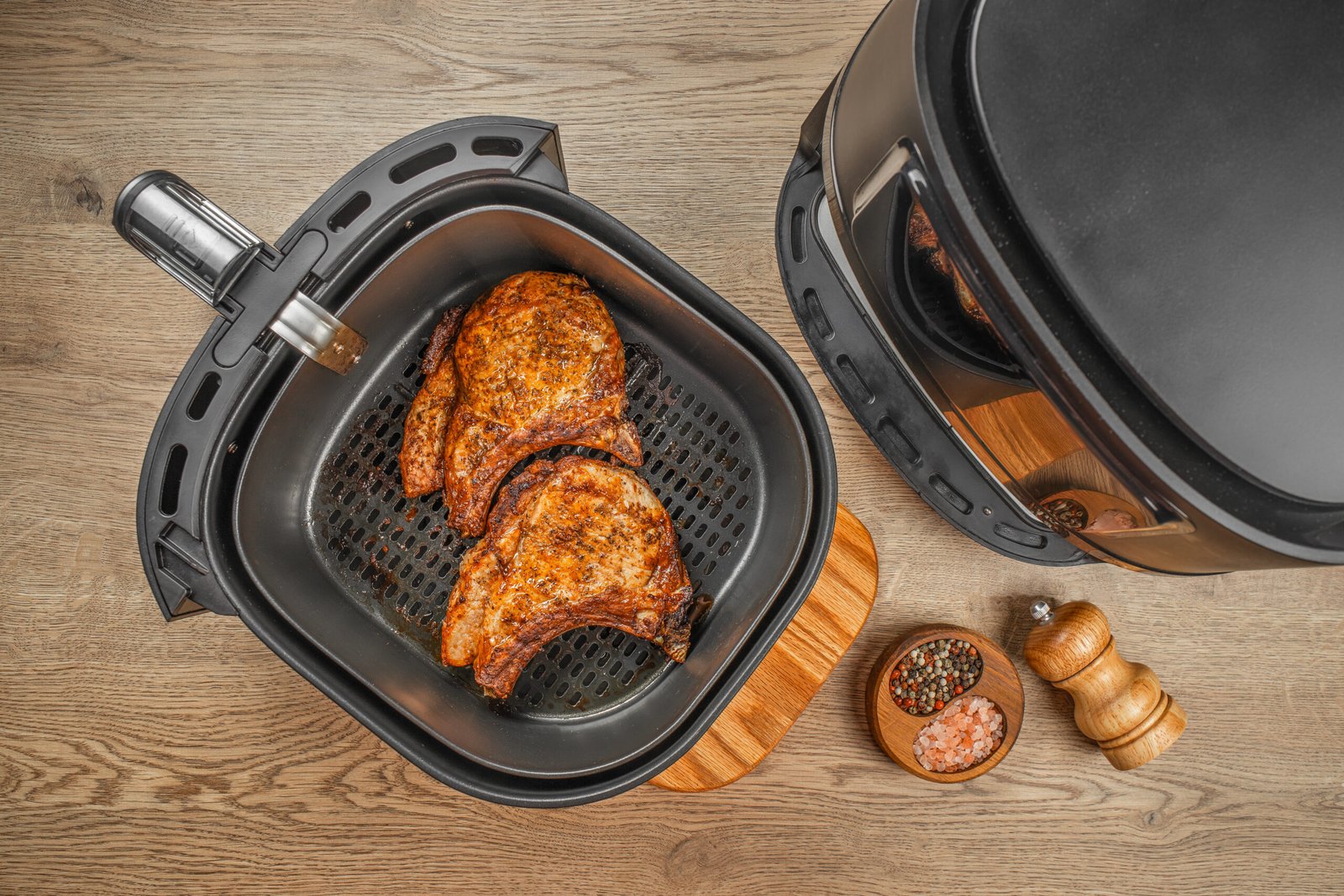
Beginner Air Fryer Rules That Make a Difference
Don’t Overcrowd
Air fryers rely on airflow. When food overlaps, it steams instead of crisps. Cook in batches if necessary.
Use Oil Lightly
A small amount of oil improves browning. Too much can cause smoking.
Shake for Even Results
Fries, vegetables, and bite-sized foods benefit from shaking halfway through cooking.
Avoid Wet Batter
Traditional wet batters don’t work well in air fryers. Use dry coatings or breading instead.
Use a Thermometer for Meat
Because air fryers cook quickly, internal temperature is more reliable than appearance alone.
I’ve linked all my favorite baking tools on my Shop My Kitchen page if you’d like to see what I use regularly.
Common Air Fryer Mistakes
Understanding what not to do prevents frustration.
Cooking everything at 400°F
Not all foods need maximum heat.
Skipping preheating
Some foods benefit from starting hot.
Ignoring food thickness
Thicker pieces require more time.
Forgetting to check early
Air fryers cook quickly — overcooking happens fast.
Small adjustments create consistent results.
Cleaning and Maintenance
A clean air fryer performs better.
- Allow it to cool completely.
- Remove basket and tray.
- Wash with warm, soapy water.
- Wipe interior gently with a damp cloth.
- Avoid abrasive scrubbers.
Regular cleaning improves airflow and prevents smoking.
Why This Guide Works
This guide focuses on clarity and structure:
- Organized cooking categories
- Clear temperature ranges
- Realistic time windows
- Beginner-friendly conversion rules
- Scannable formatting
Instead of overwhelming you with unnecessary detail, it gives you practical ranges and simple adjustments.
That’s what builds confidence.
Final Thoughts
Air fryers reward understanding.
Once you grasp how heat circulates and how to adjust time and temperature, they become predictable and efficient.
Use this chart as your starting point.
Make small adjustments.
Cook with confidence.
Before long, you’ll reach for your air fryer without hesitation — and without checking the basket every two minutes.
Pin to Pinterest
Related
Looking for other recipes like this? Try these: