In a large bowl, whisk the cold water, salt and starter together using a wooden spoon. Add the flour stirring until just combined. Do not overmix.
Cover the bowl with a plate or plastic wrap(not airtight) and let the dough rise at room temperature for 18–24 hours. Try transfer your dough around the 20–22 hour mark to avoid over-fermenting.
Place a piece of parchment paper inside your Dutch oven so that it hangs slightly over the edges for easy lifting.
Gently tip the dough into the parchment/dutch oven, being careful not to deflate the rise. If the dough feels sticky, lightly dust the top with rice flour or gluten-free flour.
Let the dough rest directly in the parchment-lined Dutch oven for 1–2 hours, covered with the lid, until puffy and noticeably risen.
About an hour before baking, preheat your oven to 450°F. Keep the Dutch oven covered while it continues its final rise.
Place the covered Dutch oven into the preheated oven and bake for 40 minutes.
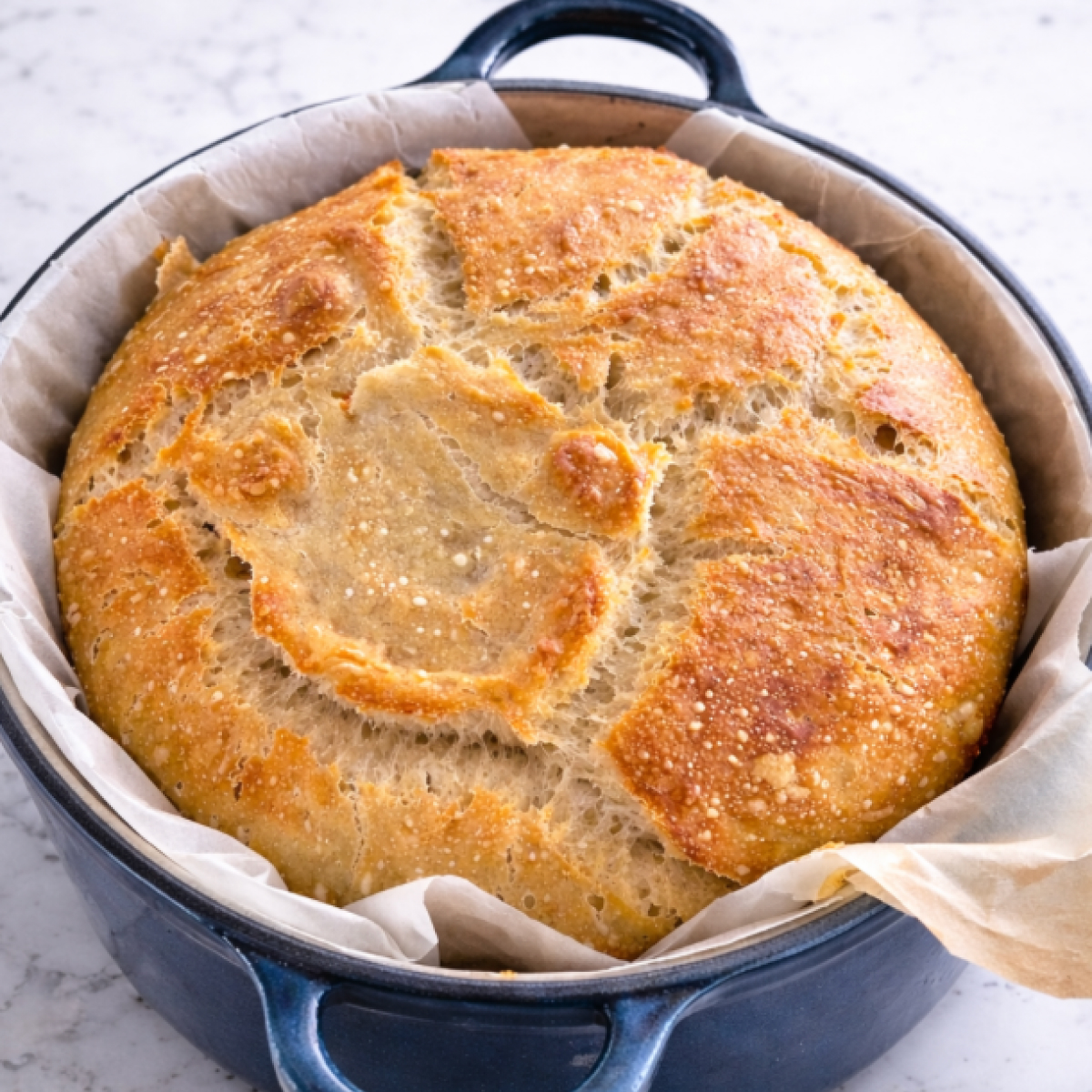
Remove the lid, lower temperature to 425 degrees and bake for another 20 minutes, or until the crust is deeply golden and the loaf reaches 200°F internally.
Use the parchment paper to lift the loaf out of the Dutch oven. Let it cool completely before slicing to prevent a gummy interior.