Ingredients
Equipment
Method
- Take the warm water(about 125°F) add yeast and sugar, set aside for 5 minutes so the yeast can bloom.
- In a large bowl, combine the flour and salt.
- Mix the olive oil in with the water/yeast mixture, add the liquid mixture to dry ingredients. Mix until a ragged dough begins to form.
- Form and knead the dough:Turn it out onto a lightly floured surface and knead vigorously for 6–8 minutes, until smooth and elastic.
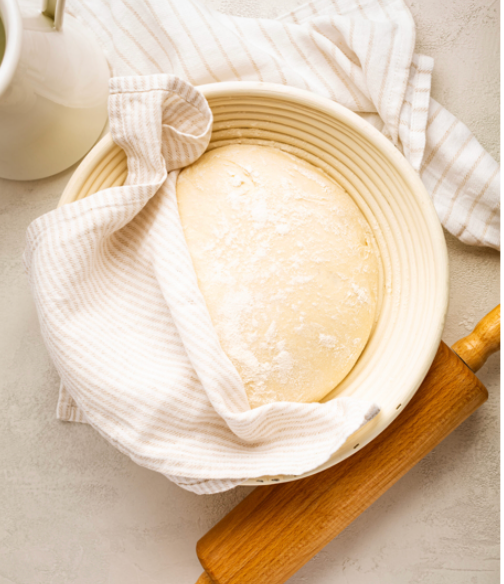
- Place the dough in a lightly oiled bowl, turn it to coat, and cover with plastic wrap and a clean towel. Let it rise in a warm place for 25–30 minutes or until puffy. Do not punch the dough down afterward.
- Stretch or roll dough into a 13–14 inch circle, about ⅛ inch thick. Transfer to a prepared pizza pan, baking sheet, or parchment-lined peel (if using a stone or steel).
Baking:
- Preheat the oven to 475–500°F.
- Add sauce, cheese, and toppings directly to the raw dough.
- Bake on the middle rack for 12–15 minutes, or until:Cheese is melted and bubblingCrust is golden and cooked through (check the bottom for doneness)
- Best for: Thin layers of sauce/toppings, preheated pans, or using a pizza stone/steel.
Notes
- Yeast Activation: Use warm water (around 100-110°F) to activate the yeast quickly. Water that’s too hot can kill the yeast, while too cold will slow the rise.
- Flour Choice: Bread flour gives a chewier, more elastic crust, but all-purpose flour works well for a softer texture.
- Rising Environment: For best results, let the dough rise in a warm, draft-free spot. A slightly warm oven (turned off with the light on) works perfectly.
- Kneading Tips: Knead the dough just until smooth and elastic to develop gluten without overworking.